
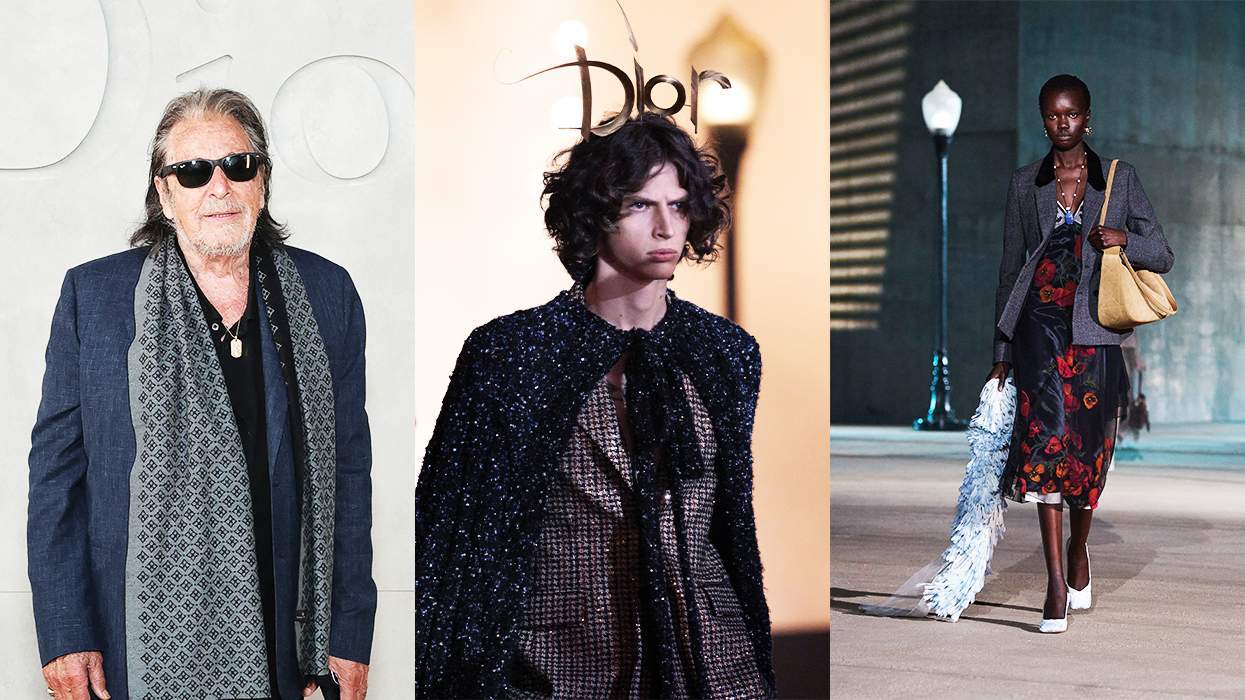
Even for Los Angeles, it was a starry night at the Dior Cruise 2027 show.
To showcase its inaugural ready-to-wear Cruise collection, the storied fashion brand staged a Hollywood fantasia in May at the Los Angeles County Museum of Art, which recently christened its much buzzed-about David Geffen Galleries.
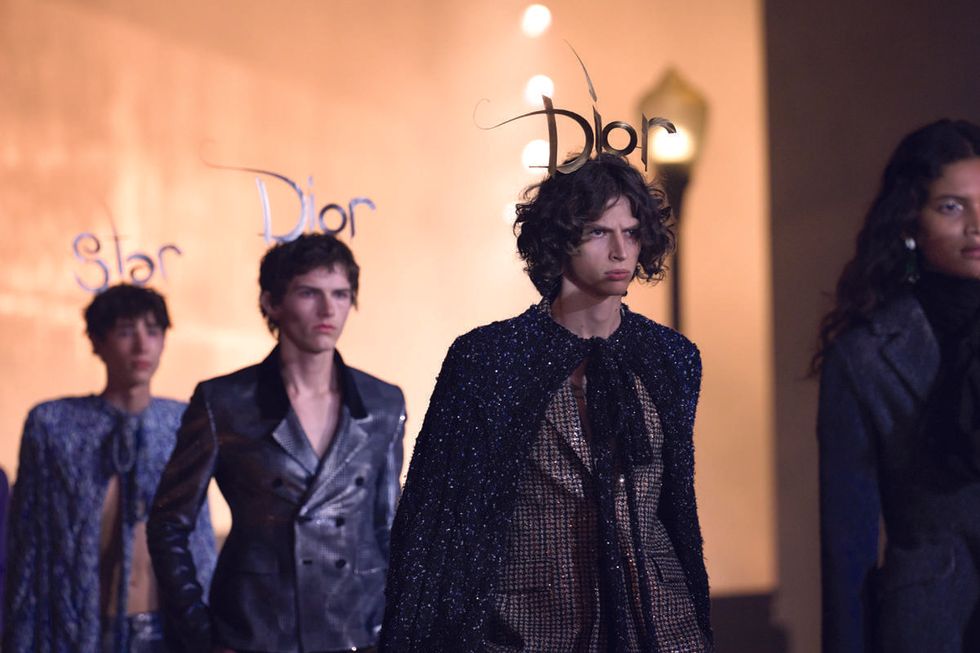 Phillip Treacy created headpieces for the Dior Cruise men’s looks.Maddy Rotman
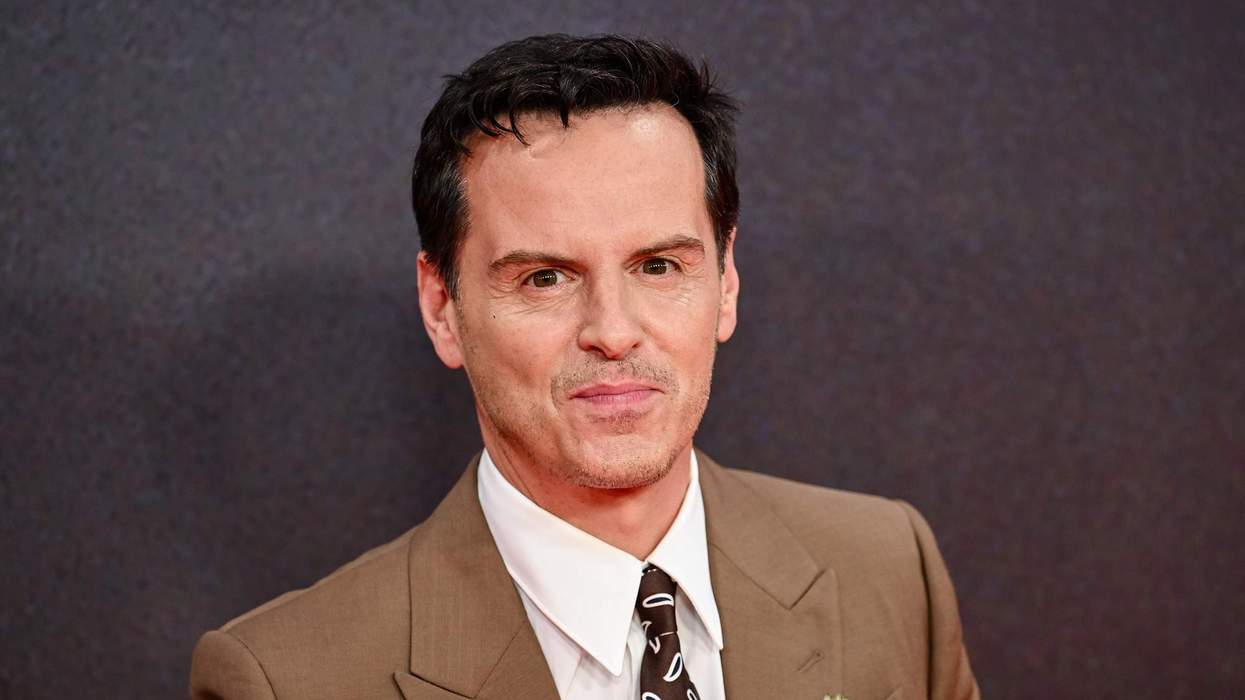
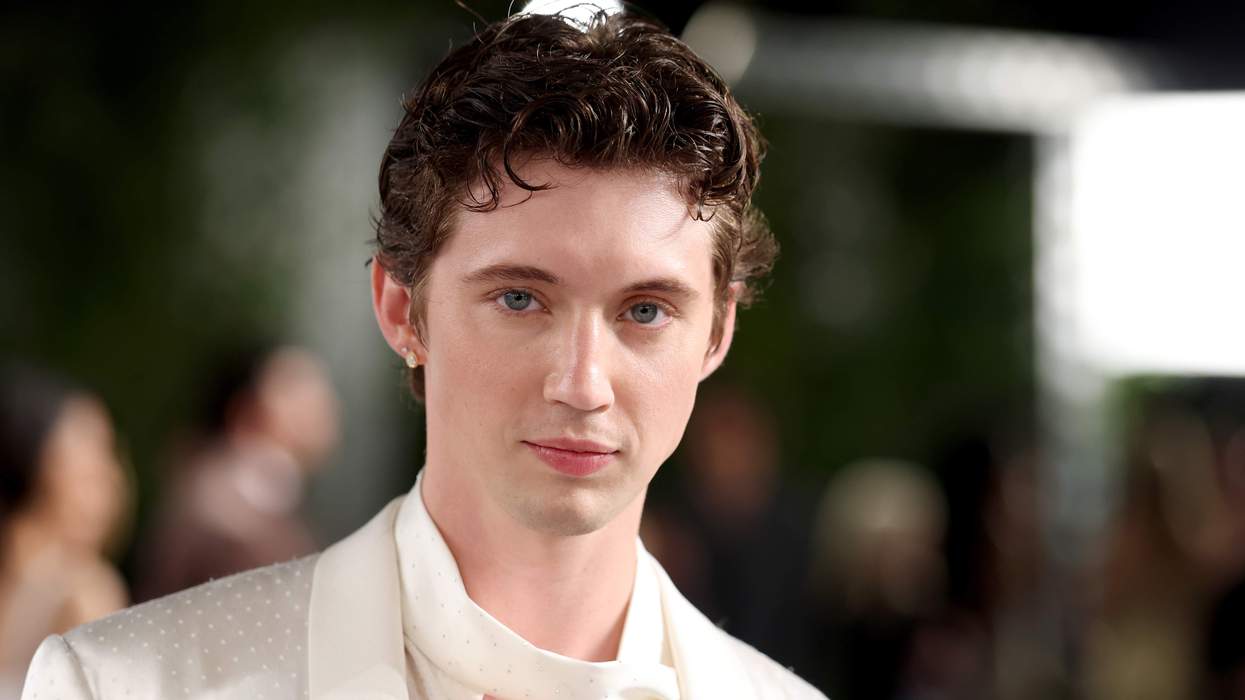
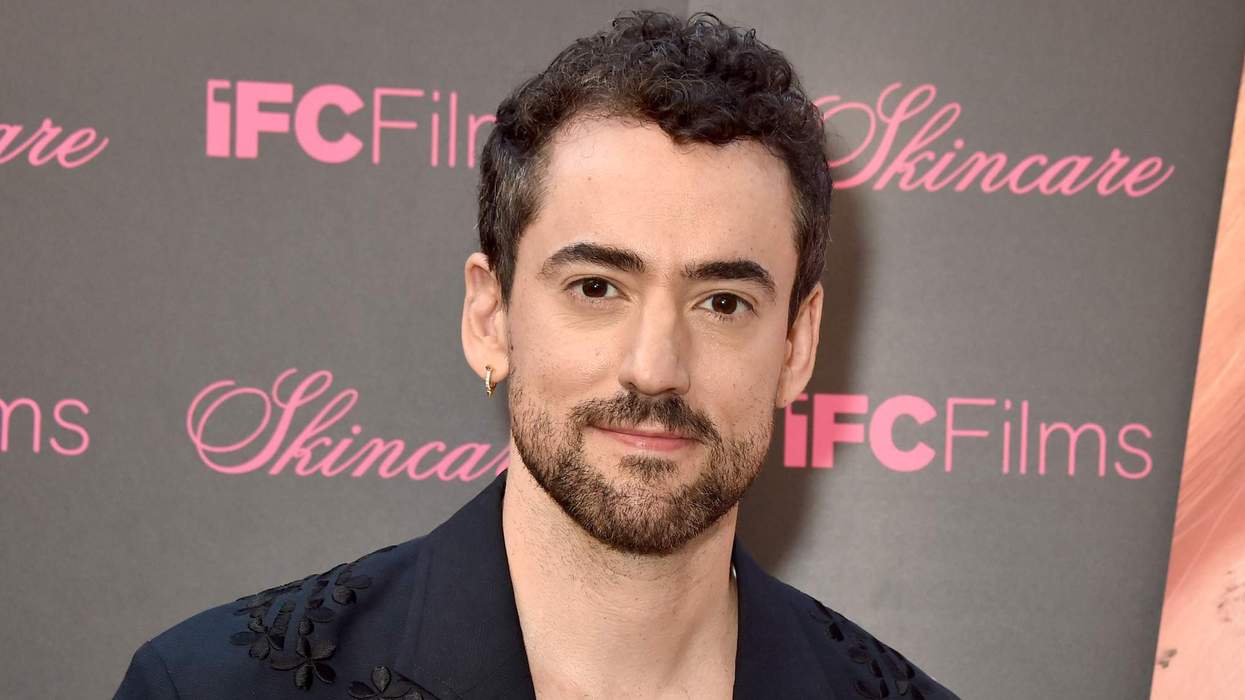
After walking a gauntlet of paparazzi near the museum entrance’s famous streetlamps, luminaries like Al Pacino, Anya Taylor-Joy, Miley Cyrus, Macaulay Culkin, Chase Sui, EJAE, Jeff Goldblum, and Tracee Ellis Ross posed for photographs in front of Dior’s stone-gray step-and-repeat and amid the vintage convertibles placed around the LACMA pavilion, which had been transformed into a runway.
Evoking film noir, models in California-poppy florals, sequined suits, bespoke headpieces, shirts designed with artist Edward Ruscha, and lace dresses emerged from a fog slashed with the exaggerated shadows of window blinds. They strutted to a tres chic soundtrack that concluded with the Tinseltown-inspired “Kelly Watch the Stars” from the French electronic duo Air.
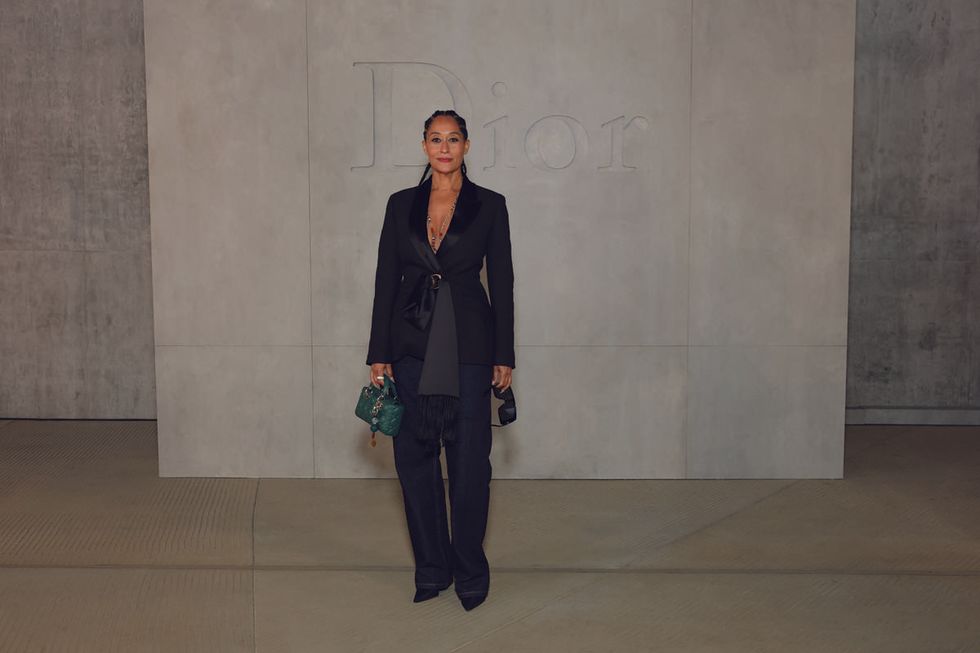 Tracee Ellis Ross Stefanie Keenan/Getty Images for Christian Dior
It was all “an illusion of L.A., in L.A.,” noted a screenplay of the evening, which outlined “the House’s longstanding relationship with Hollywood.” The script, placed on every seat beside a Dior cashmere blanket, began with a scene in 1949 between Alfred Hitchcock, Warner Bros executives, and Marlene Dietrich, who declared, “No Dior, No Dietrich” in her negotiations to headline the film Stage Fright. Wearing the brand, in this telling, ensured that her seductress character Charlotte Inwood “appears truly glamorous.”
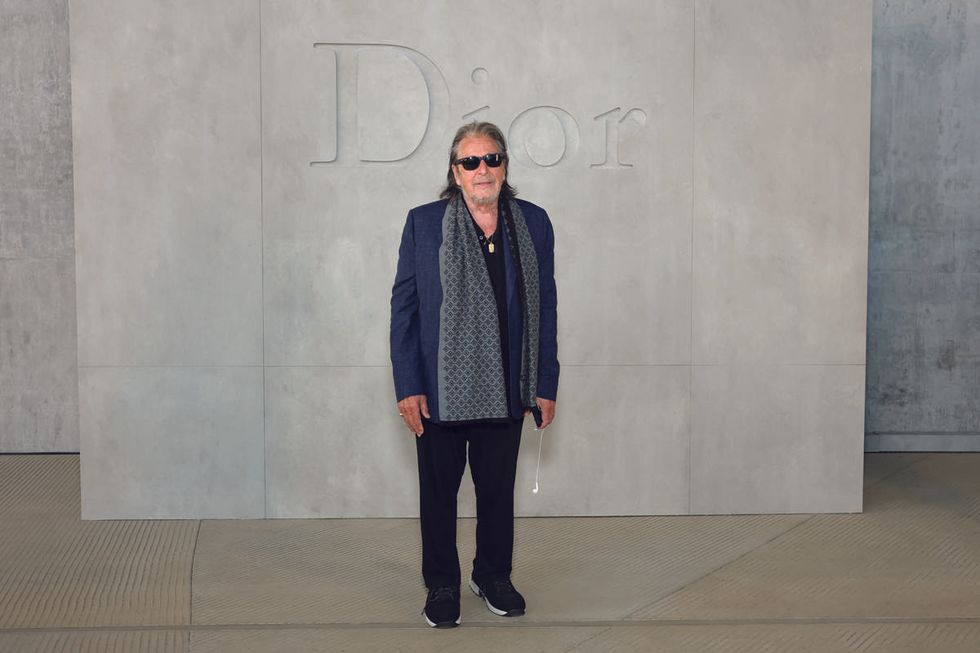 Al PacinoStefanie Keenan/Getty Images for Christian Dior
Stage Fright, along with Les Enfants Terrible, were two 1950 films that involved a collaboration with house founder Christian Dior, and these “are the main starting points for this collection,” Jonathan Anderson, Dior’s creative director since 2025, noted in the script. (The line’s mood board included images of classic stars like Grace Kelly, Audrey Hepburn, Sophia Loren, Marilyn Monroe, and Elizabeth Taylor, in addition to the aforementioned queer icon.)
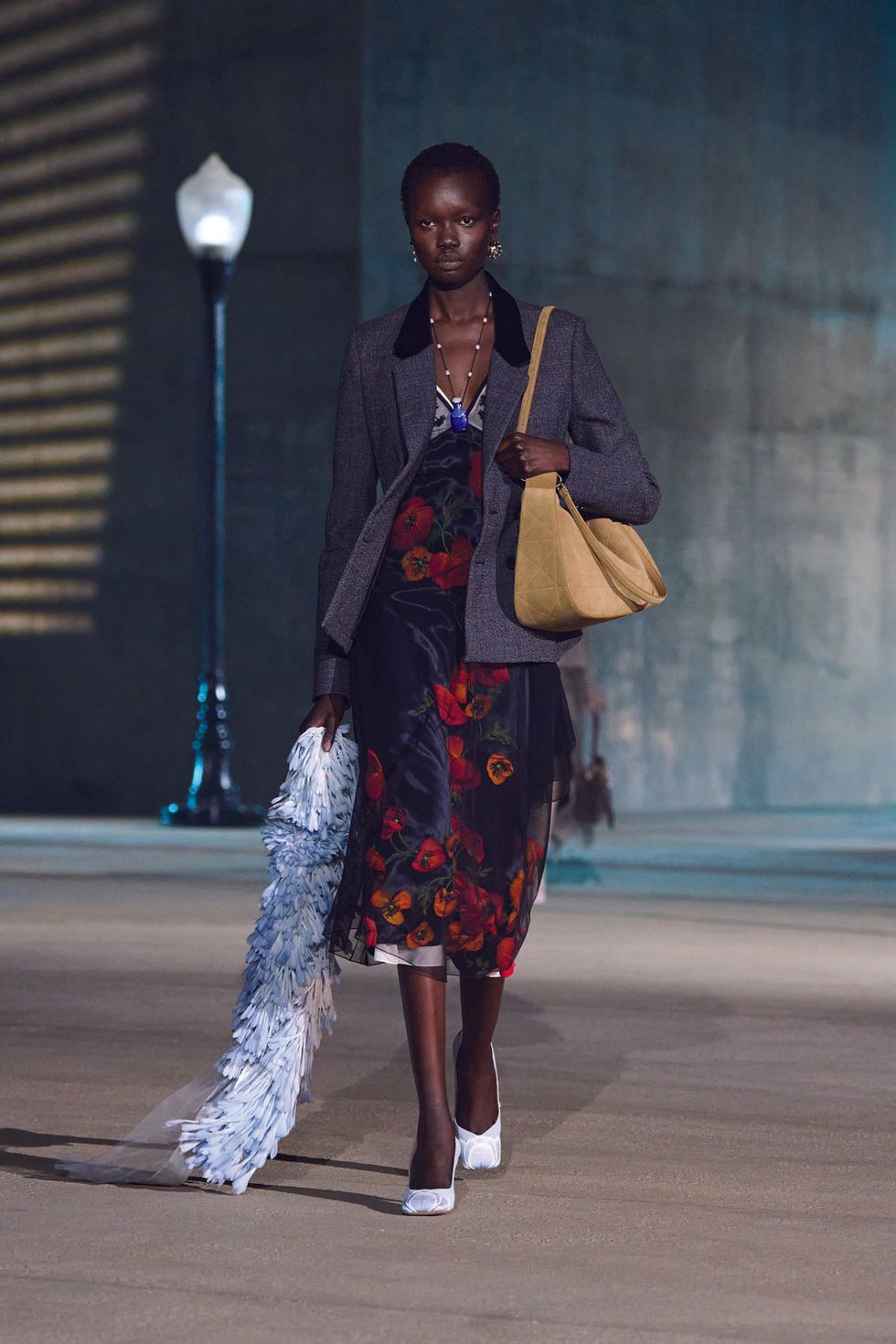 A model struts at the Dior Cruise 2027 show at LACMA with a Saddle Bag.courtesy Dior
Anderson himself has become an emerging Hollywood figure; he worked as costume designer for two Luca Guadagnino films, Challengers and Queer, which provides another line of connection between himself and the late French designer who gave the “New Look” to the world. The gay fashion guru, also known for his eponymous label JW Anderson, clearly leaned into history as much as camp in this show’s staging.
And in the screenplay press notes, playfully titled Wilshire Boulevard (the location of LACMA, as well as a riff on Billy Wilder’s midcentury film noir), Anderson spoke with some seriousness to the relationship between film and fashion, particularly in times of turmoil.
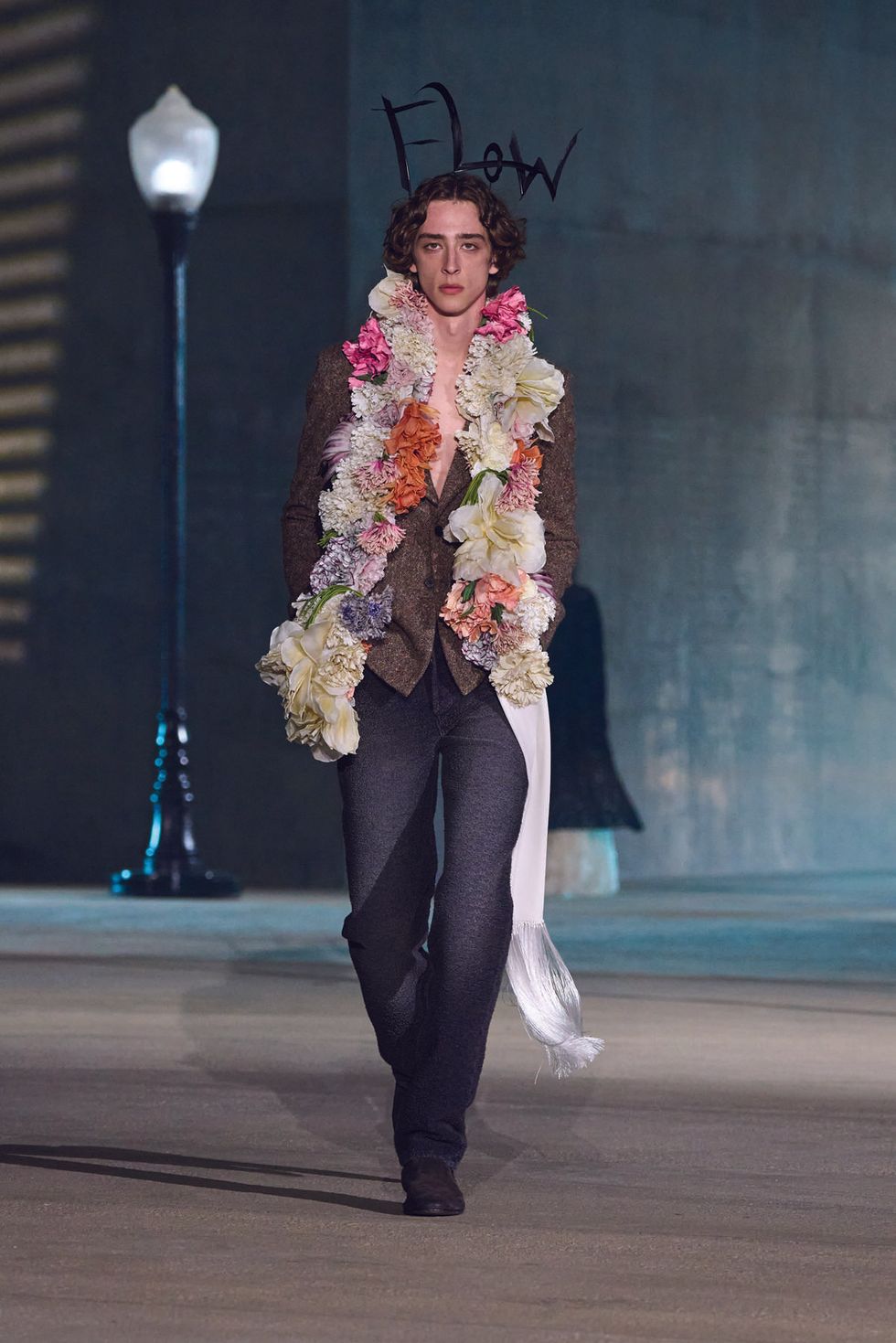 Florals figured prominently in the Dior Cruise collection.courtesy Dior
“Christian Dior understood how important the idea of ‘the dream’ was for people after the war — as a form of escapism,” Anderson stated. “He explores this in couture, his Surrealist friends were obsessed with dreams and, of course, Hollywood is ‘The Dream Factory.’ It was all part of the same cross-cultural shift.”
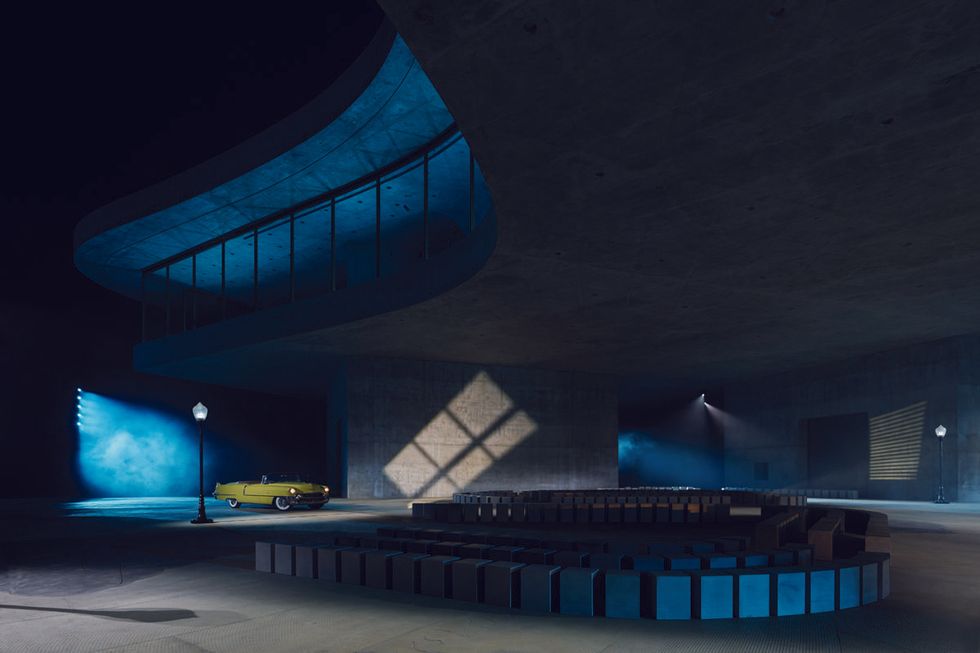 LACMA received a film noir transformation for the Dior Cruise 2027 show.Eric Staudenmair
The screenplay concluded, “The guests wind their way back to their cars and are driven to the show after-party at a location nearby.” That location turned out to be the Chateau Marmont, the storied Sunset Strip hotel modeled after a French castle. There, the stars, draped in Dior blankets, sipped champagne with one hand. And in the grand tradition of a Hollywood happy ending, they ate a cheeseburger from In-N-Out with the other.
This article is part of OUT’s July-Aug 2026 print issue, on newsstands July 7. Support queer media and subscribe — or download the issue now through Apple News+, Zinio, Nook, or PressReader.
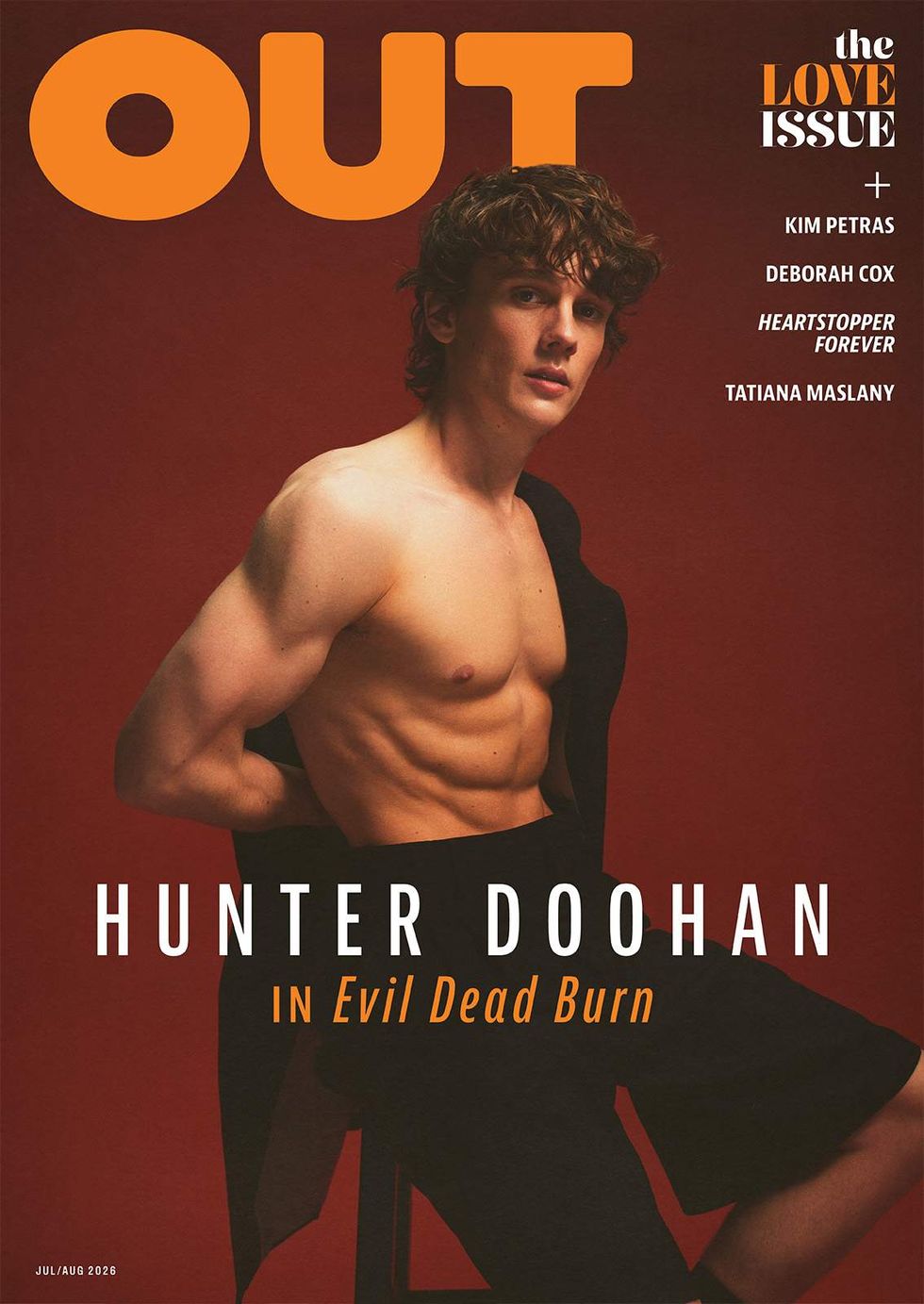 Hunter Doohan on the cover of Out's July/August 2026 print issue