


Spoilers ahead for the All American series finale.
If you were watching the All American series finale’s flash-forward sequence closely, you clocked Coop wearing a wedding ring.
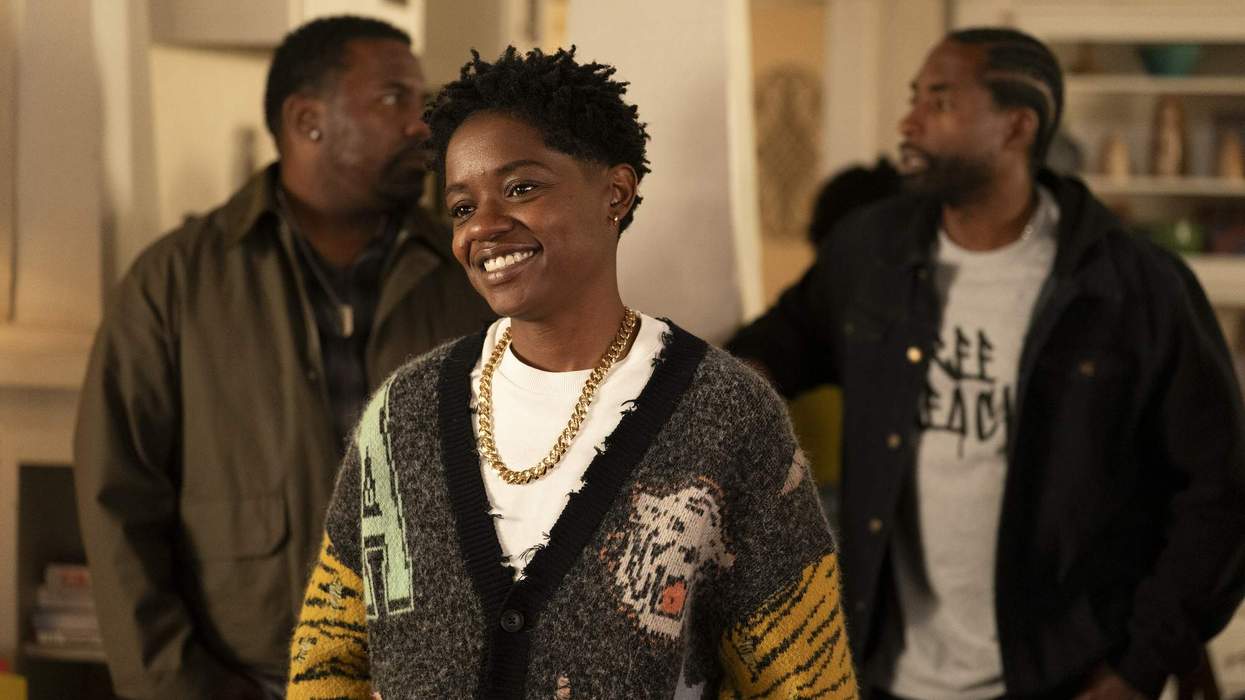
Showrunner Nkechi Okoro Carroll hoped you would catch it. “If people are paying close attention, she’s also wearing a wedding ring, which means when Breonna said, ‘I would have loved every version of you,’ she meant that,” she tells Out. ”Coop deserved her happily ever after. So she got the wife, she got the law career, she got to be sworn in by her mentor, Laura Baker, who’s now a judge.”
All American’s final hour focuses on Spencer and Olivia welcoming their twins and bringing the family back home to Los Angeles after he negotiated a trade from the New York Bobcats. The beloved series ends its run with a flash-forward to show what life looks like for all the characters. Spencer retires after a successful run in LA to hand the reins to his teammate KJ while Layla and Jordan have a child of their own. For Coop, her village watches her officially become a lawyer.
The flash-forward gives Coop everything the show had been building toward, and it comes at a time when folks are hungry for positive LGBTQ+ representation. Coop got eight seasons, a career, a wife, and a courtroom full of people who watched her achieve her dream. “There was no version where we didn’t get her to a happy ending,” Carroll says.
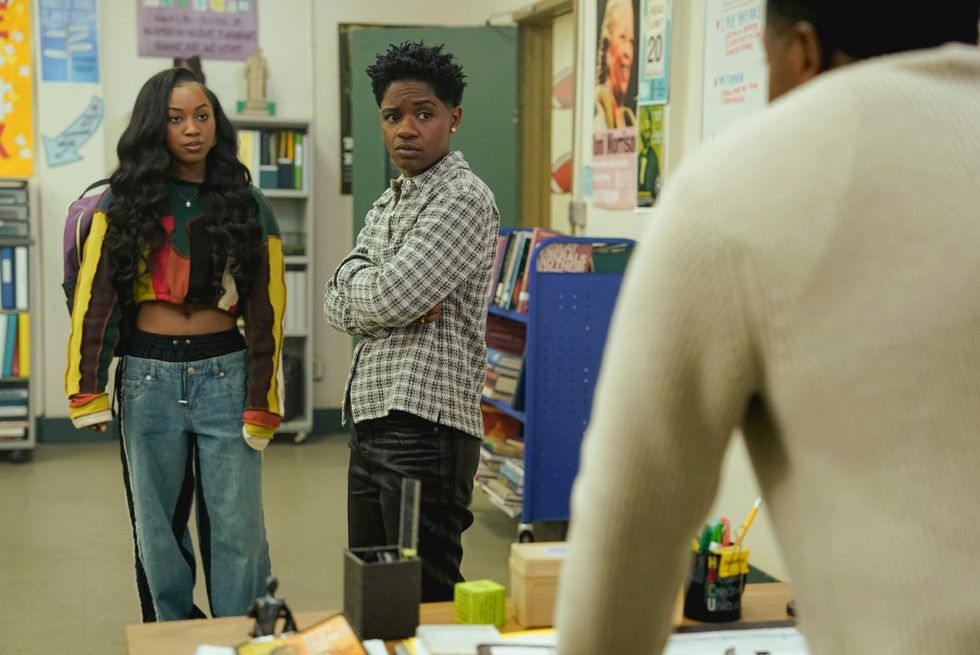
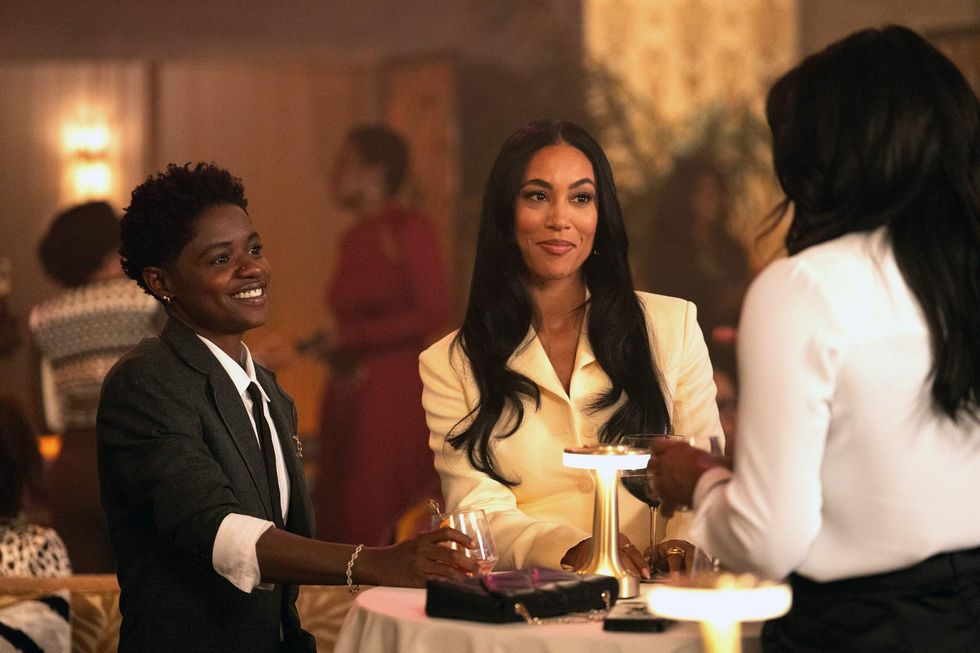 Bre-Z as Coop and Sasha Lance as Breonna Strong on 'All American' season 8, episode 2 "There Is No Competition."Troy Harvey/The CW
For actor Bre-Z, the swearing-in felt like the payoff to years of work. “That thing felt like a little dream come true,” she says. ”First of all, I got to mention that I was absolutely dressed to impress on that day.“ She remembers Monet Mazur being on set as Judge Baker, and the sense that she had finally arrived. “Coop fought so hard to stay with the law and not get deterred and not walk away from it,” she says. “It is a gradual process in real life, and it was on screen too. So I was happy to have finally arrived at that. Like, yeah, now I’m big dog. What's up?”
That fight started long before law school. Coop’s first dream on the show was music, but then her rap aspirations got cut short after she was shot. Carroll refused to let the moment pass as background violence, so it turned into a turning point for the character.
“I knew I wanted that to not just be, ‘OK, we had a character that was from South LA and she got shot because that's what happens to Black teens,’ and then we were just gonna move on from it,” Carroll says. “I knew I wanted that to have a permanent repercussion in her life.”
The shooting left Coop unable to rap the way she used to, and it took part of her identity with it. That became the story Carroll wanted to tell. ”It’s not that you move on from the dream voluntarily because the dream changed,” she says. “The dream was taken from you. And so, what does that look like?”
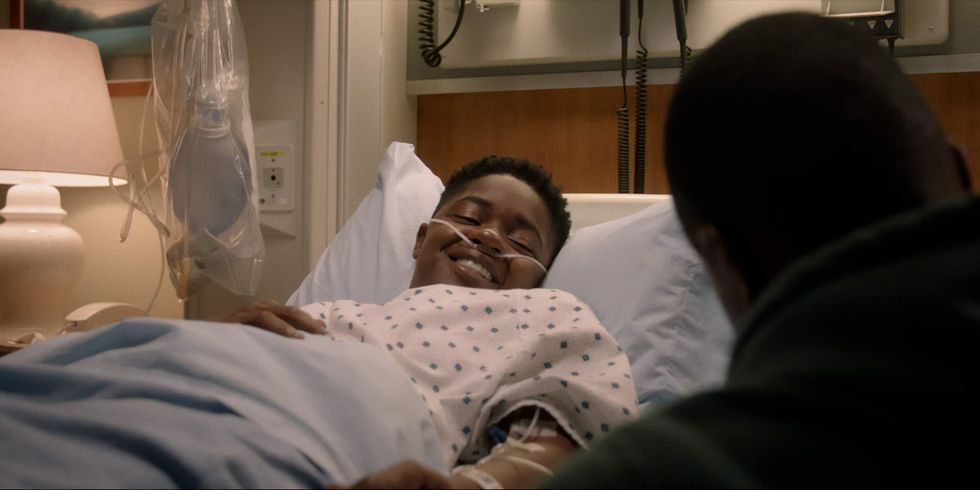 Bre - Z as Coop on 'All American' Season 4, Episode 1 "Survival Of The Fittest."The CW
Every character on All American chased a dream. Coop’s arc asked what happens when you have to find a new one. Carroll knew the answer when Coop started interning for Laura. From there, the endgame was set: Coop would become a lawyer, and she would do it to help her community. Her history with the system made that more than a career change. “Someone who has run into the law, who's been arrested, who's been part of a gang,” Carroll says. ”The perspective that gives you as a lawyer now on the other side of things. We were so excited to explore that.”
Knowing where Coop would end up was one thing. Getting her there took four more seasons, and Carroll wanted the road to include Coop losing her way. There were law school professors who didn't see her as a lawyer, a past that kept resurfacing, and relationships that fit one chapter of her life and not the next.
Part of her growth was learning to be responsible for someone else. One of the richest threads in Coop’s later seasons is her bond with Amina, the daughter of her friend Preach. The relationship began partly out of guilt because Coop blamed herself for the death of Amina’s mother Mo. She was killed while Preach was trying to save Coop’s life.
 Alexis Chikaeze as Amina and Bre-Z as Coop on 'All American' season 7, episode 13 "Award Tour."Troy Harvey/The CW
Transforming that guilt into something that would break the cycle that led to it changed Coop forever. “We’re not visiting the sins of the mothers on the children,” Carroll says. Over time, obligation became love. That’s why Coop led the search to rescue Amina, haunted by the moment Amina called her crying, “I need you, Auntie Coop,” and she wasn't there. “That really stayed with her,” Carroll says. “For the rest of her life, she will never let that happen again.”
Bre-Z comes at it from a different angle and lands in the same place. Spencer had football. Jordan had football. Coop, in her words, “was kind of just in the wind.” Amina gave her someone to answer to. “You have to look out for her,” Bre-Z says.
Coop’s story was always this full: loss, ambition, love, family. Ask Carroll why All American gave its queer character the same depth as everyone else, and her answer starts with a question. “How could we not?”
“We were trying to tell a story that authentically portrayed the lives of Black youth in our country,” she says. “And that story is completely incomplete if it doesn't include our Black queer youth, and the totality of their story. Not just the Black queer character we tack onto the friend group.”
Coop got first love, heartbreak, a lost dream and a new one, because everyone else did. And she got the coming-out conversation, because queer kids have one. “At some point, there’s a conversation with your parents that either looks like, ‘Child, I knew, I was just waiting for you to tell me,’ or looks like, ‘I don’t know what to do with this. You’re dead to me,'” Carroll says. "That’s just the truth."
Queer viewers noticed. Bre-Z says most of the response to Coop doesn't show up in comment sections. It comes in DMs and in person, and it tends to be personal. "I'm actually getting a piece of their life," she says. "Someone who's like, 'I haven't seen myself like this,' or, 'I was dealing with this and I just love the way you handled it. Thank you for showing me that it is possible to keep going.'" Recently she was in San Diego and ran into two women in the Navy and spoke to them for an hour.
 Bre-Z as Coop on 'All American.'Matt Sayles/The CW
”This is all because of the representation on All American,” Bre-Z says. "It actually just is a huge segue into the real work that I want to be able to get out and do.”
Carroll says she never considered another kind of ending. ”Anyone who knows me knows I believe in unicorns and gummy bears and leprechauns and rainbows and joy,” she says. ”So there was no version of getting to the end of this story, after all the drama these kids had been through, that they were not going to find their dream on the other side of it.”
Four seasons or eight, the kids were going to make it. The only question was how far to leap forward. For Carroll, the reason was always the audience. ”We've always embedded into the show that your dreams are worth it,” she says. “I thought it was important for our audience to see them achieving their dreams, so that it motivates them in real life to keep pursuing theirs, no matter the obstacles.”
Bre-Z is already thinking about what outlasts the show. “The story will live past us,” she says. ”As long as this thing is available to be seen, people can pull from that. For me, I know that I showed up and gave a real thing.”