



SHOULD I STAY OR SHOULD I GO?
It’s a question on many LGBTQ+ Americans’ minds right now. And why wouldn’t it be? Peeing while trans in a public bathroom is increasingly illegal. Health care subsidies are being chopped. The sharks are circling on same-sex marriage rights. And Pantone made white the color of the year — like, WTF?
“The gays are leaving,” quipped one user in my comments recently.
But alas, it takes more than vibes alone to leave the country permanently. Long-term immigration requires planning. If you want to maintain a similar standard of living, it also requires money. Visa fees, minimum savings requirements, and tax surprises that can add up fast. Also, will your new country see your marriage as legal? Can you get the health care you need? You don’t have to be rich to leave the U.S. — but you do have to think ahead.
If leaving the country is a long-term goal of yours, there are actions you can take now to better orient yourself toward your big gay transnational moment. To leave the United States for good, or just get to a safer state in the short term, your first step isn’t to pack a bag. It’s to look at your wallet.
IMMEDIATE STATE MOVES MIGHT BE A STEPPING STONE
For queer people in red states, the situation is dire. At the time of this writing, Kansas has made “driving while trans” illegal (on less than 72 hours’ notice). And Idaho has determined that, if you pee in public restrooms while trans too many times, life in prison is definitely the best use of our taxes. If you think these states won’t push further with policies that control gays, women, and people of color, a refresher on fascism throughout history would be worth your time.
The short-term solution might be to cross state lines. And while moving anywhere is expensive, scrappiness can be more valuable than savings at this stage, according to Rita-Soledad Fernández Paulino, a nonbinary money and self-care coach. When coming out to their Mexican Catholic family didn’t go well, Paulino said they relocated to New York City with two suitcases, $1,000 in savings, and a whole lot of determination.
“Not everyone is going to have all their finances in order,” they tell me. “But for me, moving to New York City was huge. I had a determination to make it work. [Being around] such diversity, you realize there are so many ways to be.”
Paulino also emphasized leaning into relationships and community at the start, establishing clear expectations — like crashing on a friend’s couch short-term — so the boundaries remain both supportive and respectful.
“Community is currency,” they say.
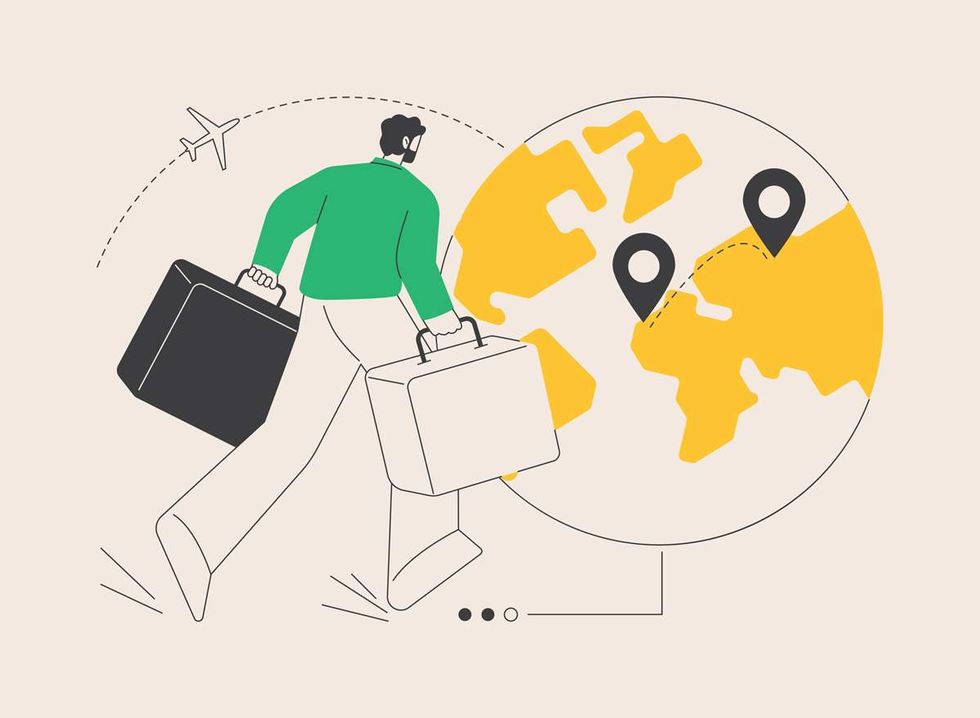 Shutterstock/Visual Generation Inc.
VISAS TAKE LONGER THAN YOU THINK
Sadly, no matter how fab your outfit might be, you can’t just prance into another sovereign nation and queen out for months or years at a time. Nearly every country requires a visa or permit if you plan to stay a while, and the time frame for getting one can range from a few weeks to several months.
There are different types of visas. A work visa requires a job offer from a company in your new country. Student visas are for students, obvs. A non-lucrative visa is for people who do not need to work, like retirees, who can prove they’ll live off savings and investments. The newer digital nomad visa, now available in over 50 countries, lets you live abroad while doing remote work for a company back home or yourself.
Visa wait times can make a DMV errand look like a cakewalk. Canada’s Express Entry system can range from a few weeks to several months. Portugal’s D7 visa takes about two to four months. Spain’s digital nomad visa takes one to three months, but delays happen often. In the Netherlands, the DAFT treaty lets Americans apply for a work permit that is often decided in one to two months. And these are just the wait times after you apply. Getting your paperwork ready, opening a bank account abroad, and having documents translated will eat up time too.
Once you have a visa, renewal processes vary by location. For some countries, like Mexico, you can apply for residency after a certain number of years. If you think you might want to move abroad soon, start learning the ins and outs of visa application processes.
HOW MUCH MONEY YOU NEED TO HAVE
Unless you’re applying for a work visa, most countries want proof that you can pay your own way. This ensures you won’t take a job from a local resident. How much you need depends on where you want to go and what visa you choose.
For example, at the time of this writing, Portugal’s D7 visa asks for a steady income of at least 920 euros per month, or about 11,040 euros per year. You also need to keep at least a year’s worth of that income in a Portuguese bank account while you apply. I repeat: [waves arms] you’d need about $12,000 sitting in a bank account in Portugal. Some countries offer residency or citizenship by investment, colloquially known as a golden visa, but the minimum investment numbers are hefty for most, and they keep ratcheting up to temper demand.
Even for money coaches, the relocation can feel like a moving target. Worried about the 2024 election, Queer Money podcast cohosts David and John Auten-Schneider had goals to move to Spain. But the goal posts kept getting pushed back.
“We were finding decent condos for around 300,000 euros, and then prices just kept going up,” says David. In Spain, for example, down payments are higher for international buyers — typically at least 30 percent of the purchase price — and a mortgage has to be fully paid off by the time you’re 75, an important consideration for anyone over 45 weighing their options. Spain also taxes international income.
“Tax-wise, it wasn’t making a whole lot of sense,” says David. The couple pivoted their plan, and expects to relocate to Mexico this summer.
HOW MUCH YOU’LL NEED TO MAKE
Unless you have a job offer from the host country, you’ll need to either prove you have an outside source of income (digital nomad visa) or show you have enough funds that you can live off of savings while visiting. Digital nomad visas, now offered by more than 50 countries, are made for people who work from a laptop for a company in another country. But they still ask you to show a minimum income, and they do not let you take a local job.
Learning how to make money online is a useful skill because it helps you find extra income. But it also enables location freedom. People who freelance or work from home often have an easier time moving abroad.
Reskilling in another country could also be an option because it would let you get a student visa, then potentially pivot into a work visa, says John Auten-Schneider.
“I don’t encourage people to take on a bunch of student loan debt, but maybe the path of least resistance is to get some student loans, go to Canada, sign up for some sort of medical-related education, and work your ass off,” he says. He notes Canada’s current need for more health care workers. “See how you can get some sort of work experience in Canada. That makes it a whole lot easier for them to say, ‘We’re just going to keep you rather than send you back.’”
OTHER CONSIDERATIONS FOR LGBTQ+ PEOPLE
Laws for LGBTQ+ people vary from place to place, so you’ll want to take those matters into consideration too. At the end of 2025, same-sex marriage was legal in just 39 countries. Spousal visa rights — who gets your assets when you die, who can own property, and how you file taxes — all hinge on whether your marriage is legal.
Health care is another biggie. If you or your partner need gender-affirming care, check if those treatments are offered and paid for in your new country. Stopping hormone therapy suddenly can cause real harm. Look for health care and/or health insurance options that cover these needs.
You don’t need all the answers today. But if moving abroad is on your mind, understand what resources you’ll need to increase your chances of success. Start saving more. Look into two or three countries that feel right. Dream big. Our lives can’t be dictated by one country or political party; you have more power than you realize.
Nick Wolny is Out magazine’s finance columnist and author of Money Proud: The Queer Guide to Generate Wealth, Slay Debt, and Build Good Habits to Secure Your Future, now in bookstores nationwide. nickwolny.com @nickwolny
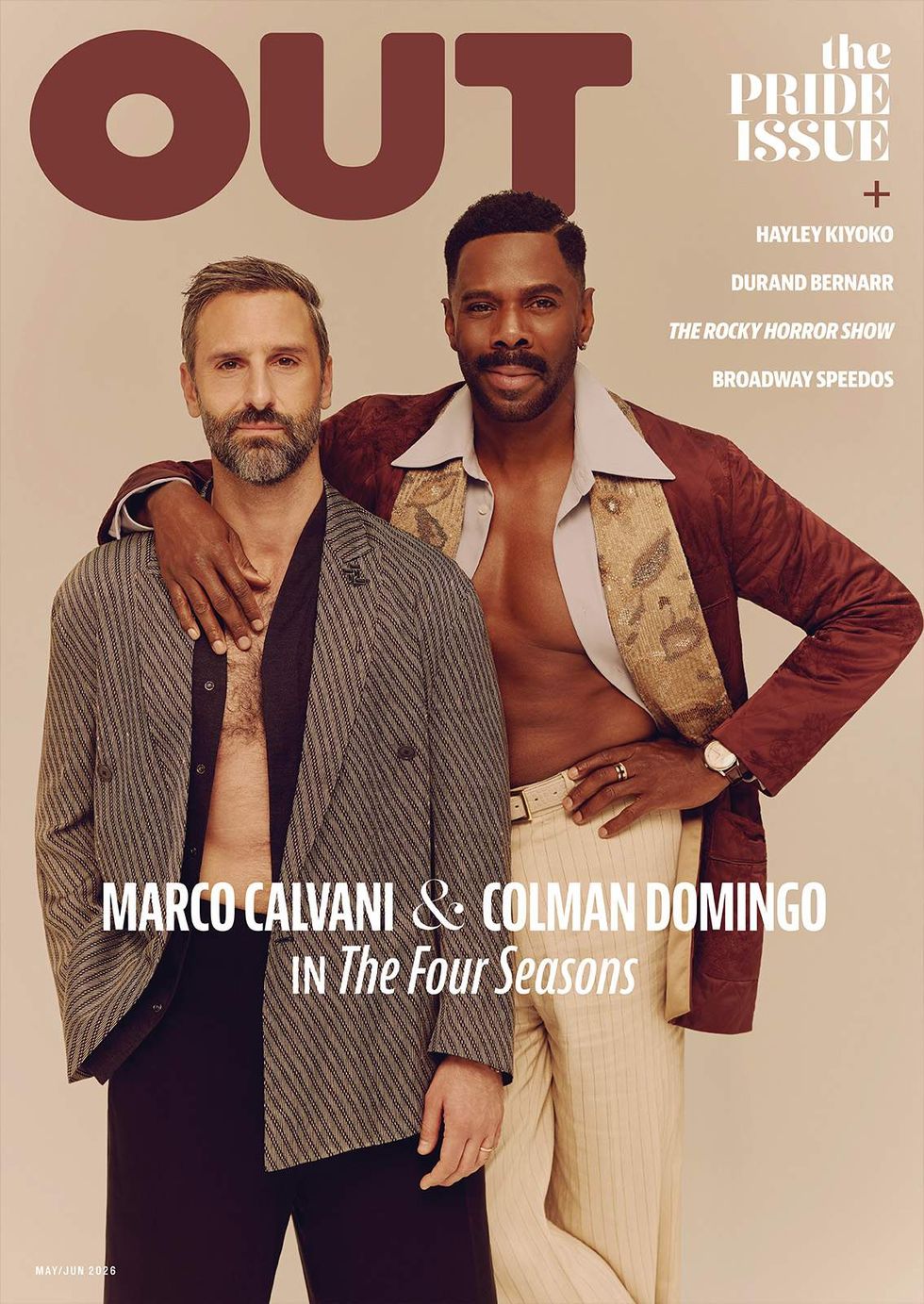 Marco Calvani and Colman Domingo on the cover of Out magazine's May-June 2026 issue
This article is part of Out’s May-June 2026 print issue, which hits newsstands May 26. Support queer media and subscribe — or download the issue through Apple News+, Zinio, Nook, or PressReader.