


This story originally appeared on The Advocate.
The upcoming U.S. midterm elections feature a heavy level of focus on Americans’ sex and gender. Millions of dollars have been spent on political campaign ads picking apart candidate positions on policies that impact transgender people. From sports, to health care, to identification documents and beyond, this election season is full of heated debates about policies that aim to define or restrict Americans’ abilities to live their lives based on their gender or their sex. When discussing these topics, it’s important to define terminology:
- Sex: Usually assigned at birth, a person’s sex is determined by medical professionals based on biological and physical characteristics such as chromosomes, hormones, and reproductive anatomy.
- Gender: A person’s gender refers to the behaviors and expressions that a given society ties to someone’s sex.
In the U.S., there have been many recent attempts to oversimplify scientific reality to fit neatly into political narratives. For example, the current administration’s day one executive order declared, “It is the policy of the United States to recognize two sexes, male and female. These sexes are not changeable and are grounded in fundamental and incontrovertible reality.”
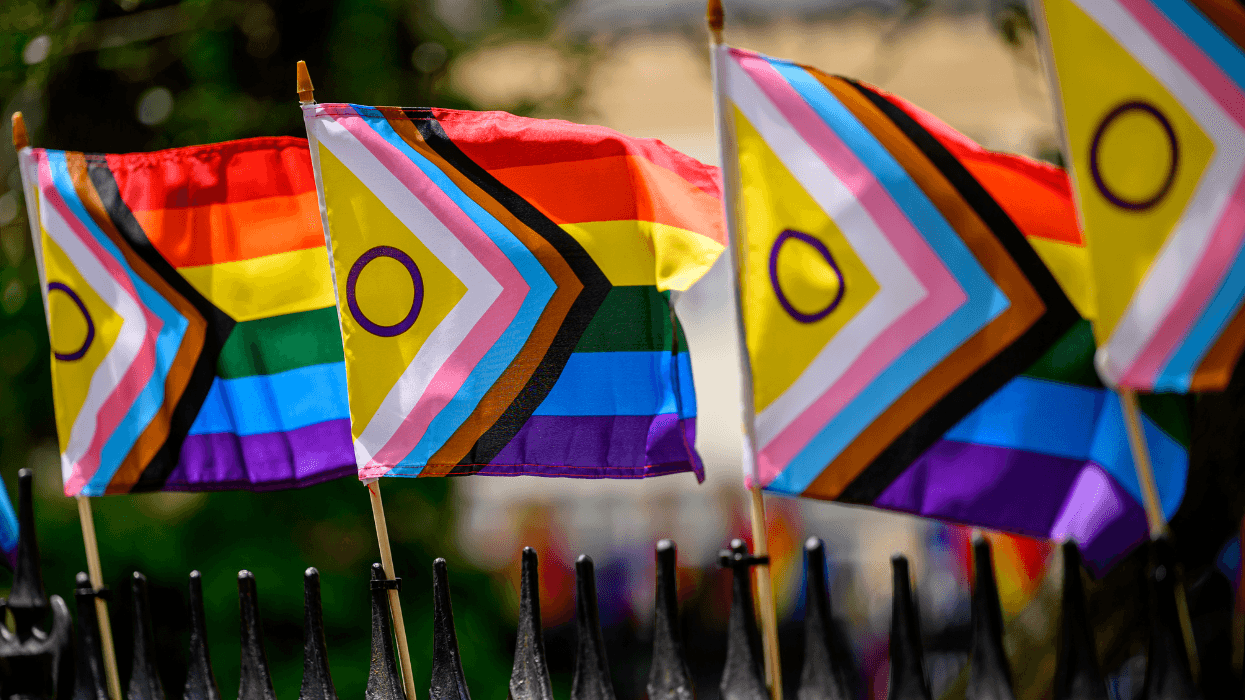
Calling something an “incontrovertible reality” does not make it true. In fact, scientific reality has long determined the opposite; there are numerous instances in which a person’s sex does not fit neatly into one of two categories: male or female. One of the most notable examples of this reality is the estimated one to two percent of people worldwide who are intersex.
InterAct, the country’s leading advocacy group created for and by intersex people defines intersex as “an umbrella term for differences in sex traits or reproductive anatomy. Intersex people are born with these differences or develop them in childhood. There are many possible differences in genitalia, hormones, internal anatomy, or chromosomes, compared to the usual two ways that human bodies develop.”
Each year on October 26th, the intersex community and their allies observe Intersex Awareness Day, a global recognition dedicated to spreading awareness of the intersex community and addressing the injustices they face. The date holds significance. Thirty years ago, on October 26, 1996, the first public demonstration by intersex people in the U.S. took place at the American Academy of Pediatrics’ annual conference. On that day, intersex advocates and their allies rallied together to call attention to the non-consensual, medically unnecessary surgeries that many intersex individuals are forced to undergo during infancy and early childhood.
While much has changed in the 30 years since 1996, misinformation and misconceptions about intersex people remain. The same is true for sex and gender more broadly, in the U.S. In many ways, while science and understanding of sex and gender have advanced, the politics of these topics continue trying to push us backward. But, it shouldn’t have to be this way.
If you’ve never met someone who is intersex, or come across language like this, it’s understandable to have questions. But that doesn’t mean we need to ignore, or fear, a group of people that we simply may not be familiar with ourselves. Policies that aim to define or restrict a person’s sex or gender are not rooted in scientific reality; they’re based on political ideology.
Learning more about people through both science and society is a good thing. As we become adults, the simple black and white boxes we were taught about as children tend to look a lot more gray – and they multiply. That is something we should embrace, not fear.
At its highest estimation, the percentage of people in the world who are intersex is comparable to the percentage of people who have red hair. At its lowest estimation, it is akin to people who are identical twins. Maybe you’ve met someone with red hair, or someone who is an identical twin. For most of us, it would probably seem outrageous to think, “let’s have separate laws that restrict the lives of red heads, but don’t apply to people with any other color hair.” That same type of thinking should apply to people who are intersex, or transgender, or any other identity that may be different from our own.
The simplest answer isn’t always the right one, or the only one. As science advances, so does our humanity. When we grow up, learn new things, and meet new and different kinds of people throughout our lives, the coloring book lines we were told to stay inside of as children tend to fade. We realize that there are more pages, and more coloring books that, maybe, we didn’t even know existed before. That process of evolution shouldn’t cause us to feel fear or hostility toward other people. It should remind us that learning and growing are natural phenomena, essential to the human experience.
Zach Eisenstein is the Director of Communications & Public Engagement Campaigns at The Trevor Project, the nation's leading suicide prevention organization for LGBTQ+ young people.
Opinion is dedicated to featuring a wide range of inspiring personal stories and impactful opinions from the LGBTQ+ community and its allies. Visit Out.com/submit to learn more about submission guidelines. We welcome your thoughts and feedback on any of our stories. Email us at voices@equalpride.com. Views expressed in Opinion stories are those of the guest writers, columnists, and editors, and do not directly represent the views of Out or our parent company, equalpride.