

In the column Straight Nonsense, columnist Moises Mendez II takes a queer eye to the insanity of straight culture.
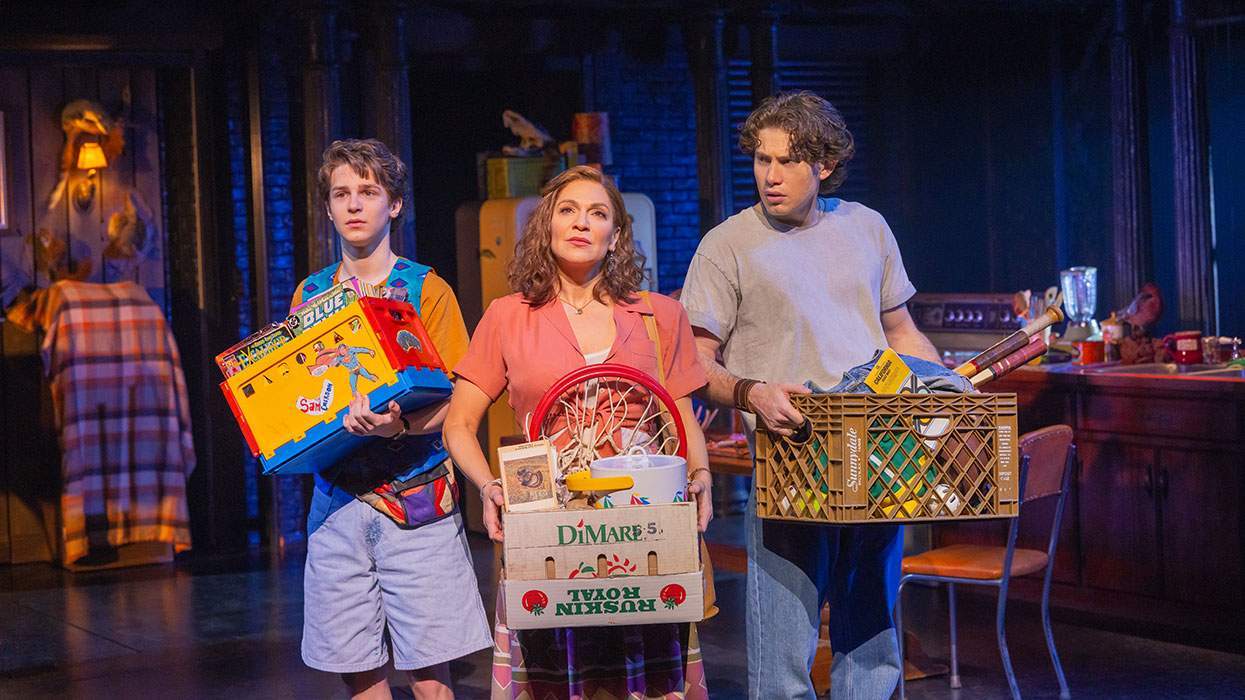
I can’t stop thinking about a Vulture interview with Michael Arden, the openly queer, critically-acclaimed, two-time Tony Award-winning director of Parade, Maybe Happy Ending, and now, The Lost Boys, his newest production that was nominated for an eye-opening 12 awards. The part that stood out to me was when the journalist conducting the interview asked about the homoeroticism embedded in the original 1987 movie, which the show is based on. Arden concedes there is some queerness, as the show is about redefining family, but he seems apprehensive about explicitly calling one of the characters gay.
Jason P. Frank, the interviewer, tells Arden that the “gay stuff” seems to go to Sam (Benjamin Pajak), the younger brother character, who has a photo of Rob Lowe in his closet and is fashion-forward. In the show, Sam has a song called “Superpower,” where he boldly declares that maybe “being queer is his superpower.” But Arden says that this song is “not about [him] being gay,” and that it’s a reference to his mother calling him “queer,” as in weird. Arden goes on to say, “He’s actually reclaiming the word in terms of it meaning, ‘strange,’” and said, “I think that’s so beautiful. But in that moment, he’s not like, ‘I’m a gay man,’ at all.”
The interviewer then rebuts with the argument that the lighting is rainbow, to which Arden counters, “We wanted it to work on two levels. The rainbow means a lot of different things to many people.” Frank curtly responds, “Sure,” which is exactly how I viewed this interaction, because it became the catalyst to a question that’s been rattling around in my brain for a few weeks now: Is Broadway obscuring its queerest tendencies as a way to market shows to a broader audience? To me, it seems as though Arden was not trying to pigeonhole this production as a queer show because not only would it change the marketing of its strategy and tone, but it could also risk alienating conservative out-of-towners who are just expecting a show about teenage vampires.
At this point, you might be saying, “Moises, this is the season with Cats: The Jellicle Ball and The Rocky Horror Show, how can you say that Broadway seems to be retreating from highlighting the queer community when these two shows exist?” I’d point you to the rest of the 2025-2026 slate and ask: Which other shows were explicitly queer in the same way? The argument could be made for Dog Day Afternoon, which is about a man robbing a bank to get the money for his transgender partner's gender-affirmation surgery, but the marketing for the show focuses mainly on it being about the robbery itself rather than its purpose.
Or take Schmigadoon!, for example, a show about a straight couple that gets stuck in a musical land where they’re forced to figure out their relationship woes before being able to return to the real world. There is a storyline that the town's mayor, Aloysius Menlove, is secretly queer and in love with the pastor in town. Being that this production is built on the back of a popular, Emmy-winning television show that has the same storyline, that part isn’t much of a secret for fans. But I know that a lot of people will be going into the Broadway production without having seen the Apple TV series (mainly because Apple has been widely criticized for not marketing the show well enough). The show uses the gay storyline for laughs, which isn’t the issue. In my opinion, you would think the gay mayor would be featured in a promo for the show during Pride, but he isn’t. The actor portraying him, Brad Oscar, is not a lead and did not receive any Tony noms for the part, so I can see why that may be the case. But they have had an opportunity to include highlighting this queer character in their promotional strategy and haven’t seemed to take it yet.
Schmigadoon! is just a small example, sure. Let’s take the Tony Award nominations, being that the awards ceremony is on Sunday. Imagine my surprise when “Tempress” Chasity Moore wasn’t nominated for her stunning turn as Grizabella in Cats: The Jellicle Ball. Her rendition of “Memory” brought me to tears and to my feet when I saw her perform it at the Perelman Performing Arts Center in 2024, and I was overcome with emotion two years later when the show finally got its well-deserved Broadway transfer.
@kevincassdirector121 Chasity Moore performing MEMORY on Broadway. Cats the jellicle Ball. They will win the Tony for best revival !! #cats #broadway #revival #newyork #musicaltheatre
The queer acting snubs were also notable this year. While I wasn’t the biggest fan of The Fear of 13, I can recognize talent when I see it, and Tessa Thompson’s raw, emotional performance in the play deserves a nod in the featured actress category. Her steadfast delivery and the use of chameleonic abilities to morph in seconds to whatever that scene needed in that moment was a sight to behold. I would also go out on a limb to include Adina Verson in this conversation as well for their performance in the most-talked-about play of the season, Liberation. If this production doesn’t take home Best Play, I will lose all hope in the Tonys, because it’s hard to recall the last time I was this emotionally affected by a Broadway show, and Verson’s character had a big part in that. Playwright Bess Wohl would also be the fourth woman in Tony history to take home this award and the first since 2009.
Broadway has always been, and will always be, inherently queer. The financial headwinds and the dilution of its cultural cache seem to be forcing the hands of the Powers That Be to broaden the theatergoing market because the business is struggling. It's become increasingly expensive to put on a Broadway show, thereby raising ticket prices for some stagings that may be difficult to justify. With each passing year, Broadway seems to keep taking one step forward and three steps back, untying one small knot of rubberband ball of issues. The lack of queer talent in the Tony Awards nominations and queer stories being told onstage is a sizable issue that the Broadway community needs to notice — before it's too late.
Moises Mendez II is a freelance culture writer based in Brooklyn, New York. Follow him on Instagram @moisesfenty.
Voices is dedicated to featuring a wide range of inspiring personal stories and impactful opinions from the LGBTQ+ community and its allies. Visit out.com/submit to learn more about submission guidelines. We welcome your thoughts and feedback on any of our stories. Email us at voices@equalpride.com. Views expressed in Voices stories are those of the guest writers, columnists, and editors, and do not directly represent the views of Out.