

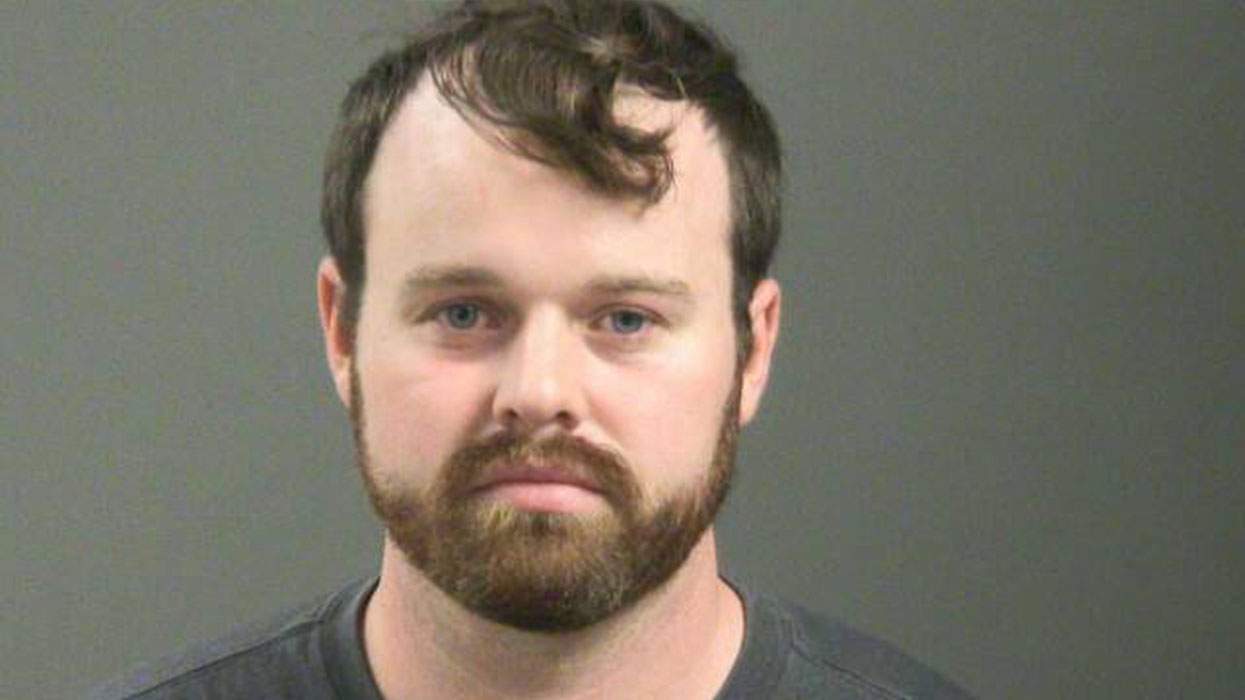

The latest headline about Joseph Duggar — the former 19 Kids and Counting star was arrested after allegations that he molested a 9-year-old girl six years ago — follows a pattern that is, by now, painfully familiar. A child. A trusted adult in a private setting. A disclosure that comes years later, when the cost of speaking has already been paid in silence.
But this story does not emerge from nowhere. The deeply religious Duggar family built its public identity on a highly visible, deeply patriarchal form of conservative Christianity, one that emphasizes male authority, female purity, and rigid family hierarchy. (Their TLC show was axed in 2015 after Josh Duggar, Joseph's elder brother, was found to have molested five kids, including four of his sisters.) That structure was not incidental to their fame. It was the product. And it is part of what makes stories like this so difficult to understand as isolated incidents rather than expressions of a broader system.
It is tempting to treat this as another scandal, another fallen public figure, another story that will move through the news cycle and disappear. But what these cases expose is not just individual behavior. They reveal environments where harm can occur quietly, where disclosure is complicated, and where the response is often shaped less by the child's needs than by the need to preserve the system around them.
I know something about that, though my own experience did not happen inside a church.
I was 11 when an adult friend of my family raped me. What happened to me did not take place within any religious institution, and it is important to say that plainly. This is not a story about one religion producing one kind of harm.
But I did grow up in Kirtland, New Mexico, in a region where religion shaped daily life in ways that were both visible and deeply embedded. Some of my closest friends were Mormon. Many have since left the church, while others have stayed. And in communities like mine, which can veer closer to more insular, fundamentalist offshoots such as the Fundamentalist Church of Jesus Christ of Latter-Day Saints, certain patterns are widely understood, even if they are rarely spoken about directly.
I had friends who were girls who experienced sexual abuse within those environments, sometimes at the hands of people inside their own families. And what people knew, even if they did not say it out loud, was how those situations were often handled. When a parent discovered what was happening, the instinct was not always to go to the police. It was to go to the church. The response would take place internally, through counseling, through spiritual intervention, through processes framed as protecting the family, but which also had the effect of keeping everything contained. The harm did not disappear. It was managed in a way that shielded the system, and often the person responsible, from outside scrutiny.
That is what patriarchal systems do at their most effective. They do not just establish authority. They shape the conditions under which harm can be named, and the limits of what accountability is allowed to look like.
What happened to me unfolded differently in structure, but not entirely in outcome.
I was an effeminate kid. I was already seen as different, already read in ways that made adults uncomfortable. And when I said what had happened to me, there were people who decided almost immediately that I must be lying. That I was looking for attention. That I was performing something rather than surviving something.
Even after a medical examination confirmed that I had been assaulted, the story did not fully correct itself. Because once people land on a narrative that protects their sense of order, they tend to hold onto it. Some shifted to a different explanation, one that was somehow worse. That maybe it had happened, but that I had participated in it. That an 11-year-old boy could be responsible for what an adult man did to him.
What connects my experience to stories like this one is not the specific setting. It is the response.
It is the instinct, again and again, to protect the adult, to preserve the structure around him, and to look for reasons why the child might not be telling the truth. It is the quiet recalibration that happens in rooms where people decide what they are willing to believe, and what would be too disruptive to accept.
Research increasingly reflects what many survivors already know firsthand: Child sexual abuse is not randomly distributed. It is more likely to persist in environments that are insular, authority-driven, and resistant to outside scrutiny. When institutions prioritize hierarchy, obedience, and internal resolution over transparency and accountability, abuse becomes easier to conceal and harder to challenge.
In patriarchal systems, that is not a failure. It is a function.
Girls are taught to be careful, to be modest, to understand their bodies as something that can provoke harm. Boys who do not conform to expectations are treated as suspect, unreliable, or somehow complicit in what happens to them. In both cases, responsibility shifts away from the person causing harm and onto the person experiencing it.
That is how abuse survives in plain sight. Not because people do not know, but because they know in a way that allows them not to act.
The Duggar story is not shocking because it is rare. It is recognizable because it is not rare. And until we are willing to confront the systems that make these patterns possible, not just in one family or one church, but across communities that prioritize authority, reputation, and control over accountability, these stories will continue to unfold in the same way: a child, a trusted adult, a private setting, and years of silence that everyone, on some level, agreed to keep.
Josh Ackley is a political strategist and the frontman of the queerpunk band The Dead Betties. @momdarkness @thedeadbetties
Opinion is dedicated to featuring a wide range of inspiring personal stories and impactful opinions from the LGBTQ+ community and its allies. Visit out.com/submit to learn more about submission guidelines. We welcome your thoughts and feedback on any of our stories. Email us at voices@equalpride.com. Views expressed in Voices stories are those of the guest writers, columnists, and editors, and do not directly represent the views of Out or our parent company, equalpride.