

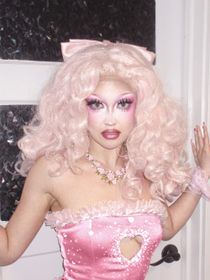
I’m a trans man who performs as a drag queen — and pink has always been my favorite color. I was born a girl and shoved into frilly pink princess dresses before I could walk. You might expect me to say I hated it, that I always felt uncomfortable in my own skin. What is true for cis men is also often assumed of trans men — that we only like masculine things. But the truth is, being transgender is much more complex than that.
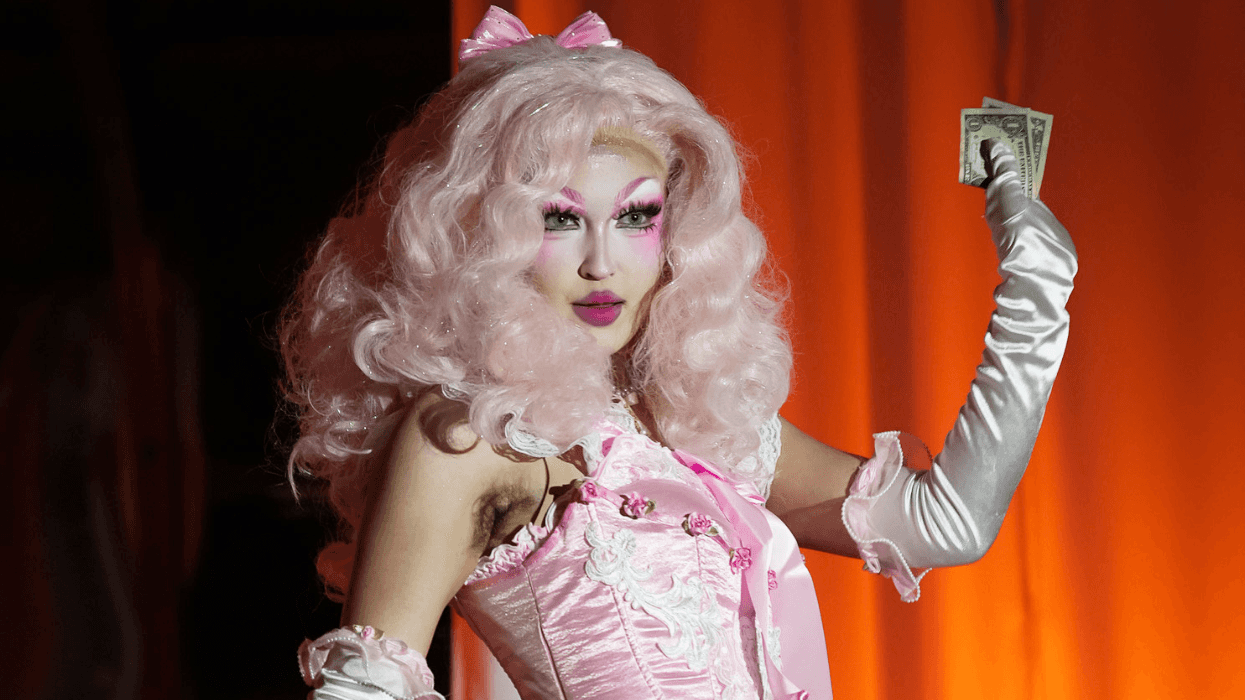
My name is Juniper Brown, though some know me by my drag queen stage name, Lady Guinea Pinks.
My identity has never fit neatly into traditional gender roles. To be clear, my performances kill on stage — but I wasn’t always this comfortable in the spotlight.
In my earliest years, my family was unstable, and I moved between foster homes as parental figures stepped in and out of my life. With no stability in my environment, I struggled to find stability within myself. Judgment became the language around me, laying the foundation for debilitating anxiety.
Experiencing household dysfunction — such as parental separation, divorce, abuse, or neglect — is considered an Adverse Childhood Experience (ACE). Research shows that the more ACEs a young person has, the more likely they are to face long-term mental and physical health challenges well into adulthood.
As a young person grappling with my identity — girl, boy, or beyond — engaging with the world felt like stepping into something I didn’t understand and couldn’t explain. I tried on different masks and felt hopeless.
I grew up too quickly, and when I hit puberty at age 8, the weight of being a girl was thrust upon me all at once. Something within me shifted. As my peers aligned with girlhood, I felt disconnected. In my attempts to feel comfortable with myself, I rejected all that pink I had once held close. I instead clung to traditionally “boyish” things, eschewing all that was considered “girly.” It wasn’t until I was a teenager that I was able to revisit femininity as an expression of my own.
But not conforming has consequences, and being misunderstood and humiliated by my peers terrified me to my core. As a result, I developed agoraphobia — the fear of going outside — and for six years, I rarely left the house. Staying home made me invisible — and that felt safer than being seen.
The longest I went without going outside was eight months, and I was swallowed by darkness and depression. It wasn’t until my vitamin D levels tanked and my skin grew pale and translucent that I took the leap to seek help. I found mental health support and discovered queer-affirming youth groups filled with people who understood me. I also found martial arts classes at a dojo that embraced my identity. I finally connected with a community that saw me for who I really was.
Therapy gave me the language to understand my anxiety, to manage my agoraphobia, and to explore the parts of myself I had pushed into the dark. I also helped develop California’s Live Beyond campaign, which teaches youth and young adults about ACEs, and through that work, I began to understand the steps I could take to heal — and how my voice and experiences could help others.
Through this journey of safety and support, I was able to reclaim my femininity on my own terms. It was no longer about playing a role I was expected to play. Instead, femininity became a tool of expression — a way of reconnecting with the parts of me that had always been there. The crescendo of that exploration was stepping into the art of drag.
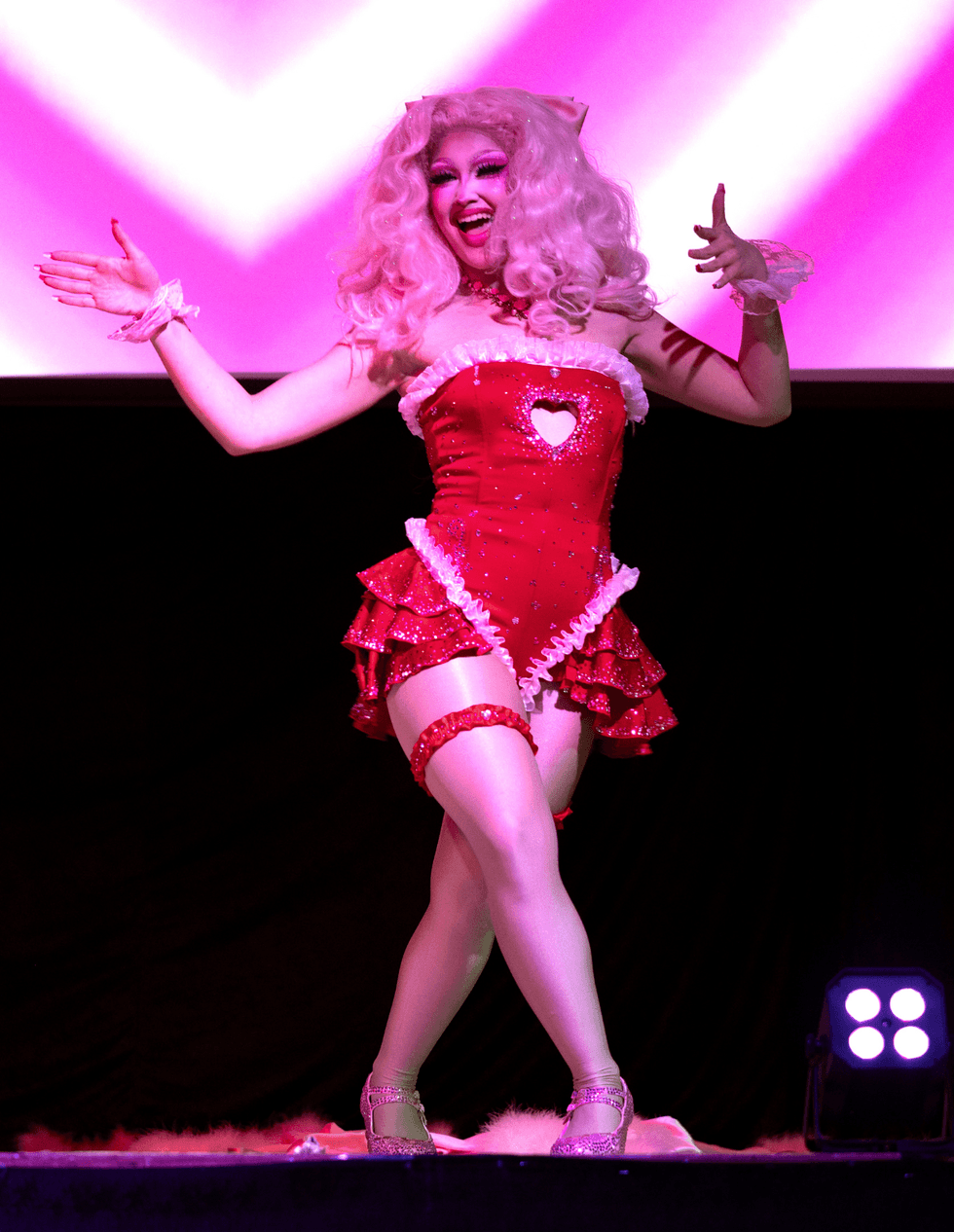 Lady Guinea Pinks performs on stage in a red sequined corset with a heart cutout under pink lighting.Cesar Ruvalcaba (@cesar.pics)
Drag gave me a space where my femininity wasn’t questioned, but celebrated — where it existed alongside my transmasculine identity, not in conflict with it. On stage, enveloped in the pinks, pearls, and ruffles I’d always adored, I felt most authentic. It was not a mask that hid my identity, but the truest reflection of it. I was finally visible in the way I chose to be. Most importantly, it was the first place where my agoraphobia couldn’t touch me.
And it all started with asking for help.
Therapy didn’t change who I was — it gave me the foundation and support to be a man and still step into the dresses I always wanted to wear. Today, I live beyond fear, shame, and the boxes I once forced myself into. Performing as Lady Guinea Pinks allows me to reconcile and integrate both my masculine and feminine sides without sacrificing my integrity, and to fully show up in the outside world. In my healing, I finally live beyond the walls that once kept me inside.
Juniper Brown is a 20-year-old pre-veterinary medicine student and drag queen performing under the name Lady Guinea Pinks. They have long been engaged in queer advocacy while also serving as a Young Adult Advisor for Live Beyond, the state of California's Adverse Childhood Experiences awareness campaign.
Opinion is dedicated to featuring a wide range of inspiring personal stories and impactful opinions from the LGBTQ+ community and its allies. Visit Out.com/submit to learn more about submission guidelines. We welcome your thoughts and feedback on any of our stories. Email us at voices@equalpride.com. Views expressed in Opinion stories are those of the guest writers, columnists, and editors, and do not directly represent the views of Out or our parent company, equalpride.