

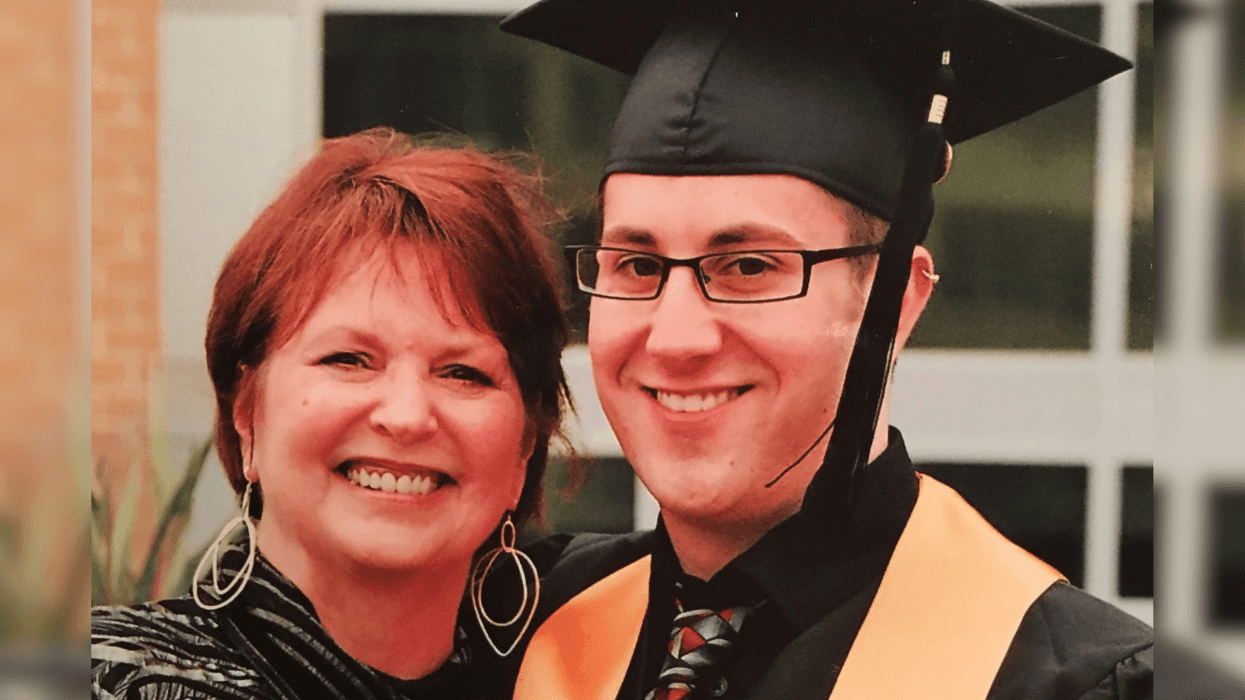

My mom was on a roll, cycling through names from my childhood the way she did when she was feeling good – checking in on people I hadn't thought about since graduation. I answered, filled in what I knew, and made up the rest. The usual.
Then her questions drifted somewhere else.
"Is she married now?" she asked about the last girl I'd dated by name, before I came out, four years prior. "She was such a nice girl. Is she seeing anyone?"
My mom said it with the same voice you'd use to recommend a Roth IRA. Just a mother happily matchmaking with a woman and a life I hadn't thought about in years. She wasn't hoping I'd come back around – she didn't remember.
That entire chapter – my coming out – had been erased by her brain surgery. I sat there, phone against my ear, agreeing I hadn't heard from my ex-girlfriend. Discussing a future that didn't exist. Wouldn't exist.
I had to come out to my mother again. The reboot nobody asked for.
I'd already walked through this fire once. Now someone was handing me the match and asking me to light it myself.
I was 23, sitting at my desk buried in Spanish flash cards, when my mom called and said two words: "two aneurysms." The world stopped.
Open cranial surgery, scheduled within the week. Nobody could tell us which version of her would wake up.
The surgery went fine – mostly. Then came the after: her memory skipping, her handwriting shrinking to nearly nothing, her sense of smell gone for good. A follow-up scan explained why. Somewhere on the table, a mini-stroke had happened too – one nobody caught at the moment.
It took 18 months before I worked up the nerve. She was still too precarious to drop a bomb on. But the longer I stayed quiet, the more it felt like I was keeping a secret instead of showing restraint. So I decided it had to happen in person, on a trip I'd already had planned.
Leesburg, a suburb of Albany, is barely three hours south of Atlanta, but it might as well be a different decade – a town of under 3,000 people where the biggest recent news was getting a Publix to replace the Piggly Wiggly. Every mile down I-75 put more distance between the man I'd worked hard to become and the scared kid who knew he was different and couldn't say why.
We ended up at Mellow Mushroom in Albany, a mural of music legends running the length of the wall behind her – Elvis, Hendrix, the Chili Peppers, No Doubt. I made small talk until it felt right, then nudged her toward the last girl I'd dated. She lit up. Told me she couldn't wait to see grandbabies from me someday.
Gwen Stefani stared down from the mural with a look that said "Don't Speak," just sip. I took the advice. Drained my glass and flagged the waiter for a second.
"Mom," I said, "about five years ago, I wrote you a letter. You got pretty emotional when you read it. Do you remember that?"
She paused, then gave a slow, gentle shake of her head.
I reached across the table and put my hand over hers. "It's OK. You're here. You're alive. That's what matters." Then I pushed ahead anyway. "I need to tell you something, and I need you to understand that we've already had this conversation once."
She went still, eyes fixed on me, waiting.
"I'm gay."
She reached for her lemon wedge, squeezed it into her tea, and met my eyes – checking, I could tell, for a piece of context she'd overlooked.
"Are you sure?"
The comedian in me wanted to call out the obvious, if only in my head. "Mom, I memorized every word of Jagged Little Pill when I was 10 and was never shy about it. I've had a skin care routine since Clinton was in office. Left field feels generous."
I didn't get to answer before the food arrived and I was grateful for the interruption. Frustrated, but not angry – none of this was her fault.
I hated that we were starting from the same place all over again – and I knew, even if her face didn't fully show it, that some part of her was breaking open a second time. So I gave myself one rule: My feelings could wait. As far as she knew, this was the first time she was hearing it – which meant somewhere in her head, the future she'd imagined for me had ended. Me, married to a woman, three kids deep, thriving in the suburbs. Gone, mid-bite, at a Mellow Mushroom in Albany, Georgia.
"Trey, I love you no matter what," she said finally. "I just worry about you. I don't want someone to hurt you because of this."
She meant it. In her mind, I'd just become an open target, and she was scared for me – the same way she'd have been scared if I'd told her I had polio. Growing up in the South in her era, that's about the only frame she'd ever been handed for it. And she wasn't alone – two years earlier, California had voted to ban gay marriage. If the state with the rainbow flags couldn't sort it out, South Georgia never stood a chance.
It could have gone worse. I've never once doubted her love was real, whole, or unconditional. But some part of me wanted the follow-up question anyway – who I was seeing, which celebrities I thought were attractive. I wanted her to treat it like news instead of a diagnosis. That part of me understood exactly what she was grieving. Because I was grieving it too.
Coming out the first time drained me. Doing it again was hell.
For a while, I only saw that afternoon as a loss – the version of her who might have asked about him the way she'd asked about the girl before. But a brain that had every reason to forget me handed me something I never could have engineered on my own.
What she did remember, before I'd even finished the sentence, was how to love me first and ask questions second. Two different versions of her mind, two different conversations – and somehow the same instinct came back both times. Not the worry. Not the discomfort. The love got there first.
Never thought coming out would need a sequel, but I still got the rare, strange privilege of watching her prove her love twice.
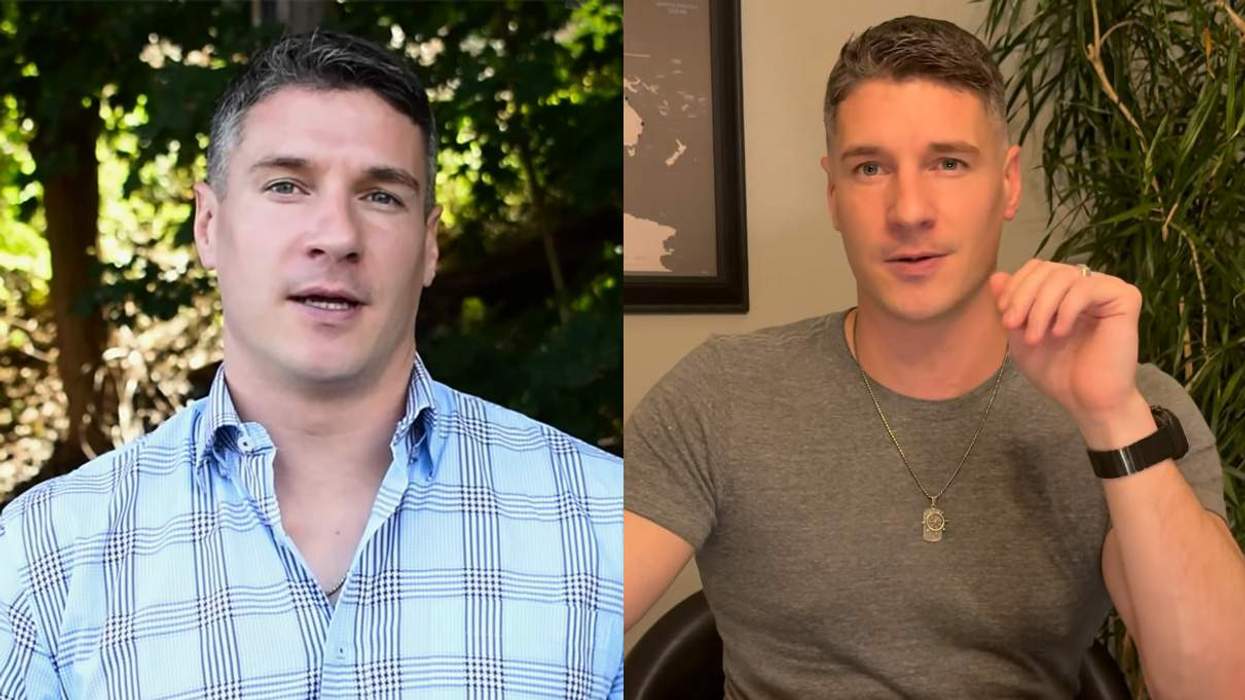
Trey Toler is a comedian, writer, and the author of the memoir Good Damage: Tragedy. Lightly Polished, with a Side of Optimism (Ripples Media, 2026).
Opinion is dedicated to featuring a wide range of inspiring personal stories and impactful opinions from the LGBTQ+ community and its allies. Visit Out.com/submit to learn more about submission guidelines. We welcome your thoughts and feedback on any of our stories. Email us at voices@equalpride.com. Views expressed in Opinion stories are those of the guest writers, columnists, and editors, and do not directly represent the views of Out or our parent company, equalpride.