
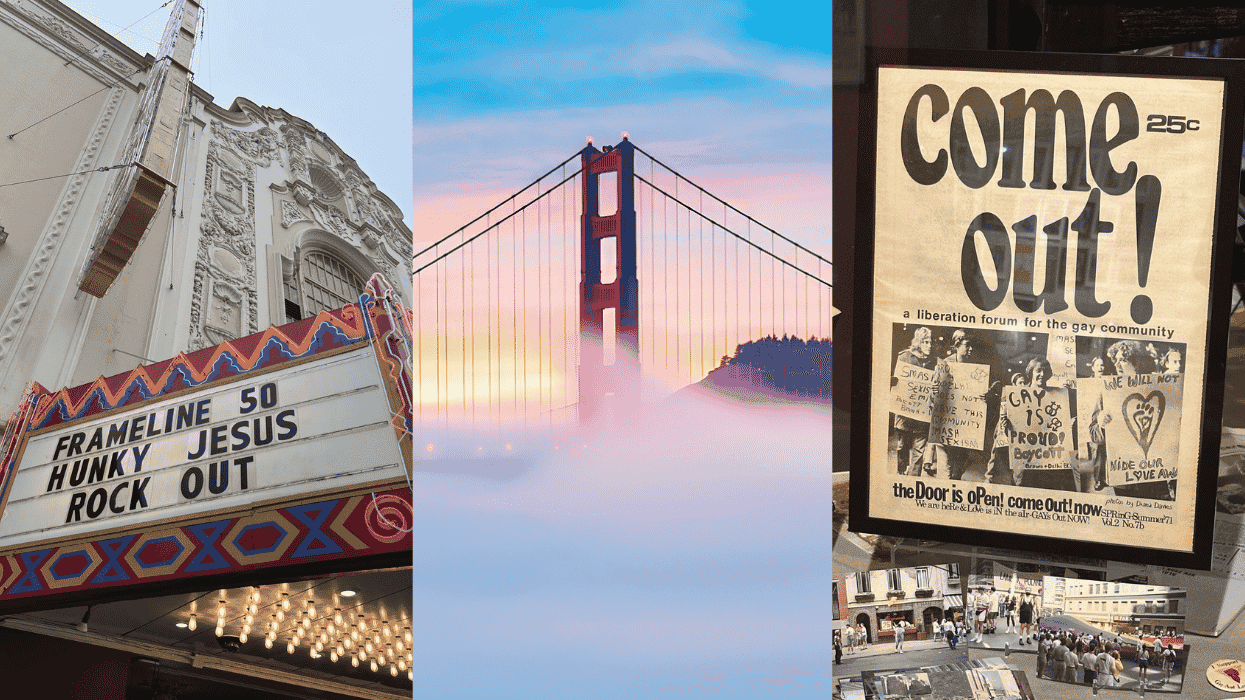
“The coldest winter I ever spent was a summer in San Francisco,” read a quote “maybe” attributed to Mark Twain outside of the Counterculture Museum, which is dedicated to 20th-century subcultures, at the iconic corner of Haight and Ashbury.
Twain may or may not have provided this temperature check of San Francisco last millennium. But during the city’s Pride weekend celebration in June this year, this forecast (at least initially) had some truth to it. Traveling from sunny Los Angeles, I decided at the last minute to grab my North Face fleece, which proved to be wise. Fog, wind, and spits of condensation greeted me as I exited the San Francisco International Airport to grab the BART train to my hotel, The Jay, near Union Square. In the mornings and nights, that jacket was a close friend.
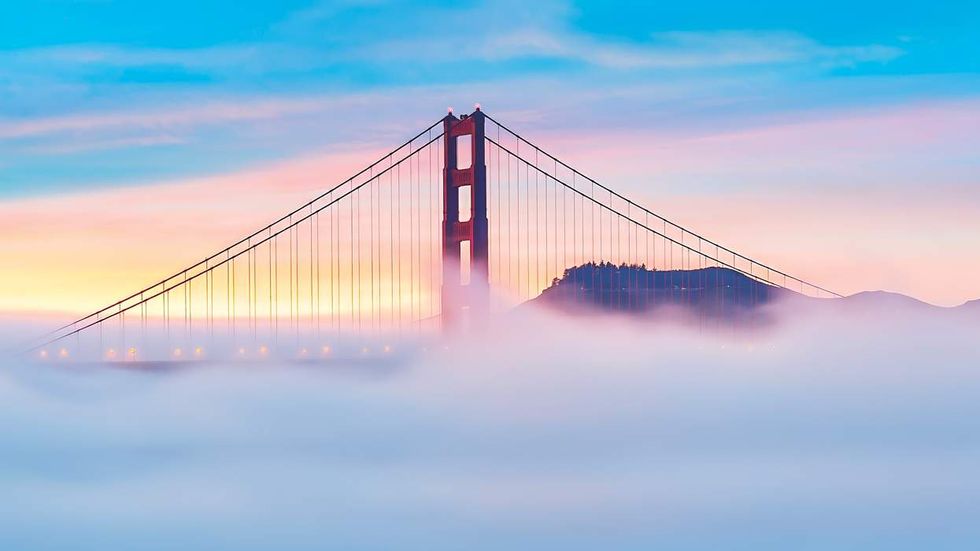 Golden Gate Bridge Somchaij/Shutterstock
Of course, the mist is part of the allure of S.F. I woke up each morning to dramatic views of the shrouded Bay, and was delighted when the wisps dramatically parted under the afternoon sun. And while San Francisco may be chilly for summer standards, the city’s year-round range (the 50s to low 70s) makes it an appealing travel destination in winter as well.
I had come to the city for its Pride festivities but also to explore it as a queer mecca. It did not disappoint. So much LGBTQ+ history happened — and began — in San Francisco that even walking down the sidewalk feels like a queer journey through time.
At the Counterculture Museum, I marveled at the typewriter that belonged to Allen Ginsberg, as well as a first edition of “Howl,” his landmark 1955 poem that famously gave testament to the “best minds of my generation destroyed by madness.” The Beat poets are prominently featured in this museum, as are posters, costumes, books, and ephemera from the anti-war and hippie movements. These items prove San Francisco’s central place in the history of countercultural revolution. And while the museum may not explicitly connect the dots, the collected stories of government forces trying to suppress youth and marginalized groups resonate strongly with today’s struggles against oppression.
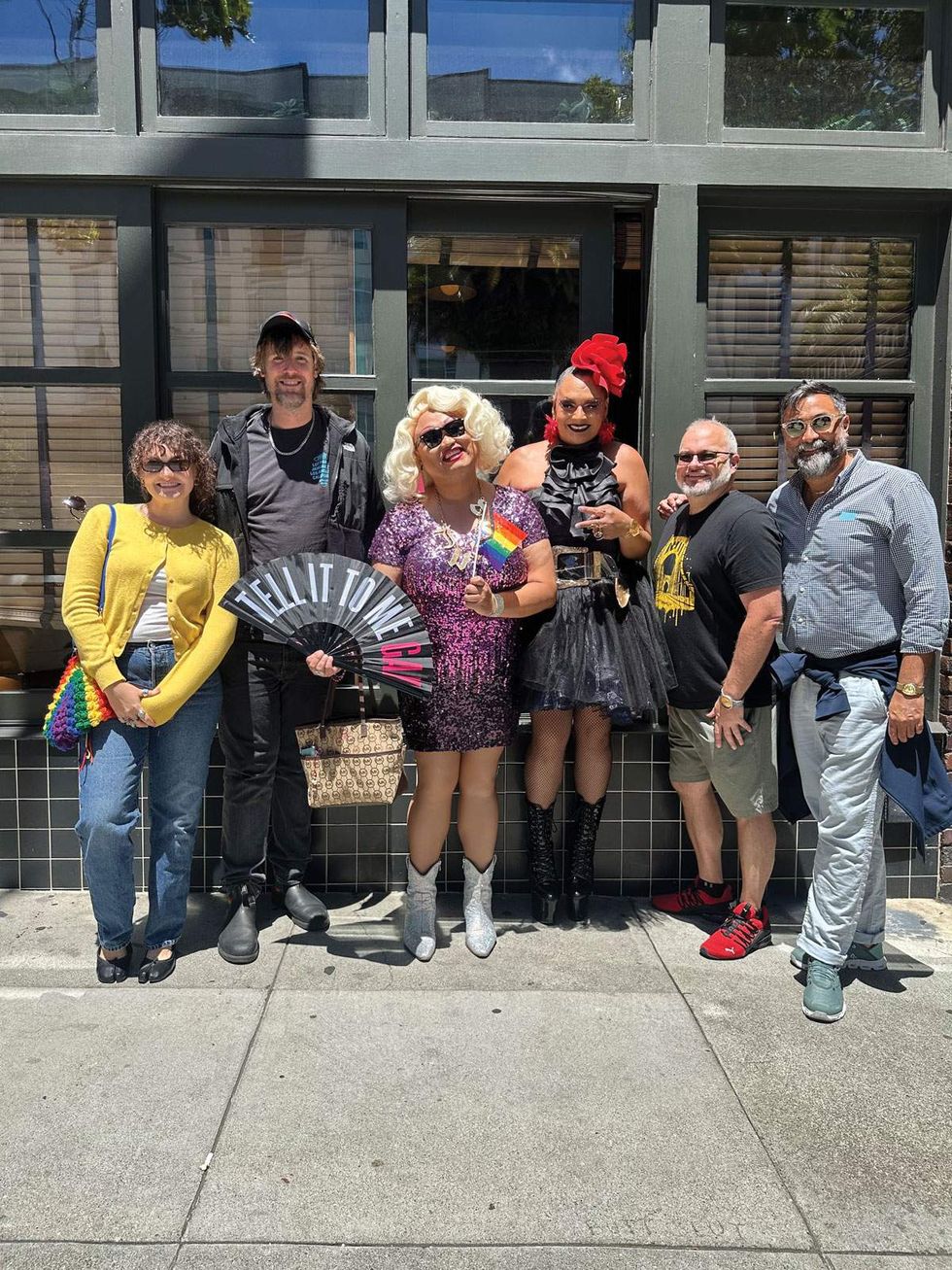 Caitlynn McDaniel, Daniel Reynolds, Juicy Liu, S.F. Drag Laureate Per Sia, Adam Dupuis, and Chad Belisario before brunch at Wooden Spoon.courtesy Daniel Reynolds
The Castro District is the heart of San Francisco’s LGBTQ+ community and history. Rainbow lights twinkled along the BART escalator as I exited into Harvey Milk Plaza, named after the assassinated gay political leader. The suit he was killed in, as well as personal belongings like his camera, whistle, and campaign shirt, are at the GLBT Historical Society Museum, which boasts a treasure trove of items from the LGBTQ+ movement. Executive director Roberto Ordeñana led my tour of the long-running “Queer Past Becomes Present” exhibit, which includes a costume worn by José Sarria, the first out gay political candidate and founder of the Imperial Court System. I was starstruck seeing the first Pride flag, designed by Gilbert Baker in 1978, on display just prior to the banner making a historic trip to Ireland. (Don’t worry, it will return to S.F. by year’s end.) At under 2,000 square feet, the museum’s current footprint is small but impactful in its displays, and planning is underway to move to a much larger location (over 11,000 square feet) on 18th Street.
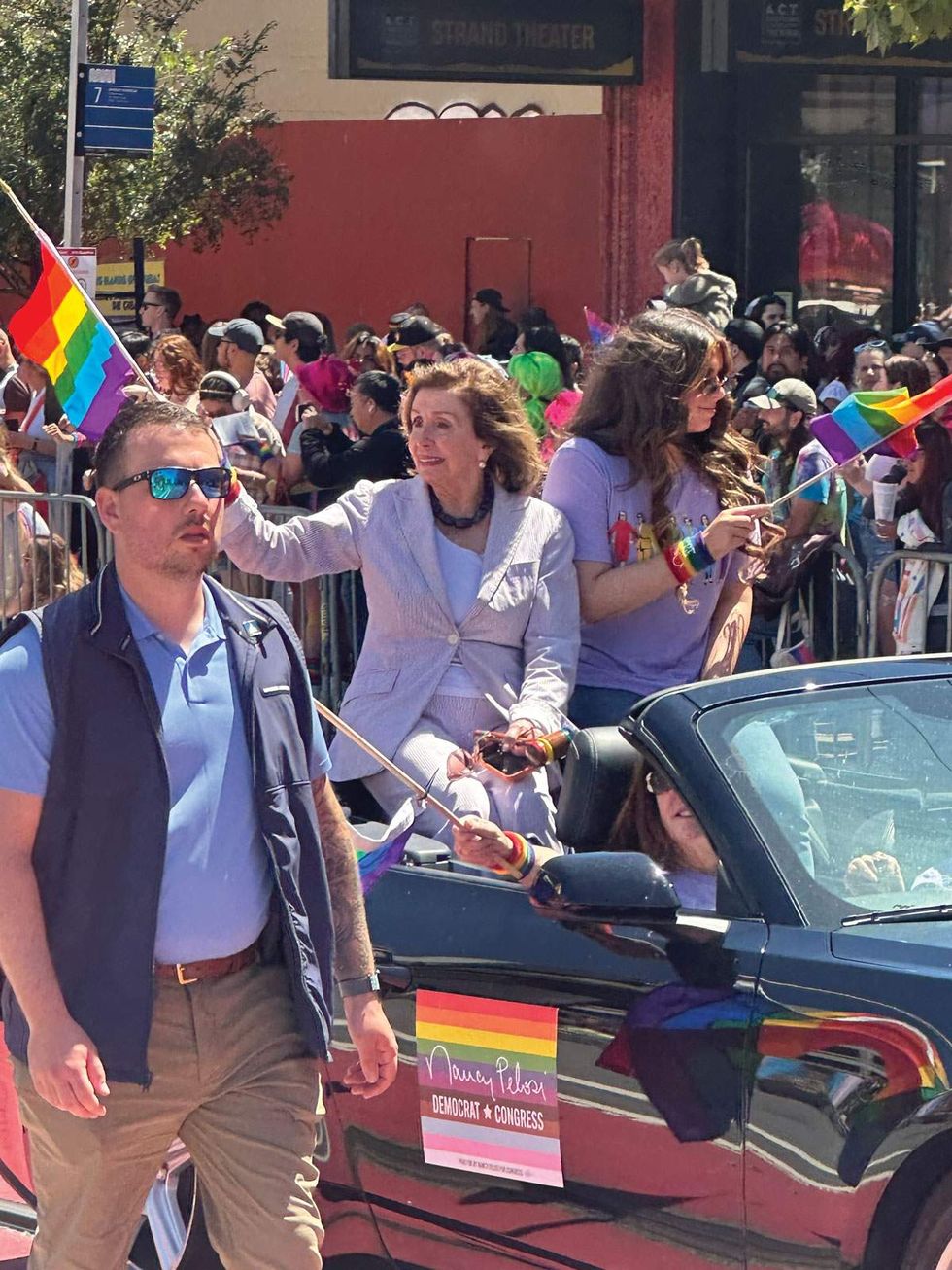 Rep. Nancy Pelosi waves a rainbow flag at the San Francisco Pride Parade.courtesy Daniel Reynolds
It takes a village to preserve queer history. In addition to local leaders like former Mayor London Breed and California State Senator Scott Weiner, Ordeñana praised the advocacy of Juanita More!, a local drag performer whose annual Pride bash was benefiting the GLBT Historical Society that year; to date, More! has raised more than $1.5 million for local charities with her party.
Frameline: The San Francisco International LGBTQ+ Film Festival was celebrating its 50th anniversary the weekend I visited. As part of the festival, I attended my first event at The Castro Theatre, an iconic 1922 movie palace that regularly hosts LGBTQ+ happenings. There, I caught a screening of Hunky Jesus, a documentary about the Sisters of Perpetual Indulgence, the order of drag nun activists that began in S.F. on Easter Sunday in 1979. (Hunky Jesus is the name of the group’s annual satirical competition in Mission Dolores Park, in which contestants creatively interpret Jesus and “Foxy Mary” through costumes and performances.) Sister Roma, a prominent member featured in the doc, led a blessing onstage alongside dozens of other nuns.
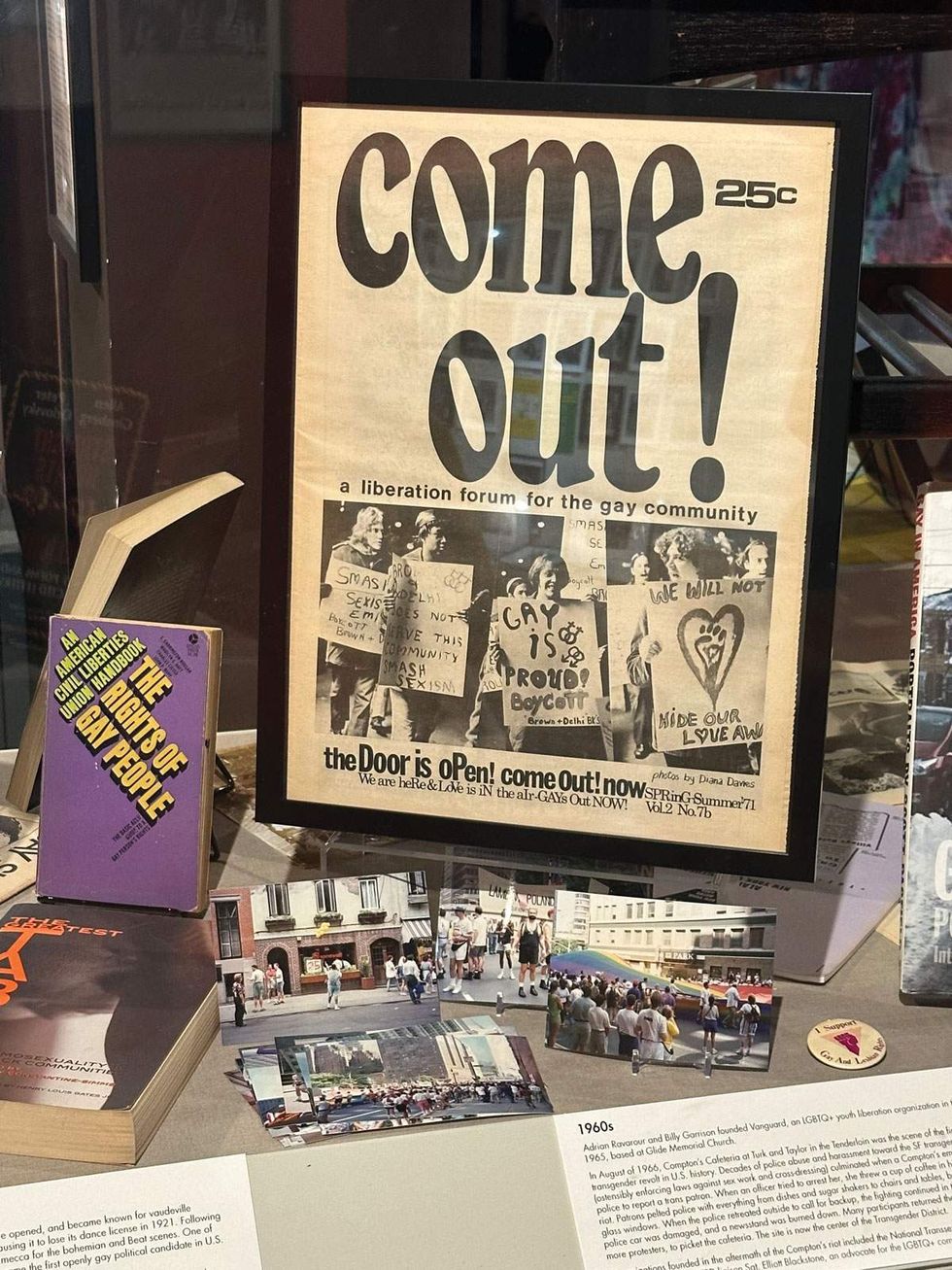 LGBTQ+ history on display at the Counterculture Museum.courtesy Daniel Reynolds
While in the Castro District, don’t miss grabbing a drink at iconic gay bars like Twin Peaks Tavern and Moby Dick. For a late-night stop, I tried (and failed) to get into the Badlands dance club, which had a sizable line, so I ducked into the nearby Last Call for a cozy nightcap.
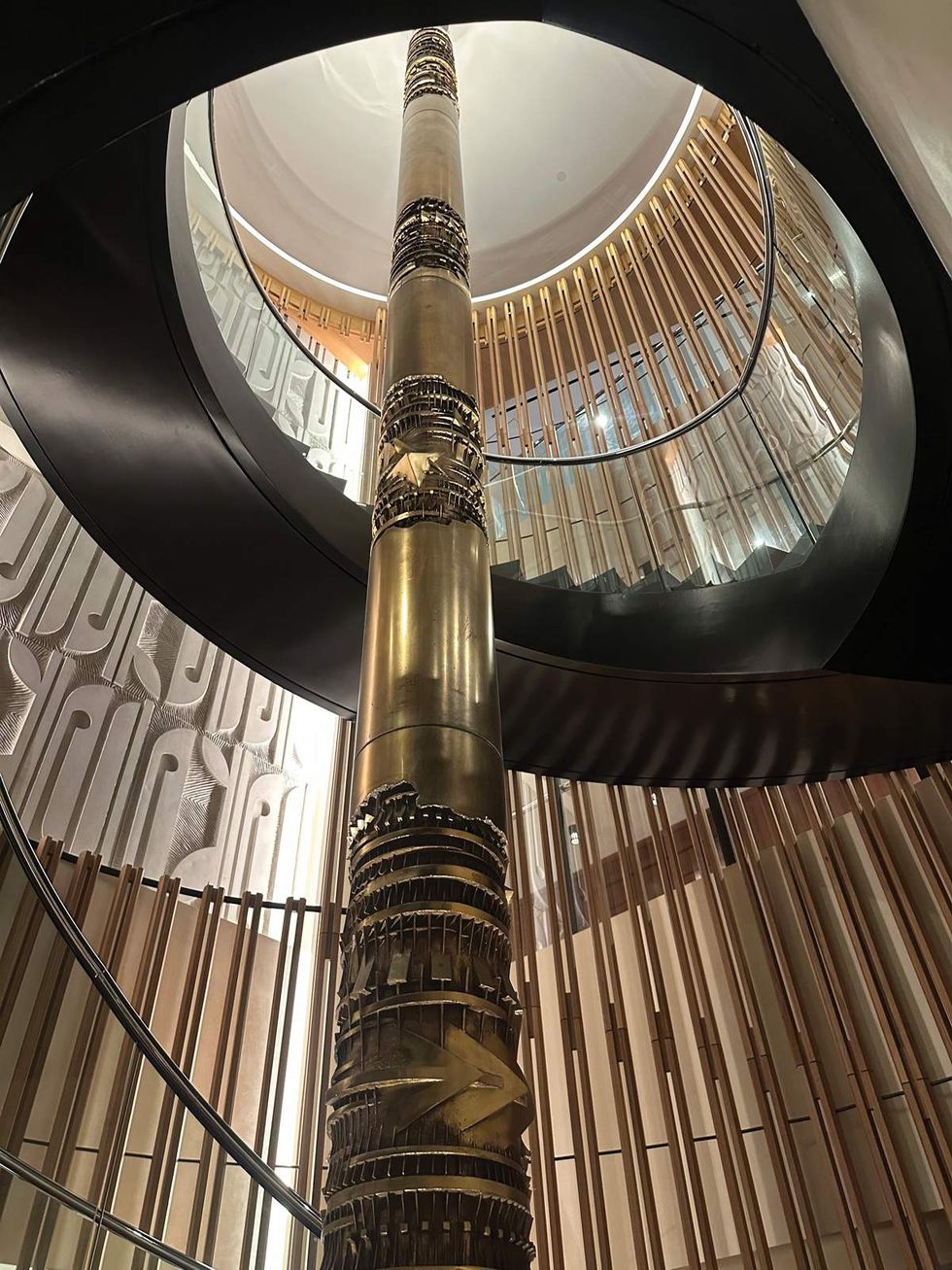 The Jay’s staircase spirals around a bronze totem designed by renowned Italian artist Arnaldo Pomodoro.courtesy Daniel Reynolds
Year-long, Mission Dolores Park is a major center of queer congress. I stopped by on a sunny Saturday afternoon during the city’s Dyke March. Groups of all kinds crowded the large green hill to drink, smoke, and enjoy stunning views of downtown. Many picnicked or even set up makeshift bars and living spaces, and I walked past several musicians playing to small crowds. There’s really no place like it. The park is also a center of political happenings. The city’s Trans March had taken place there a day before my visit, when Weiner, who is running for Nancy Pelosi’s Congressional seat, made headlines after he was confronted by pro-Palestinian demonstrators.
Politics are very much part of San Francisco Pride, whose theme for its 56th year was “Resistance in Action!” The clouds parted for the parade on Sunday, and I had a front-row view of it from the grandstands, spotting politicians like Pelosi, Weiner, and Mayor Daniel Lurie among the major names in the march. The procession gave space to activists over celebrities; grand marshals included trans migrant artist Marcel Pardo Ariza; Louise Lawrence Transgender Archive founder Ms. Bob Davis; community leader John Weber; National Center for LGBTQ Rights president Imani Rupert-Gordon; Horizons Foundation president Roger Doughty; and the community organization Trans: Thrive. My favorite contingent, the Dykes on Bikes, led the parade, and I cheered for the health care workers of UCSF and Kaiser Permanente as well. My VIP pass also got me into the nearby Asian Art Museum in the Civic Center, where I rehydrated and perused the ancient Buddhist statues.
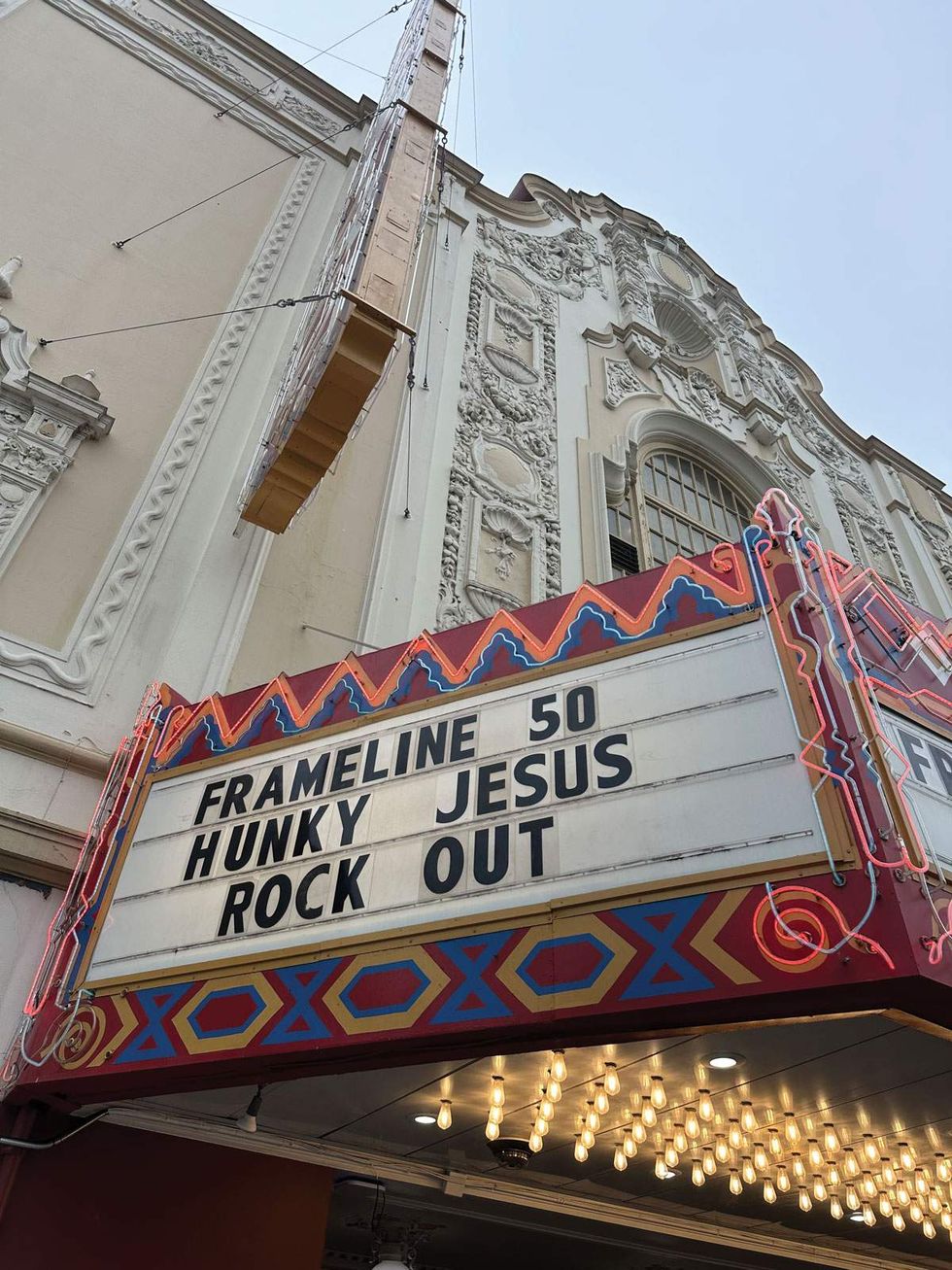 The newly renovated Castro Theatre is back in business.courtesy Daniel Reynolds
During the parade, I got a big hug from S.F Drag Laureate Per Sia, who — along with Michelle Tea — is a founding member of the city’s Drag Story Hour. Over generously sized waffles at Wooden Spoon, a popular breakfast/brunch spot on Market Street, Per Sia previewed books for an upcoming reading, including The Hips on the Drag Queen Go Swish, Swish, Swish. The library is open, indeed!
Waffles weren’t my only delicious taste of S.F. A true highlight was Bosco (the eatery, not the drag performer!). The restaurant is known for live-fire Italian cooking, and I savored the parade of homemade pastas and breads, as well as roasted meats and vegetables. Their espresso martini was worth the evening caffeine. Located in S.F.’s SoMa neighborhood, Bosco is also a stone’s throw from the city’s leather bars like Powerhouse and the SF Eagle, which has one of my favorite patios.
For those seeking waterfront views and Mediterranean flavors, try Alora. The hummus and rack of lamb there — enhanced with cocktails recommended by the server — were scrumptious, especially when paired with an S.F. sunset. It was the perfect finale to my visit to the Golden City, which, when it comes to cuisine and LGBTQ+ history, can’t be beat. Just don’t forget a jacket!
This reporter was invited to S.F. by the San Francisco Travel Association, which subsidized the trip.
This article is part of OUT’s Sept-Oct 2026 print issue, on newsstands September 1. Support queer media and subscribe — or download the issue now through Apple News+, Zinio, Nook, or PressReader starting August 20.
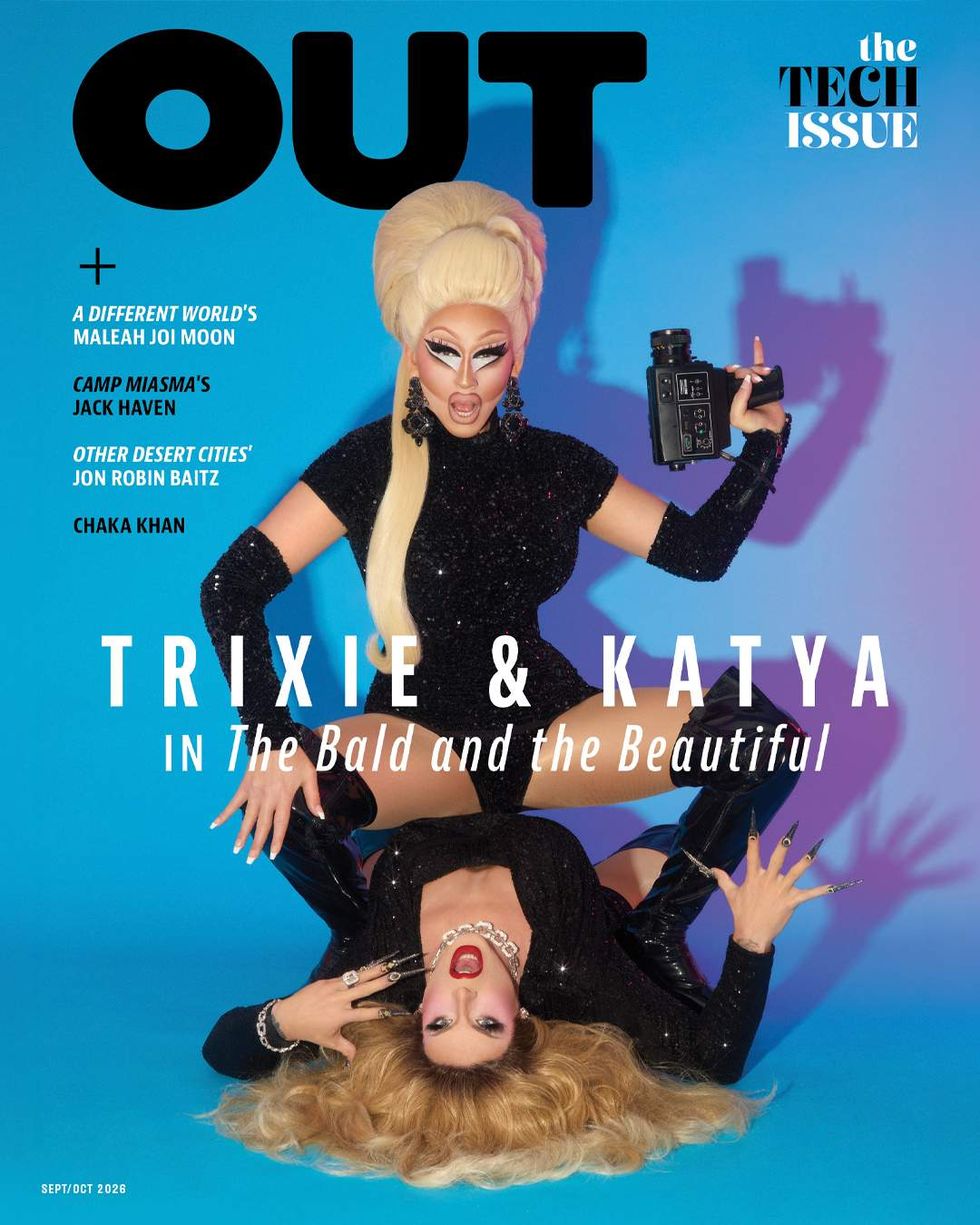 Trixie & Katya on the cover of Out magazine's Sept-Oct 2026 print issue Photography by Albert Sanchez and Pedro Zalba