

Throughout history, cities have served as cultural epicenters: Athens, Alexandria, and Rome in the ancient world; Florence, Milan, and Paris in the Renaissance and early modern eras; and, of course, who could argue that Los Angeles, London, and New York hold reign in the 20th and 21st centuries. But 188 miles south of the bright lights of Broadway lies another city of culture: Baltimore.
Known by many in the queer community as the home of renowned actor and filmmaker John Waters, the city has also been home to other artists, including jazz icon Billie Holiday, poet Edgar Allan Poe, and visual artist Amy Sherald, a Georgia native who honed her craft there. In late January, I had the pleasure of taking in the beauty of this city of artists and learning why Baltimore’s art scene is unlike any other.
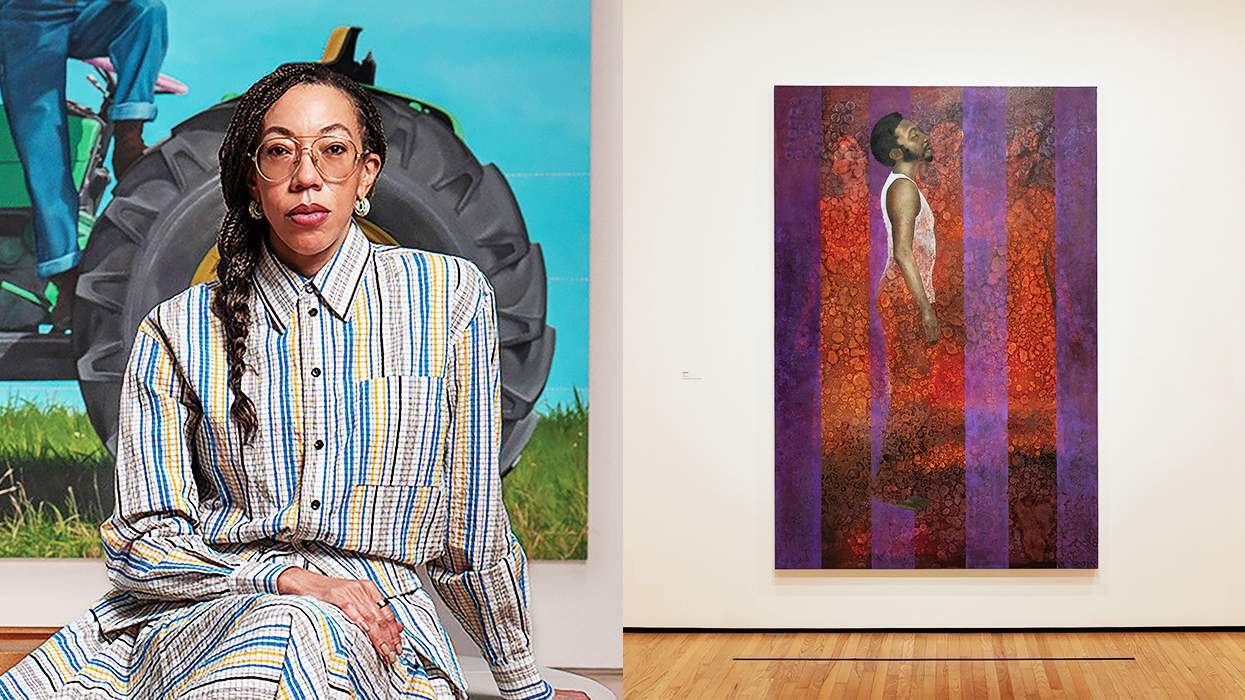
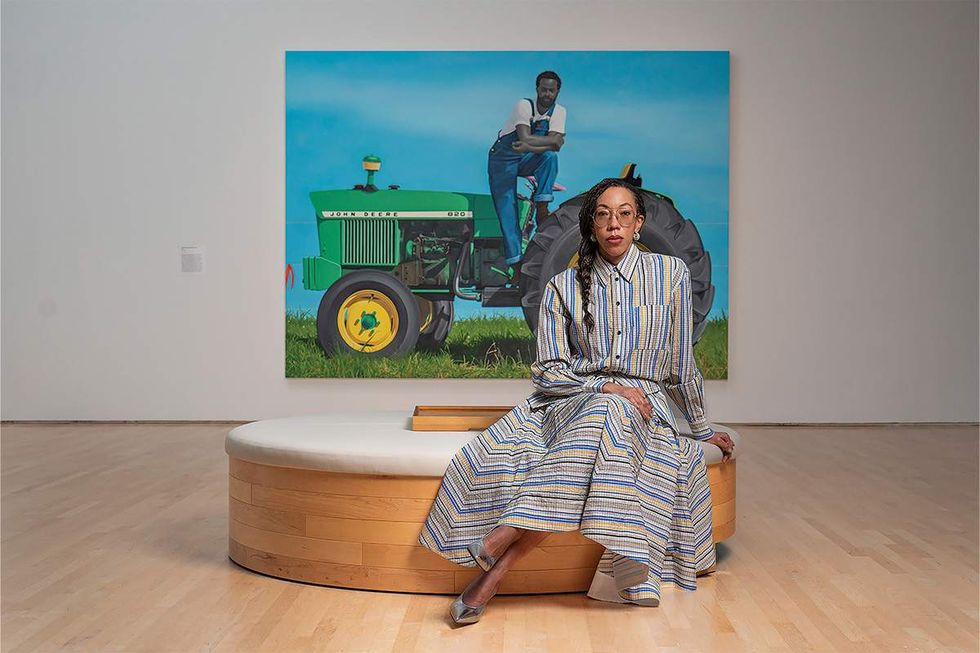 Amy Sherald at her Baltimore Museum of Art exhibitionKelvin Bulluck
I arrived at Hotel Revival Baltimore, a swanky hotel in the heart of the city’s historic Mount Vernon neighborhood. It felt like walking into a space tingling with subtle yet exciting energy, eager to burst into full force at night. From the courteous valet to the ease of check-in, the experience was a breeze of warm air in an otherwise frigid January. Locally sourced, curated art is displayed throughout the hotel, a tribute to Mary Elizabeth Garrett, the Gilded Age philanthropist and suffragist who once lived on the premises and was an avid art lover. Should you decide to book at the hotel, try out the Miss Mary Suite, located on the top floor and complete with amazing views of Mount Vernon.
Art runs through the veins of this city. Founded in 1963, the Baltimore Center Stage was later designated the State Theater of Maryland, providing the highest-quality programming for households across the city and beyond. That legacy continues with the Trans History Project, the latest initiative located in this space. Led by creator and Program Director Bo Frazier, the Trans History Project aims to work with 10 transgender and gender-nonconforming playwrights to commission, develop, and publish plays that reflect the lived experiences of transgender and gender-nonconforming individuals throughout history.
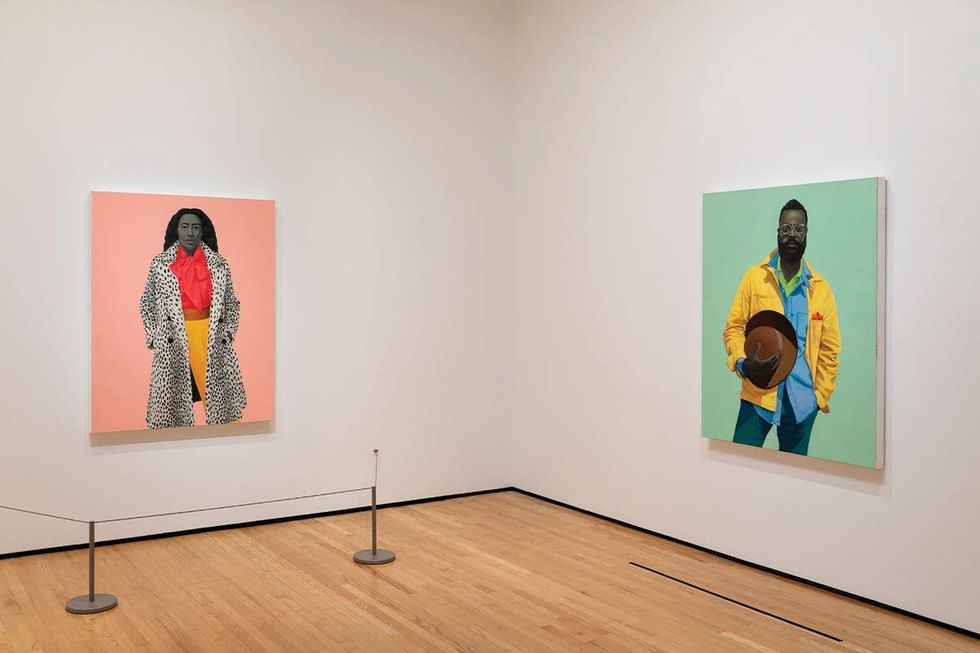 (L-R): Amy Sherald. As Soft as She Is... 2022; A Golden Afternoon. 2016. Private CollectionMitro Hood
“We never learned about [trans history] in history books,” Frazier reflects, admitting that the theater word proclaims but doesn’t always live up to the promise of inclusivity. “There is little to no trans or nonbinary work or characters or stories on our stages. So this [project] was not only to tell our stories [but also to] educate people about our history and humanize these people from history.” One of the plays commissioned in the current cohort is miss EMERICA, written by Yona Moises Olivares. It takes the form of a pageant in which the contestants are trans women and trans femme people, who must “prove” their womanhood to win citizenship. “So it starts off as campy and fun, and then like…it’s gonna punch you in the gut,” Frazier says.
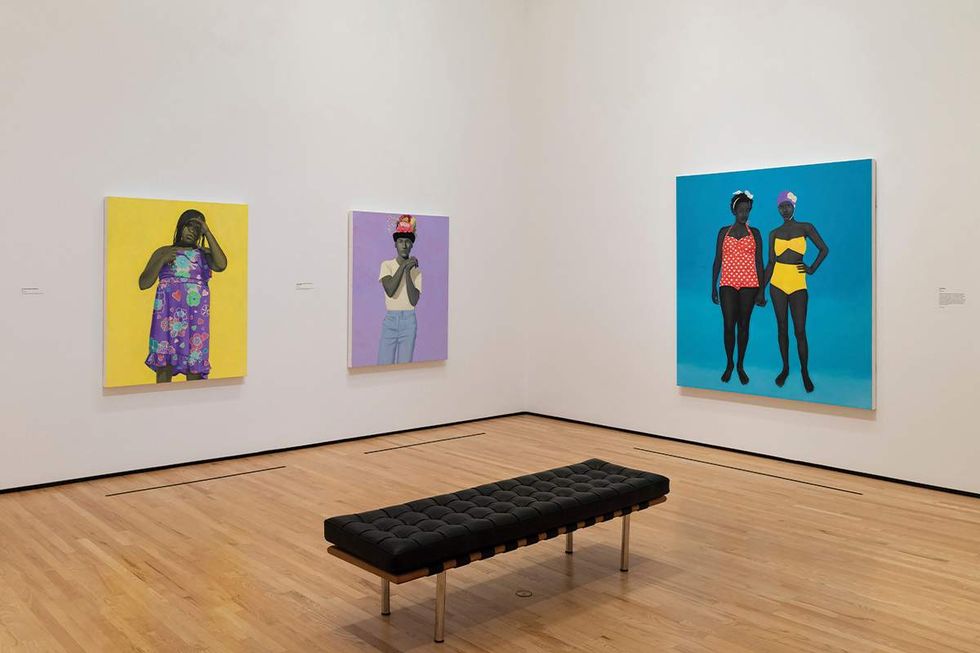 (L-R): All Things Bright and Beautiful 2016; Try on dreams until I find the one that fits me. They all fit me 2017; The Bathers 2015Mitro Hood
After touring the facility, my next stop was dinner at Alma Cocina Latina. This wasn’t a solo dinner, however: I met with Baltimore Center Stage’s artistic director, Stevie Walker-Webb, and Avon Haughton, the artistic associate of new works. In between sips of the Puntofijo (Misguided Spirits Rum, Diplomatico Mantuano, Johnnie Walker Red, citrus, guanábana, black pepper) and enjoying Duck Atollado (spiced roasted duck breast, Calasparra sofrito criollo, foie gras mousseline, guava jelly), we chatted about the diversity and impact of Baltimore’s art scene. Born in Texas, Stevie spent time in New York City’s art scene before moving to Baltimore and hasn’t regretted it. “I fell in love with it the moment I came to Baltimore,” he smiles, asserting the city is a blend of his hometown (Waco, Texas) with Atlanta and NYC. “You put those three cities in a blender, you would get a place that’s diverse, rich, and unique, and just really fearless as Baltimore is.”
“I’ve never met two people who are alike,” Avon responds. A Baltimore native, Avon identified early on with Charm City’s cultural capacity for letting its residents shine. “The city holds so much space for everyone’s uniqueness,” he affirms. “Blackness and queerness and beyond those things…. You have to dare to be who you are. And then once you’re there, the city will be your soft place to land.”
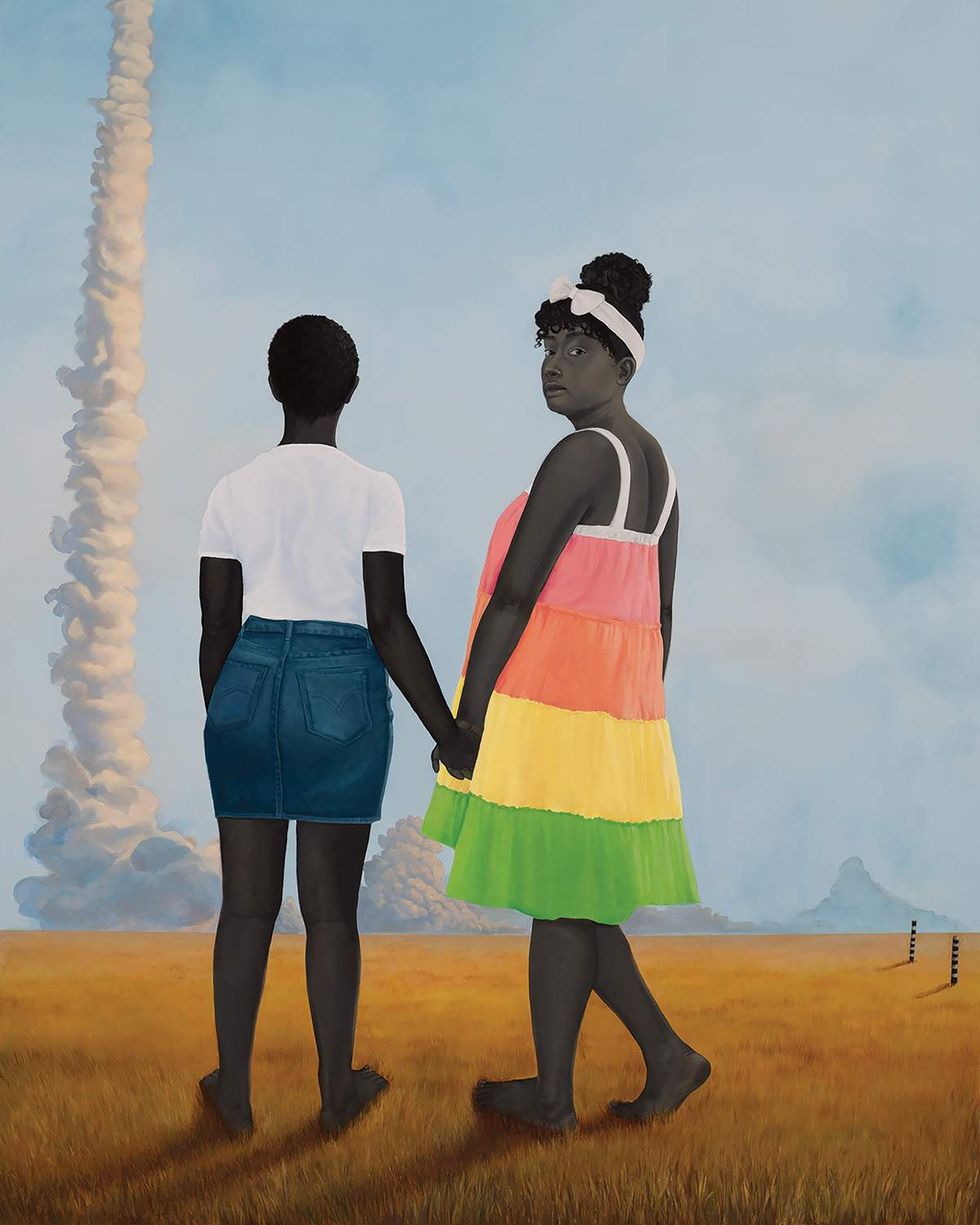 Amy Sherald’s Planes, Rockets, and the Spaces in Between 2018courtesy Amy Sherald
After dinner, we sauntered a mere five minutes in the snow to The Royal Blue, a cozy, welcoming lounge and restaurant known for its drinks and burgers. I thoroughly enjoyed its Don’t Empress Me Much (Empress gin, grapefruit, blood orange, and club soda); make sure to stop in during the week for bingo and late-night dances. The next day, I visited Papermoon Diner for a morning bite. Located in the Remington neighborhood, Papermoon is known equally for its delicious meals and its eclectic decor. The sausage gravy and brioche were a treat, though I wished I had room to try one of the delectable milkshakes. It’s a great place to try if you’re planning a trip to the Baltimore Museum of Art, less than 10 minutes from the diner.
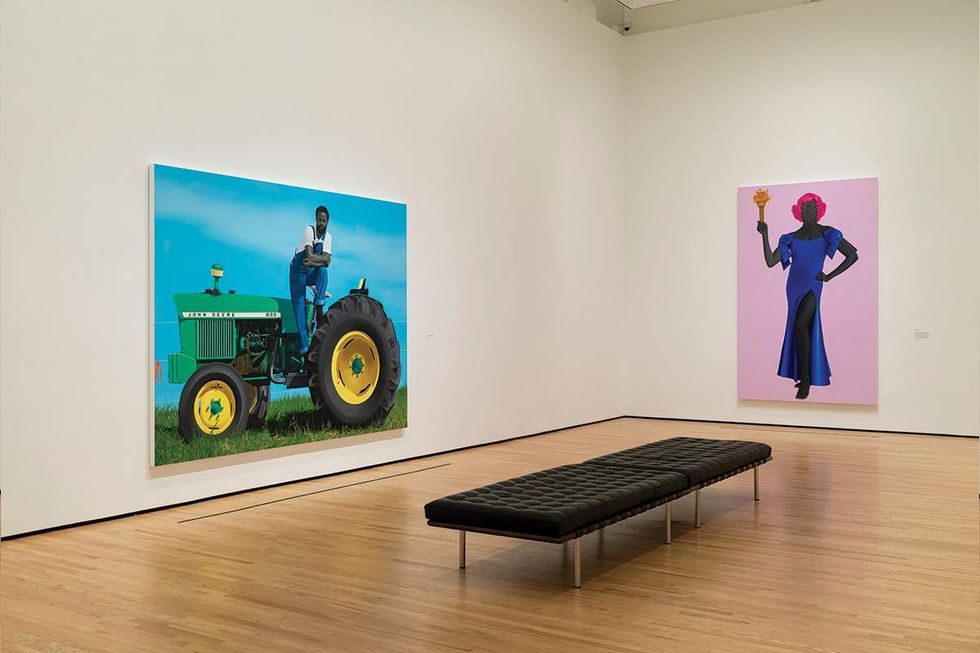 (L-R): Amy Sherald’s A God Blessed Land (Empire of Dirt) 2022; Trans Forming Liberty 2024Mitro Hood
Amy Sherald’s “American Sublime” show was on display during my visit, a retrospective of her work from her earliest years to high-profile pieces, including commissioned portraits of Breonna Taylor for Vanity Fair and the official portrait of former First Lady Michelle Obama. Sherald’s work reflects the Black experience in the United States, drawing on the history of portraiture and photography to create arresting images that invite viewers to engage in social dialogue on race and representation.
Included in the exhibit is the powerful portrait Trans Forming Liberty. Sherald reinterprets the iconic image of the Statue of Liberty as a Black trans woman gazing beyond the viewer, wearing a blue satin gown while resting her left hand on her hip. Her right hand is raised, holding a torch containing gerbera daisies. The model Arewà Basit, a Black nonbinary trans-femme artist, has reflected on the work: “When I see this, I see all of the years being told that I had to recite the Pledge of Allegiance. And when I found the truest meaning of what that pledge is, I see this version of Lady Liberty.”
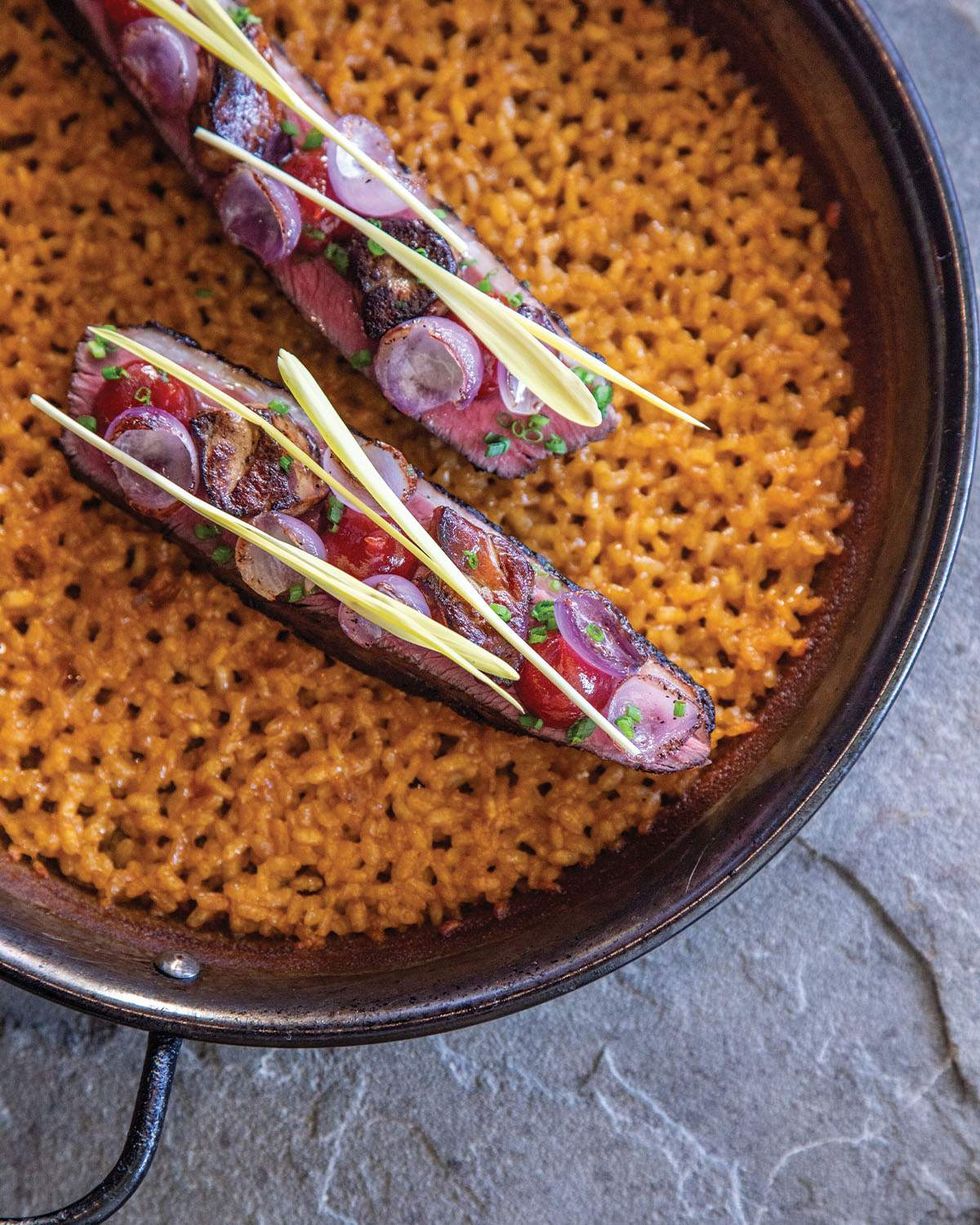 Dish at La Cocina LatinaCourtesy La Cocina Latina
It was this image, however, that was deemed controversial in some corners. Last July, Sherald canceled the exhibition at the Smithsonian’s National Portrait Gallery after gallery officials discussed removing Trans Forming Liberty from the show. When BMA announced it would host Sherald’s show, that moment felt like a homecoming. “Baltimore has always been a part of my DNA as an artist,” Sherald said in a statement in September after the BMA announcement. “To bring this exhibition here is to return that love,” she added.
After touring the exhibition and the permanent collection, I stopped by Gertude’s Chesapeake Kitchen, the museum’s restaurant, for a light lunch. Not long after I sat down, John Shields introduced himself. An award-winning chef, food writer, show host, and owner of Gertrude’s, John told me about his history and the establishment, including his earlier aspirations of becoming a musician in Provincetown, befriending local legend John Waters, and Sherald’s days at Gertrude’s. “She used to work here,” he says, a hint of pride in his voice.
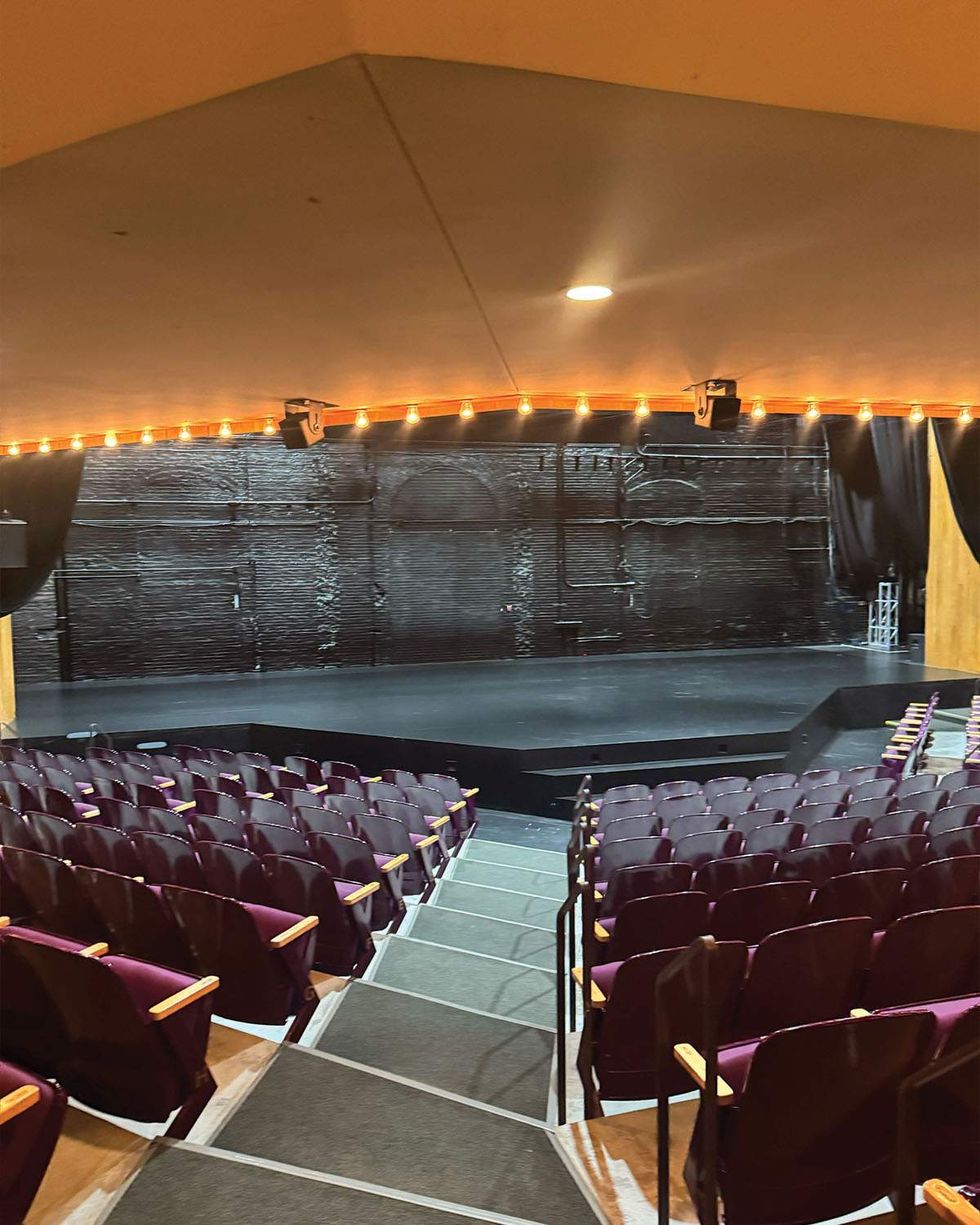 Baltimore Center StageMarie-Adélina de la Ferrière
While chatting with Shields, my lunch date, Anne Elliott Brown, arrived. The BMA’s senior director of communications, Brown spoke in a voice equally proud of “American Sublime.” “It took us two...two and a half months to put this together,” she reflects over her seafood salad (local field greens, grilled gulf shrimp, lump of crabmeat, avocado, grape tomatoes, roasted lemon vinaigrette). Not long after Sherald announced she would cancel her show at the National Portrait Gallery, BMA’s executive team reached out to her about bringing “American Sublime” to Baltimore. Whereas exhibitions of this caliber often take several months to plan, the speed at which the team assembled it deserves a documentary. But the effort was well worth it: The museum has seen record-breaking attendance since the show opened in November, and it remains on display through April 5. Undoubtedly, it is a tribute to one of Baltimore’s celebrated artists.
Sherald’s impact is a badge of pride in Baltimore’s art scene, nowhere more evident than at the Creative Alliance. This community space brings artists and audiences to experience enriching programs. Among its initiatives is the Resident Artist Program. The program provides artists with reduced-cost housing, allowing them to focus on their craft while learning about marketing, branding, and other resources for 21st-century artists. Sherald was in the program when she won the grand prize in the prestigious Outwin Boochever Portrait Competition at the National Portrait Gallery in 2016. While preparing future celebrated artists, Creative Alliance also hosts interactive movie nights, RuPaul’s Drag Race viewing parties, and performances. If you’re in Baltimore in January, you have to see Elvis’ Birthday Fight Club, billed as a “glamorously sleazy evening of combat” that features hilarious matches and marvelous burlesque.
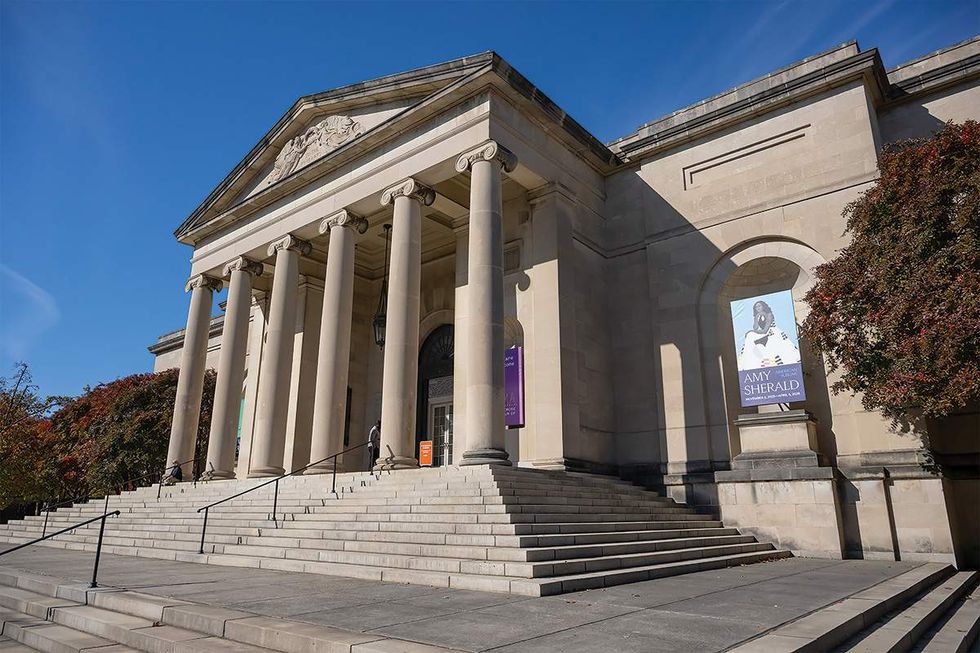 Baltimore Museum of ArtMaximilian Franz
For dinner on my last night, I stopped in at Sally O’s, a favorite neighborhood spot with a cool and kitschy aesthetic. I suggest making a reservation in advance; if you show up without one, you can at least grab a fabulous drink at the bar. The Sally Mac & Cheese was creamy, delicious, and will make you forget you slept in your bra. The Highlandtown Smashburger with a side of truffle fries was beyond amazing, and I had no regrets. A must-try for a last night in this city of artists!
What struck me most wasn’t just the volume of talent, but the way Baltimore seems uninterested in rushing artists toward some imaginary finish line. Unlike cities where art is measured by proximity to power or visibility, Baltimore offers something quieter and rarer: time. Time to experiment. Time to fail without disappearing. Time to become. There’s no frantic audition energy here, no sense that worth is tied to virality or proximity to the “right” rooms. Instead, the city wraps its artists in infrastructure, community, and permission: to be unfinished, to be specific, and to stay.
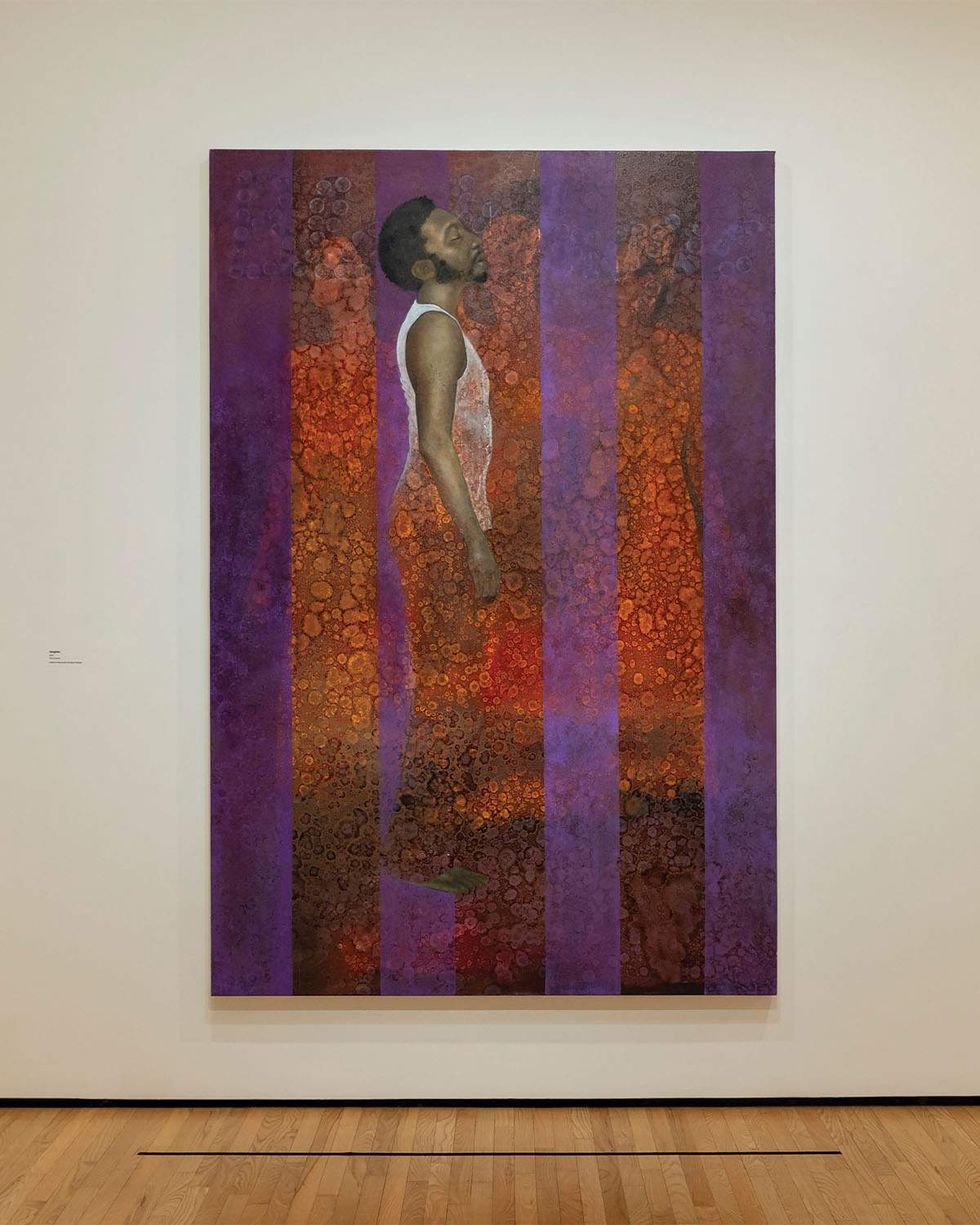 Amy Sherald’s Hangman 2007Mitro Hood
From Edgar Allan Poe to John Waters, Billie Holiday to Miss Tony, Duke Ellington to Amy Sherald, Baltimore tells a different story about what it means to build a life in art. This is not a city obsessed with being first or loudest. It values endurance, experimentation, and the long arc of maturing into your own. Here, artists aren’t encouraged to outrun their circumstances. They’re encouraged to live inside them.
If you’re looking for inspiration, Baltimore offers it generously. Through a boundary-pushing play, a museum gallery that chooses its artists boldly, or a neighborhood bar where conversation stretches longer than the night, this is a city that meets you where you are and invites you to stay. Not to chase the next thing, but to make something honest, at your own pace.
This trip was paid for by Visit Baltimore.
This article is part of OUT’s Mar-Apr 2026 print issue, which hits newsstands March 24. Support queer media and subscribe — or download the issue through Apple News+, Zinio, Nook, or PressReader.