


When Other Desert Cities came to Broadway in 2011, Jon Robin Baitz’s acclaimed family drama captured a country wrestling with political division; due to its insights, it became a 2012 finalist for the Pulitzer Prize for Drama. Fifteen years later, as the play returns to Broadway in a new production starring Julia Louis-Dreyfus, Ed Harris, Allison Janney, Lily Rabe, and Joe Keery, Baitz believes the America of today has moved far beyond the one he originally imagined.
Ironically, that’s exactly what makes the play feel more essential than ever. “I think, in retrospect, one longs for the kind of civility and discourse with which those people conducted that interrogation of their beliefs,” Baitz states. “Because now, as far as I can see, nothing like that exists nationally or domestically.”
Set over a tumultuous Christmas weekend in Palm Springs, Other Desert Cities follows the politically conservative Wyeth family as long-buried secrets force them to confront competing versions of truth, loyalty, and love. While the play has always explored ideological conflict, Baitz says today’s audiences will encounter it through a dramatically different lens.
“When we did the read-through, I was struck by the ways in which these conditions had been amplified beyond almost all recognition,” he recalls of an early table read with the revival’s cast. “As long as you stick hard to the human mess, ugliness, tragedy, and love within it, the [play’s original] questions themselves remain applicable.”
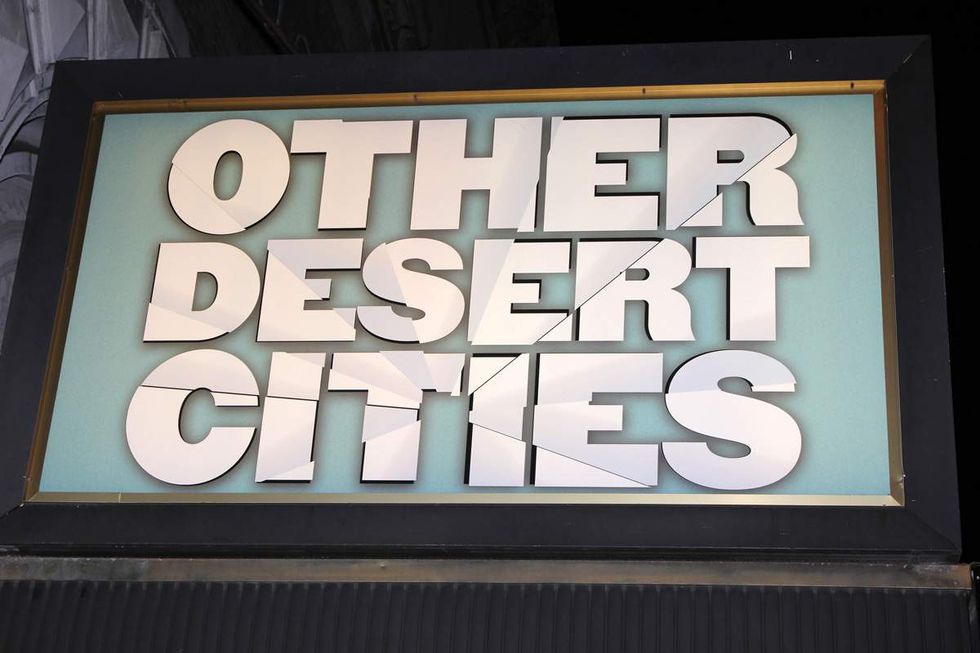 Original signage for Other Desert Cities, which returns to Broadway this fall.Bruce Glikas/FilmMagic
That commitment to humanity remains central to Baitz’s work. Unlike many contemporary political dramas, Other Desert Cities refuses to tell its audiences who the heroes and villains are. In fact, every member of the Wyeth family believes they’re protecting someone they love, even when they’re hurting one another in the process. “They’re all pretty much well-intentioned,” Baitz explains. “There’s no kind of malignant force on that stage.” Instead, “ambiguity is my friend, as is irony,” he mentions of his playwriting craft for the show.
Importantly, that moral complexity is exactly what Baitz worries America has lost. Reflecting on today’s increasingly polarized political climate, he admits it has become much harder to imagine the kind of conversations his characters once had. “You have to be able to speak the same language in order to experience empathy,” he posits. “I mean emotional language.” For LGBTQ+ audiences, that search for empathy carries an added resonance.
Although Other Desert Cities isn’t explicitly centered on queer characters, Baitz believes queer artists have long been uniquely positioned to illuminate the complexities of American families, because they often experience those families from both the inside and the outside. “To be gay is to be very much an expatriate,” he emphasizes. “Playwriting is in many ways an act of processing otherness into something coherent, which is, traditionally or historically, what a lot of gay people have had to do.”
Growing up queer, he says, often means becoming an observer. “You experience pain at a different frequency,” Baitz notes, invoking playwrights like Tennessee Williams and Edward Albee. That perspective “stamps your passport as outsider and exile.”
It’s a striking observation from one of America’s most celebrated playwrights, particularly at a moment when many LGBTQ+ people once again find themselves navigating political hostility and questions of belonging. Even the play’s Palm Springs setting has taken on new meaning.
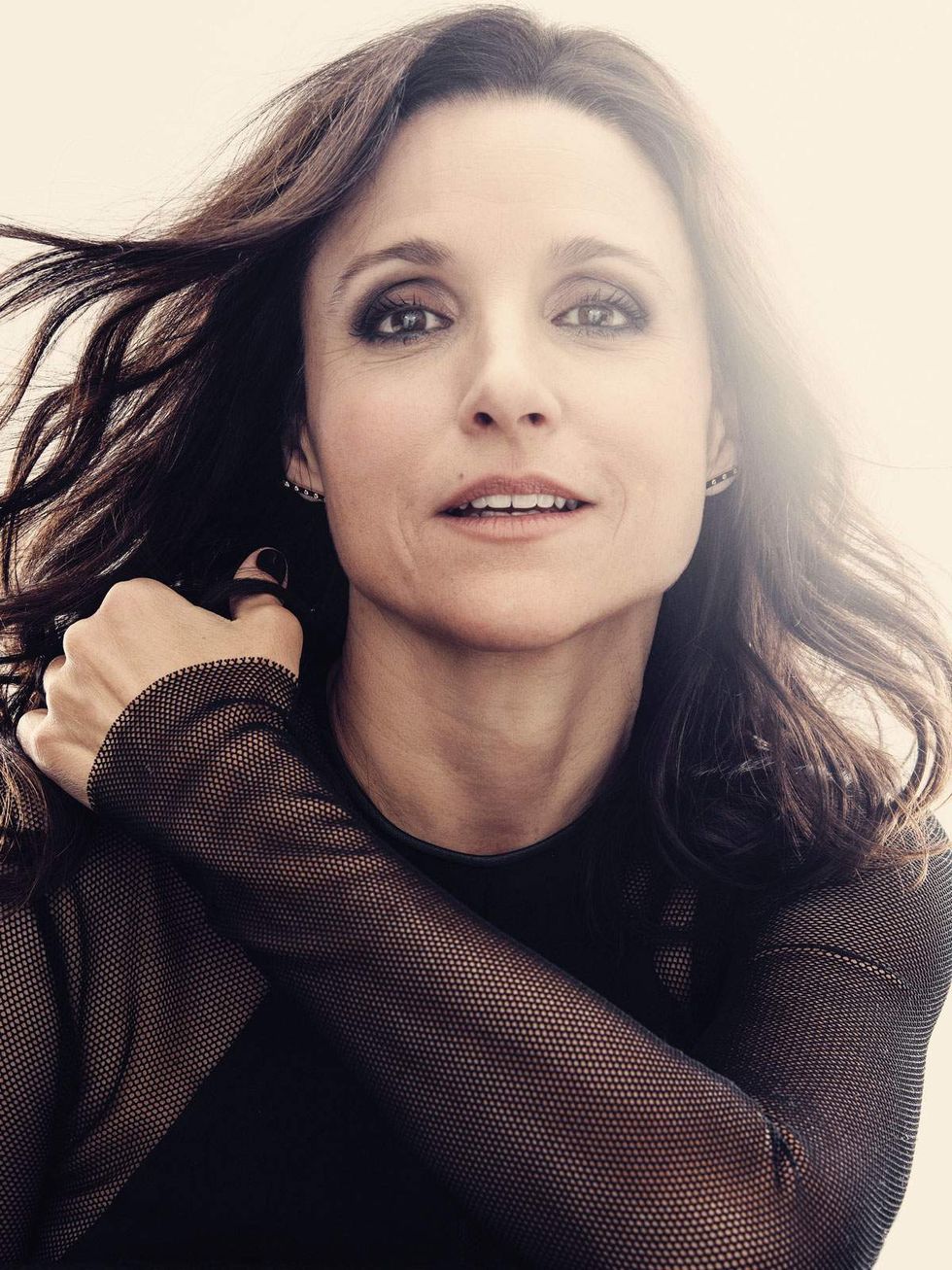 Julia Louis-Dreyfus will make her Broadway debut in Other Desert Cities.Christopher Anderson
Years ago, Baitz described the desert city as representing the end of the American West. Today, he sees it as a reflection of a country increasingly consumed by performance rather than authenticity. “I think America has become increasingly presentational,” he bluntly states. “The surface increasingly is the subtext.”
The silence he once found in the desert, he argues, has become increasingly rare. “The American dream has definitely died, as far as I can tell,” he opines. “We’re now in a very terrifying moment before a rebirth of some sort, hopefully.”
Yet Baitz remains remarkably hopeful about theater itself. He isn’t interested in declaring Other Desert Cities a timeless masterpiece. Instead, he sees every revival as another opportunity for audiences to rediscover themselves. “I’m looking for something to happen to me,” he says of his motive when attending the theater. “I’m looking for a kind of recognition and an encounter.” And that philosophy extends to this Broadway revival, directed by John Benjamin Hickey, whom Baitz first worked with decades ago as an actor.
At the early table read for this production, watching the new cast explore familiar material revealed fresh emotional depths for the playwright. “I was struck not by the kind of stariness of it, but the rawness,” Baitz describes. “They [the cast] felt immediately like a family in a true crisis.”
He praises Louis-Dreyfus for bringing unexpected dramatic depth to Brooke while using “her incredible instinct for comedy and subvert[ing] it even more than she has in the past.” He also calls Allison Janney “breathtaking” and describes being “sort of speechless” while watching Ed Harris inhabit Lyman.
Ultimately, Baitz believes audiences return to plays like Other Desert Cities for the same reason they revisit Shakespeare, Ibsen, or Chekhov — it’s not because the world stays the same, but because we don’t. “Theater saves us in a way from Marvel comic book fantasy,” he offers. “I don’t think theater is medicine, but I think that these plays can make you better. They’re empathy machines.”
In an America increasingly defined by certainty, outrage, and ideological absolutes, revisiting Other Desert Cities on Broadway offers something far rarer. It grants us the possibility that understanding begins not with agreement, but with the willingness to see another person’s humanity. And 15 years after its Broadway debut, that may be the play’s most radical act.
The Broadway revival of Other Desert Cities begins previews September 29 and opens October 18 at the Hudson Theatre.
This article is part of OUT’s Sept-Oct 2026 print issue, on newsstands now. Support queer media and subscribe — or download the issue through Apple News+, Zinio, Nook, or PressReader.
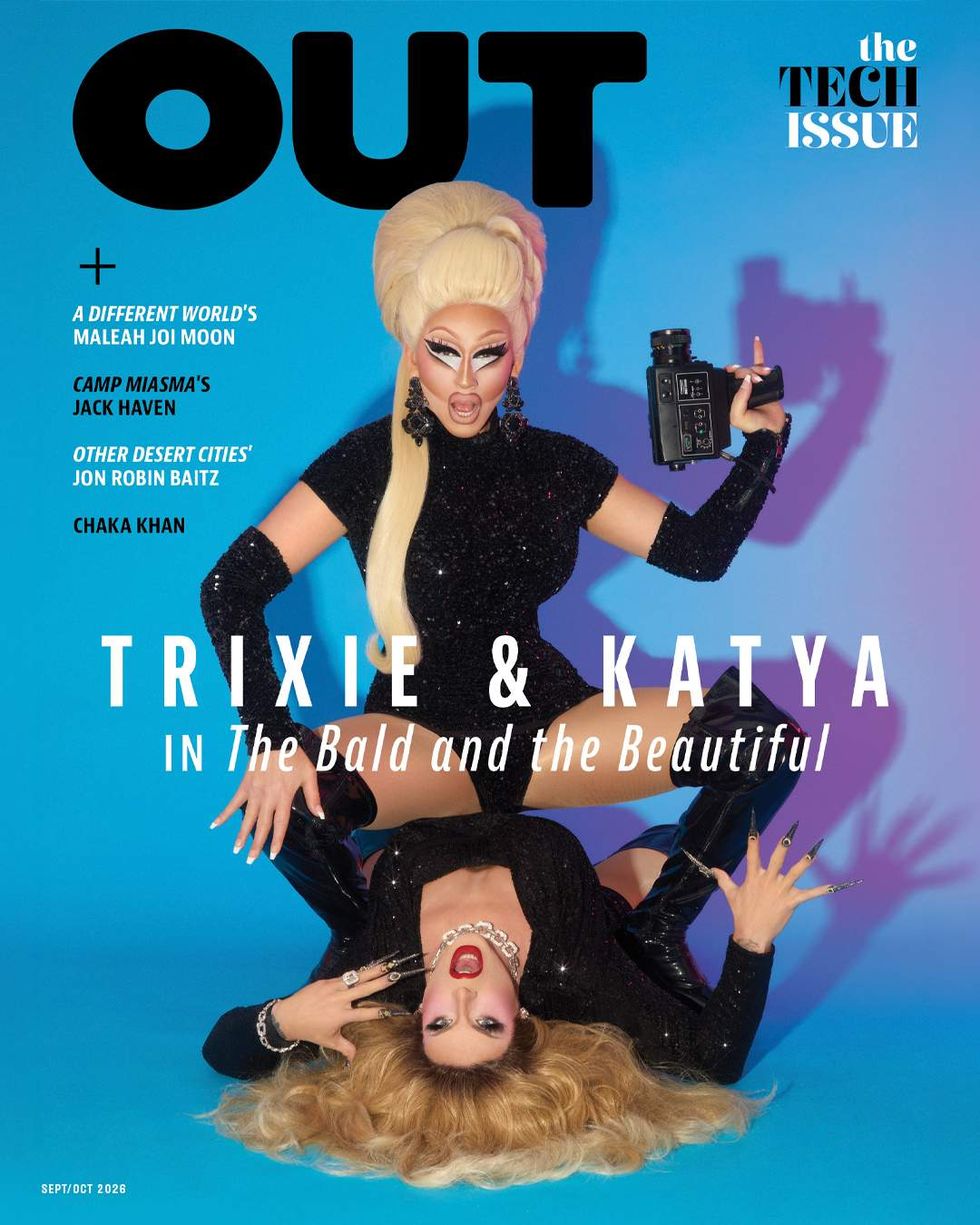 Trixie & Katya on the cover of Out magazine's\u00a0Sept-Oct 2026 print issue Photography by Albert Sanchez and Pedro Zalba