

Modern dating can be a nightmare of endless chatting on apps that never leads anywhere, being ghosted just when you think you’re making a connection, and unrealistic expectations created by the illusion of endless options.
And things only get more complicated and frustrating when you don’t fit into the gender binary.
“The internet has made it possible to convince ourselves that all the cyber personas — our own and each other’s — are real,” explains Skylar Lyralen Kaye, a genderfluid, fae, and trans dating expert and author of Bachelorx: A Nonbinary Memoir. “This ironically means we’re all in fantasy, idealizing and demonizing each other, acting like we’re princes/s charming while also texting with no intention to meet, or suddenly disappearing after flirting, or swooping in to love bomb like a stork with no baby but plenty of raging hormones.”
For the nonbinary community, you’re not just dealing with the normal ups and downs of the toxic meat market that the dating world has become, but the reality that the dating apps weren’t built for you, and many people are ignorant and may not even understand what nonbinary means.
So on top of keeping the conversation flowing, worrying about whether or not you have lettuce in your teeth, and wondering who is going to make the first move, you also have to think about whether the person sitting across from you at the restaurant is going to use your correct pronouns. And then there is all the emotional labor you'd have to expend every time your boundaries are crossed or you're forced to educate a brand new person on what it means to be nonbinary.
Kaye describes enby folks (an informal way of saying nonbinary) as being “unicorns trapped among the horses” who cis gender queer people keep asking “to act like horses, only with different pronouns,” which can be frustrating, exhausting, and can make you gun-shy about dating at all.
“This means that in the fantasy world of online dating, with bots and messages, disappearances and urge to merge, we also have to convince people that we’re real, we’re us, we know who we are, and we’re not necessarily a unicorn or a bird or a top or a bottom or on any spectrum or binary of any kind,” they said. “We have to change the way the cisgender people we date perceive.”
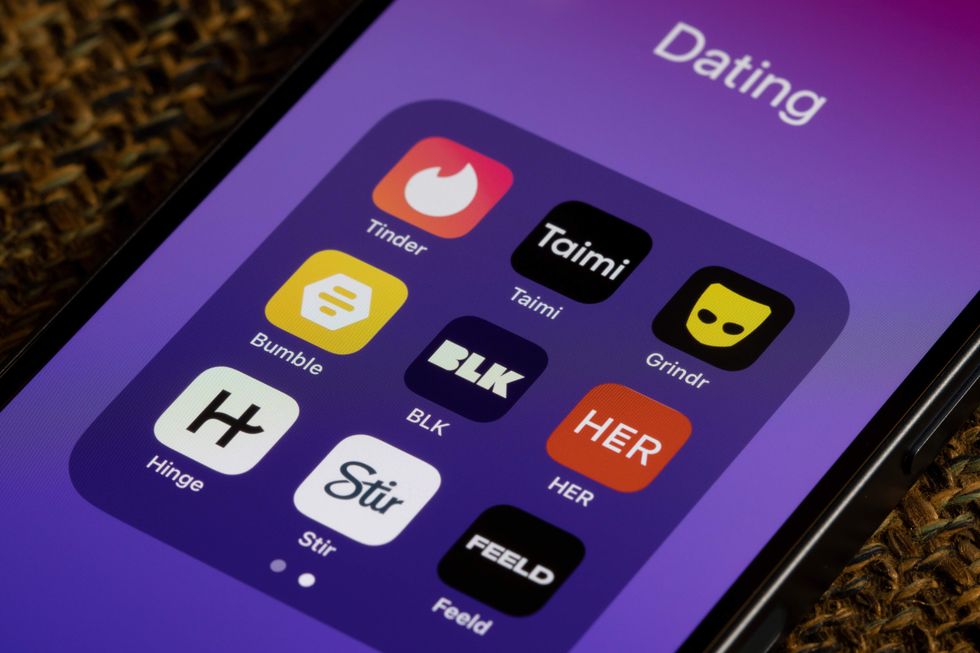
Dating apps on a cellphone screen.
Tada Images/Shutterstock
Sofie Roos, a bisexual licensed sexologist and relationship therapist who is currently practicing at a clinic where she works with a lot of nonbinary people, said that modern dating should make things simpler if you are nonbinary because it’s “easier to get in touch with people with similar sexual or gender identity as you,” but in reality, even if you exclusively date other queer people, there are still challenges.
“Many within the queer community shares negative experiences from the dating scene — for example, needing to navigate stereotypes and negative norms — but nonbinaries get in an extra exposed situation as their identity exists outside the traditional gender framework,” which means that there are plenty of LGBTQ+ people who lack understanding and that can make you feel even more like an outsider than you did before.
On top of all of this, dating apps — and the world in general — are built around the gender binary, which leaves out a lot of genderqueer and nonbinary people.
“From my perspective, both personally and professionally, modern dating can be especially complex for nonbinary people because so many of the systems we’re dating within are still very binary,” said Kiki Maree, a queer and inclusive sexologist. “A lot of dating apps, social norms and expectations are built around ‘men’ and ‘women,’ which means nonbinary people are often moving through spaces that don’t even account for us, which can show up in very practical ways like limited gender options or mismatched algorithms, as well as how people relate to us one-on-one.”
Maree, who is agender and married to a nonbinary person, said that her partner has struggled to be understood and is often put into a box based on their perceived gender and not who they actually are, which is why communicating with the people you date is key.
“My partner is AMAB [assigned male at birth], and has a beard, which oftentimes results in people assuming he/him pronouns are OK, that they should act more ‘masculine,’ or that they want masculine roles," she said. "This is to say that how we present can be really confusing for many people when it comes to gender, which is where language and communication can come in and bring so much clarity, and so having these kinds of conversations from the beginning really helps to prevent misunderstandings and protect comfort in intimate situations while dating.”
So all of this makes dating as a nonbinary person sound harrowing, but these experts have tips for navigating the dating scene and finding someone who loves and understands you for exactly who you are.
Dating tips for nonbinary people:
1. Choose your dating scene carefully
If you want to go the dating app route, pick one that is LGBTQ-inclusive and allows you to choose pronouns you feel comfortable with. (To start, check out OkCupid, Taimi, HER, and Bumble. Feeld is also a popular option for those practicing ethical non-monogamy.)
If you plan to try to meet someone in person, try a place you already know is queer-friendly.
"To thoughtfully choose where to date can minimize the bad experiences, which reduces the risk of finding dating too draining,” Roos said. “And if you prefer to not be online, then think of a physical dating scene where you feel comfortable and seen. It can be anything from a book club or a queer walking group to an inclusive LGBTQ+ bar or a political organization.”
2. You don’t owe anyone a free education
You don’t have to expend mental and emotional energy educating someone about your identity. Instead, try to find someone who already understands what it means to be nonbinary.
"Date either T for T or only people who have already dated and loved nonbinary people so you don’t have to lie face-down wailing about all the free education you’re dishing out to the few who actually ask you questions,” Kaye said.
3. Trust your gut
 Person holding a nonbinary flag.AlvaroMP/Shutterstock
If you’re instincts are telling you this person is bad news, or isn’t worth it, trust that feeling and move on instead of wasting your time.
“If you must give benefit of the doubt to one who has no enby experience, use your mythic abilities to intuit whether or not they’ll really get you in time,” Kaye said.
4. Have the hard conversation
If someone is treating you badly or being careless with their words, call them out. Don’t just let things slide because you think you don’t deserve more.
“Be badass about the hard conversations,” Kaye said. “Like, do you plan on continuing to screw up my pronouns forever, or just this date?”
5. Share your identity on your own terms
You get to choose when to talk about your gender identity with a new person, so don’t feel rushed. Roos suggests adding it to your profile if you’re using a dating app so you can filter out people who aren’t interested or are rude about it. But when it comes to talking about your identity in more depth, you get to decide when and how that happens.
“Many have the wrong idea that nonbinary people should always explain their gender identity, but for most, it’s a very private thing to talk about, and you definitely don’t have to, so take that with you and remember that you never need to open up before you want it and feel comfortable sharing,” Roos said.
6. Set boundaries early
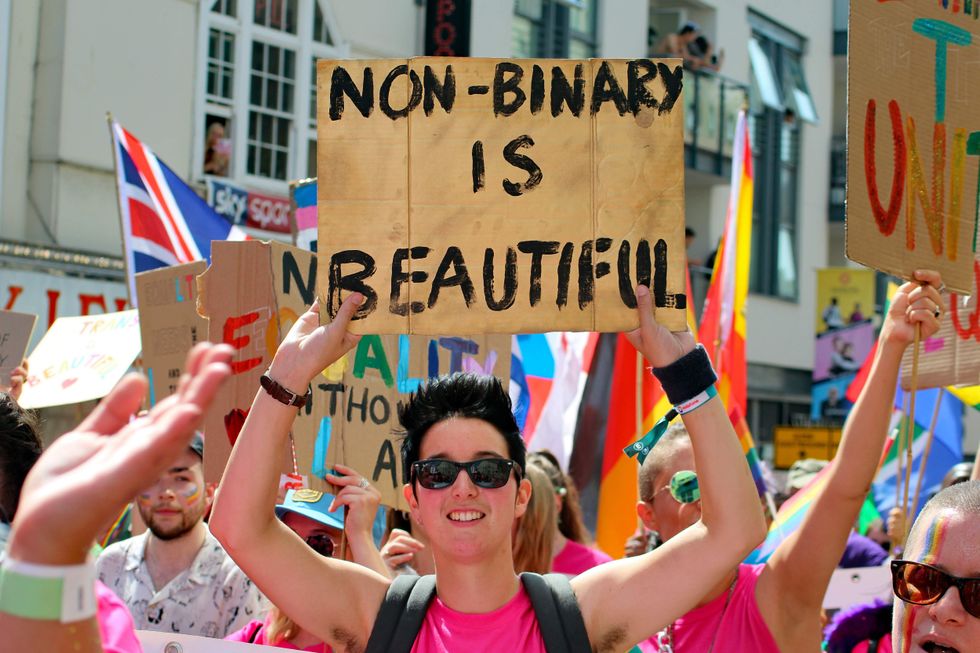
Person holding a 'Non-binary is beautiful sign.'
Dave Smith 1965/Shutterstock
“If someone doesn't respect you and your limits, for example by misgendering you or asking questions you’ve said you’re not comfortable with, then correct them or feel free to walk away,” Roos said.
If you feel unsafe, walk away immediately, but if you’re just worried about causing a scene or being considered dramatic, try not to be afraid to stand up for yourself.
7. Build a community
Dating is hard under the best circumstances, so try to surround yourself with other queer people who can support you while you’re playing the field or trying to find your soulmate.
“It becomes so much easier to date if you also have a context where you feel seen and understood, so invest in friends and a community where you can get support and perspectives,” Roos said.
8. Take a break if you need it
Dating as a nonbinary person can be exhausting, so if you start to feel tired or not present in the experience, take a step back and reassess.
“Don’t see finding love as something you start and never end before finding what you’re looking for, but see it as a process where taking a break sometimes leads to coming back stronger,” Roos said.
9. Communicate about your body
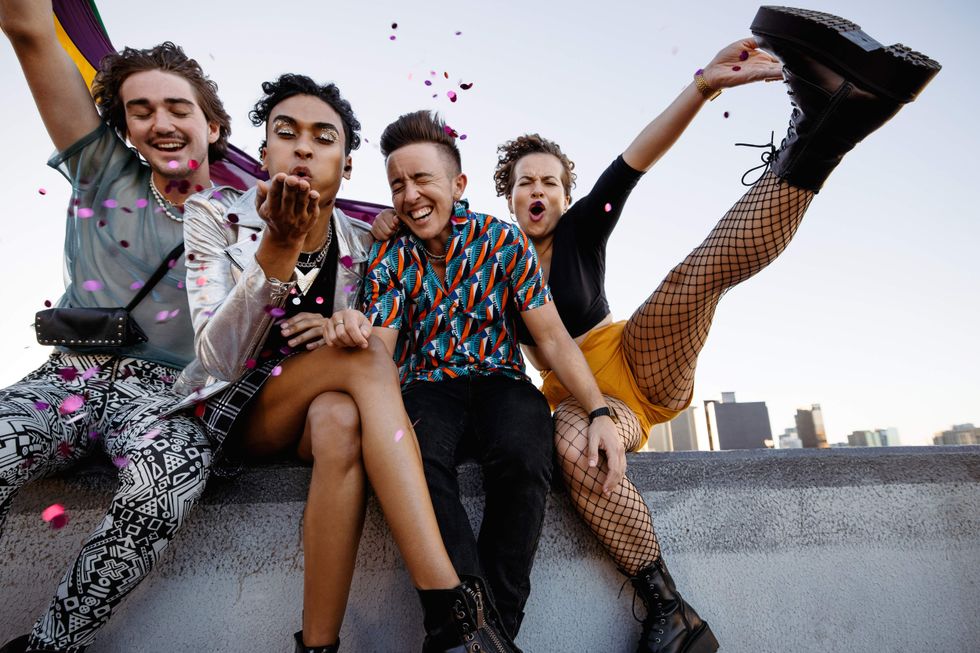
Queer friends celebrating.
Jacob Lund/Shutterstock
You don’t have to bring this up on a first date, but before you get intimate with someone, have a conversation about the words you would prefer they use for your body.
“Another thing to be mindful of is being sure to clearly communicate boundaries around your body and presentation, as nonbinary folk often get boxed into expectations about how they should look, or what they should be comfortable with physically,” Maree said. “The earlier you can communicate what names you like to use for your body parts, and how you like to be referred to in sex can be so very beneficial.”
10. It’s OK if you don’t know what you like
Whether you’re new to dating and sex or you’ve been in the game for a while, you might not know all of the things you like and don’t like and what things might trigger body dysmorphia.
“While communicating in the moment can put strain on intimacy, there are some really lovely and soft ways that can be expressed such as ‘that doesn't really work for me right now’ or ‘I'd love it if you called me this, or said that,’” Maree said. “The same can be true with where and how you like to be touched. Ways to communicate this in the moment are ‘I'd actually love it if you grabbed me here or touched me like this’ for example.”
11. Don’t shrink yourself for other people
The goal of dating shouldn’t be to make yourself appealing and palatable to everyone. You want to find someone who loves and accepts you, so don’t shrink yourself to make other people happy or in the hopes you’ll get that second date.
“The right people will love us for exactly who and how we are,” Maree said. "I feel like it can be very tempting to soften or simplify our identity in order to just make things easier for others, or to create more opportunity for connection. However, of course, that will usually backfire, as we then attract people who like a version of us that isn’t real, or is only a small version of ourselves.”
Sources cited:
Skylar Lyralen Kaye is a genderfluid, trans, fae, dating expert and author of of Bachelorx: A Nonbinary Memoir.
Sofie Roos is a bisexual licensed sexologist, relationship therapist, and author at relationship magazine Passionerad.
Kiki Maree is a queer and inclusive sexologist.