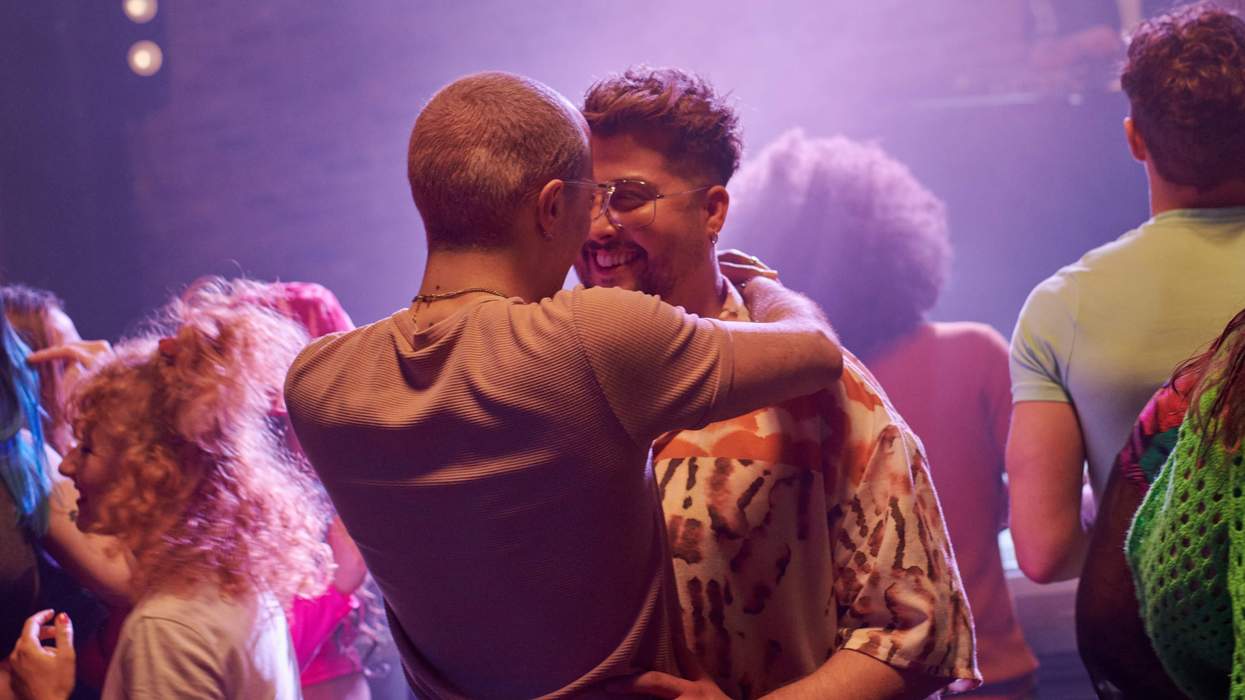


For Pride events across America, the Trump administration’s federal funding threats have led to a minefield of new challenges. Public parks, school districts, and corporations alike are bending the knee to avoid losing financial resources, as the president strong-arms an unpopular agenda rooted in Christian nationalism. The message so far has been clear: Do as we say or be punished.
Fortunately, the people who put together your local Pride each year are tough. Really tough. They have the type of “make it happen” energy and leadership it takes to gather communities and push back, qualities we need in abundance right now as LGBTQ+ erasure becomes part of the national political agenda. You want your local Pride leader in your corner, and this year, they want you in theirs too.
I asked five Pride organizers what they’re seeing in the field this year; here’s what they had to say.
“If we don’t like something, we will call it to action”
Recurring Twin Cities Pride title sponsor Target is headquartered in Minneapolis. When Executive Director Andi Otto received word that the organization would be updating its stance on diversity and inclusion efforts, he and his team made the decision to decline the $50,000 sponsorship and crowdfund the resulting budget hole. The pivot occurred at the moment anti-DEI executive orders were making national headlines, which led to a blitz of donations. By the end of March, the crowdfunding effort had brought in $113,500 from 1,691 donors, according to the organization.
“I always want to be really clear that [Target] continues to offer support and sponsorship to us. But it just didn’t sit right with me,” Otto says. He said the DEI changes that most influenced the decision include Target’s choice to no longer participate in the Human Rights Campaign’s Corporate Equality Index, a voluntary corporate scorecard that has been around since 2002.
“My question was ‘Why?’” Otto says. “To me, that screams, ‘We’re hiding something.’ The HRC [index] is self-reported. If you’re not committed to saying, ‘Hey, we have these policies,’ what are you changing? I felt as though I wasn’t given a clear picture.”
Otto says the crowdfunding effort surpassed expectations. “Never in my wildest dreams did I think the response would be what it was. What’s even more powerful than us getting the funding is the very clear statement [the community made] to the entire population that we will put our money where our mouth is. If we don’t like something, we will call it to action.”
Still, at the time of our interview, Twin Cities Pride was navigating a $200,000 shortfall. “Corporations just aren’t responding to us. That seems to be the road they’re taking.”
“Take a more active role”
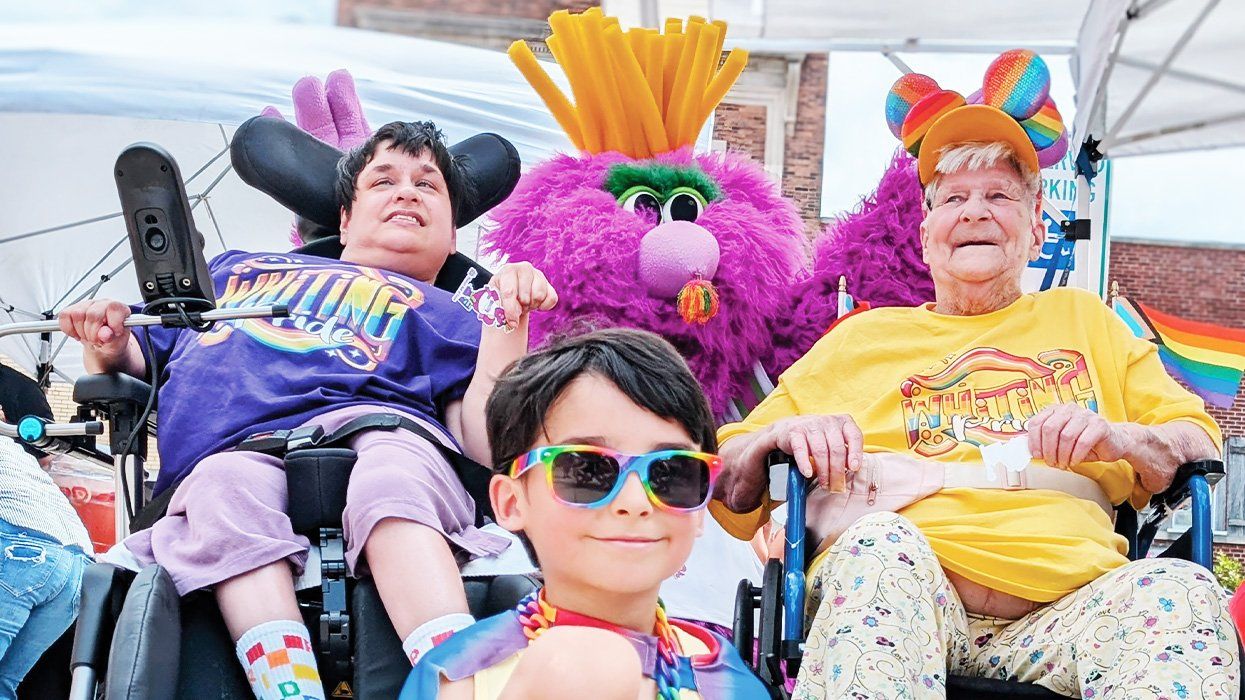
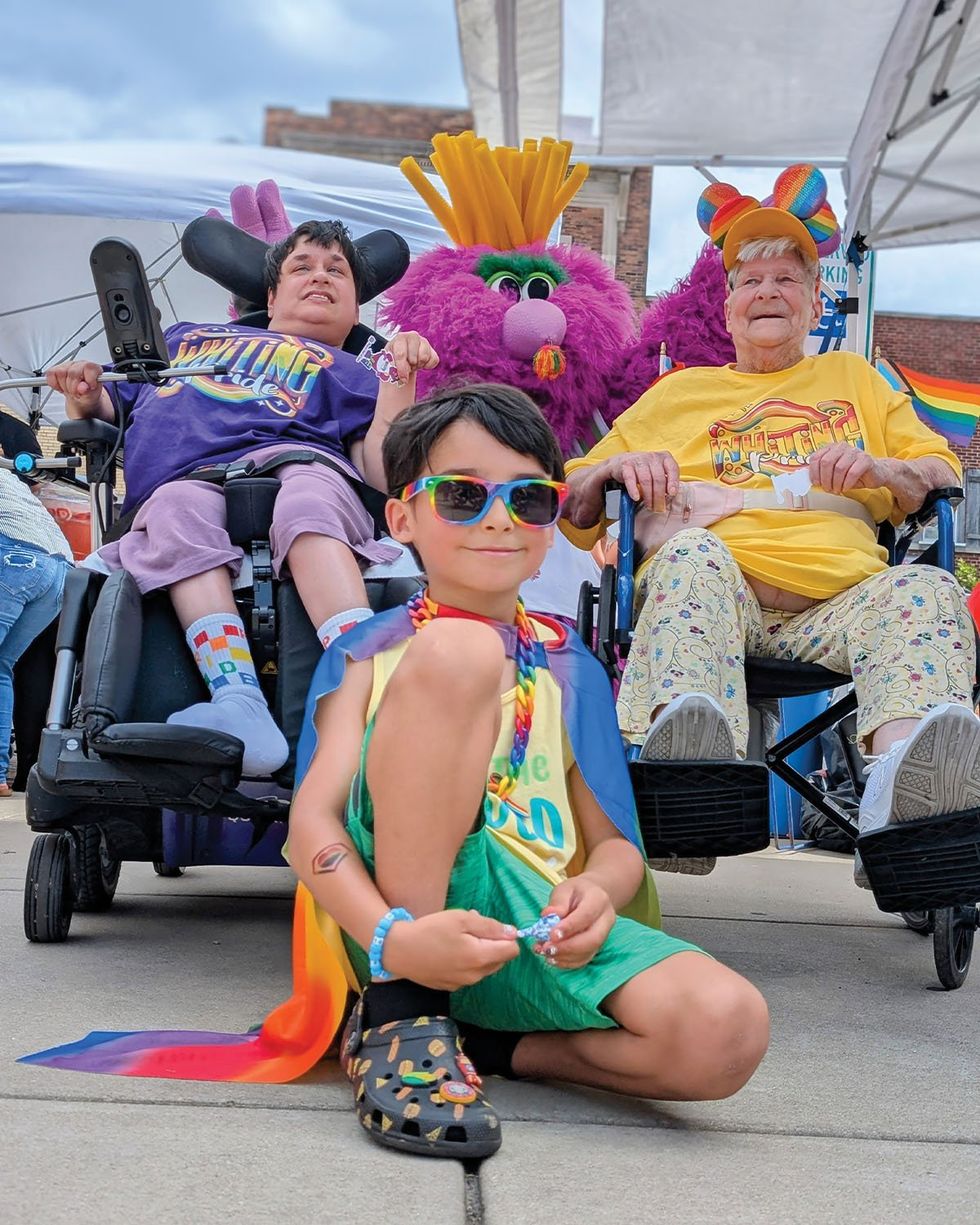
In Whiting, Indiana, a town of 4,500 people just southeast of Chicago, Pride organizers fought to exist from the start.
After the City Council and the mayor rejected requests for a Pride proclamation in 2023, an estimated 50 people spoke at subsequent council meetings to voice their support. A three-hour block party was eventually allowed, giving organizers one month to put together the inaugural Whiting Pride. The event attracted 400 people and raised about $5,000, mostly through cash donations.
“There are some big organizations here, so we considered putting together different sponsor level packages, but due to the current political climate we want our community members to have grassroots activism,” says Bridget McCullough-Favela, Whiting Pride’s corporate secretary. Last year, the event had 12 booths, a benchmark the organizers expect to build upon now that they’ve had a full calendar year to prepare.
“What would be productive is for people to continue to show up, not be discouraged by the rhetoric that’s going around, and take a more active role instead of being a bystander and taking events like this for granted,” she says.
“We’re going to find the money”
At San Francisco Pride’s March member meeting, the organization announced a shortfall of about $300,000 and named five sponsors that had not renewed in an effort to alert the community, said Executive Director Suzanne Ford.
“We didn’t disclose with prejudice. I provided what they said about a lack of funds,” she says. “I did say that all of them had been sponsors with us for years, and it was out of the blue that they went away. I’m trying to put a face on it because those companies have been with us so long.” At the time of our interview, at least one sponsor had re-initiated sponsorship conversations as a result.
“We’re going to find the money,” Ford says. “People are looking to make a statement that they don’t agree with what’s happening out of Washington. Here’s a concrete way to do that.”
Ford also emphasized the importance of not letting anger and malaise overtake the queer experience. SF Pride’s 2025 theme is “Queer Joy Is Resistance.”
“We cannot let them take our joy. We cannot just become an angry bunch of people,” she says. “There is a verifiable reason to have anger, and I want people to have the ability to express that. But I also want people in our community to be with each other and enjoy each other. We can do both.”
“I wanted to have community in my community”
In 2018 Jason Rocha helped start a Pride festival in The Woodlands, a Houston suburb in a county that voted 72 percent for Donald Trump last year. “I wanted to have community in my community,” he says of The Woodlands Pride. In 2023 the organization joined a lawsuit against the state of Texas regarding Senate Bill 12, legislation that would criminalize any type of performance in front of minors deemed “sexual” (essentially, a drag ban). A federal court declared the law unconstitutional, and while that ruling has been appealed, the ban remains blocked from enforcement.
“We had a conservative oil company sponsor us for our second or third year, so I intentionally put them at the front of the park where they get the most traffic,” he says. “I wanted them to see that it’s not bad. Just turn off Fox News and live real life with real people. They were thriving; every time I walked by, they had a packed house.”
After the lawsuit, the company and others dropped future sponsorship (“at least they said why — others quiet-quit us,” Rocha says). Because the organization has focused on smaller donors since its inception, it’s been able to absorb the funding blow. Rocha explains how, even for elements like security, it can be difficult to fully disentangle from resources that are federally funded and therefore subject to political pressure.
“We hire off-duty police officers because that’s required for the permit,” he says. “We’re paying them, but they’re wearing uniforms that I assume are provided by the county. The guns that they carry are provided by the county. And the county gets federal funding. They’re going to pull little bits here and there until it all unravels and you’re stuck with a picnic at a private park.”
“You have to be a chess player”
DEI mudslinging aside, recession fears are also shaping the sponsorship landscape. Julia Music at Ferndale Pride in Michigan said the organization usually has next year’s naming rights sponsor lined up by the end of the current year’s festival. But last year, that didn’t happen. Some non-LGBTQ+ factors have been giving sponsors cold feet, Music says.
“One of the [past sponsors] is alcohol, and they’re very concerned about the tariffs,” they say. “They have no idea what that looks like, as far as how things are changing, so some of them are canceling any event that doesn’t sell liquor, and we don’t sell liquor at our Pride festival.”
Music emphasizes the distinction between corporations themselves and their employees, with whom many Pride organizations have had fruitful, years-long partnerships. “That’s been hard, because the people inside those companies are LGBT people,” they say. “They’re fighting to get that money back. They want to come to the Pride festival and show off what they do. So we’re trying to be gentle with those situations. You just have to be a chess player and play the long game.”
How to support Pride efforts this year
You can, of course, post selfies and jam out to the DJ at Pride this year (and every year). There are also actions you can take that will more directly support organizations as they grapple with various new resourcing challenges.
First, if you can donate money, please do so. When you donate to an organization, you become more invested in its mission, and this sense of purpose can be an antidote to feelings of isolation or emptiness (there’s also a tax deduction here, so keep those receipts). “Set up a recurring donation to your Pride organization, just $5 a month,” says Rocha. “If we had half of our attendees donate $5 a month last year, that’d be $60 times 4,000 people – that’s a lot of money.”
If your budget is too tight to donate money, remember that you can also donate your time. Several directors said day-of volunteering makes a huge difference; consider sprinkling a volunteer shift into the day’s festivities to lend an extra set of helping hands.
“A lot more people want to participate on some level,” Music says of the vibe shift this spring. “I see a lot of people energized around the festival itself. They want to volunteer, or want to host a fundraiser. There’s all sorts of energy going on around the event, and I think because of that we’re going to be able to make it this year.”
Nick Wolny is Out magazine’s finance columnist. He writes Financialicious, a personal finance newsletter tailored toward queer readers, and is working on his first book, Money Proud, which releases later this year. NickWolny.com @nickwolny
This article is part of the Out May/June "Pride" issue, which hits newsstands May 27. Support queer media and subscribe — or download the issue through Apple News, Zinio, Nook, or PressReader starting May 15.