

Queer people are statistically disadvantaged when it comes to household wealth, employment, and financial stability. Resources like a steady job or higher education can improve earning potential. So can owning property or winning Drag Race. But there’s another way to build wealth, and that is to start a business.
We gays are pretty damn good at business, as it turns out. Queer founders create 36 percent more jobs and 114 percent more patent than the industry average. People with money are taking notice; one report released by Morgan Stanley last year found that 45 percent of all U.S. investors want opportunities to invest in queer diversity and inclusion, and this number spikes to 76 percent for investors who have an LGBTQ+ member of their household.
Unfortunately, many of these business ideas never achieve liftoff, either because they don’t have the funds to make it happen or don’t have the proper guidance to navigate the treacherous waters of entrepreneurship. We get passed over for angel investment and venture capital too often: According to the LGBTQ+ entrepreneurship nonprofit StartOut, less than 0.5 percent of the $2.1 trillion in overall startup funding in the past several years was raised by out queer founders, despite the most recent Gallup poll seeing LGBTQ+ identification in the U.S. climb to a record-high 7.6 percent.
“When we do get funded, we only get 84 cents on the dollar compared to straight and cis founders,” says Brian Richardson, StartOut’s CEO.
To fight this, a crop of queer-focused venture capital funds, business organizations, and communities have emerged to help LGBTQ+ people find economic stability and fulfillment through entrepreneurship. They’re out to funnel funding to the ambitious queer people who need it most, as well as to give lay investors an opportunity to discover and mentor LGBTQ+ businesses on a deeper level.
The Venture Capital Closet
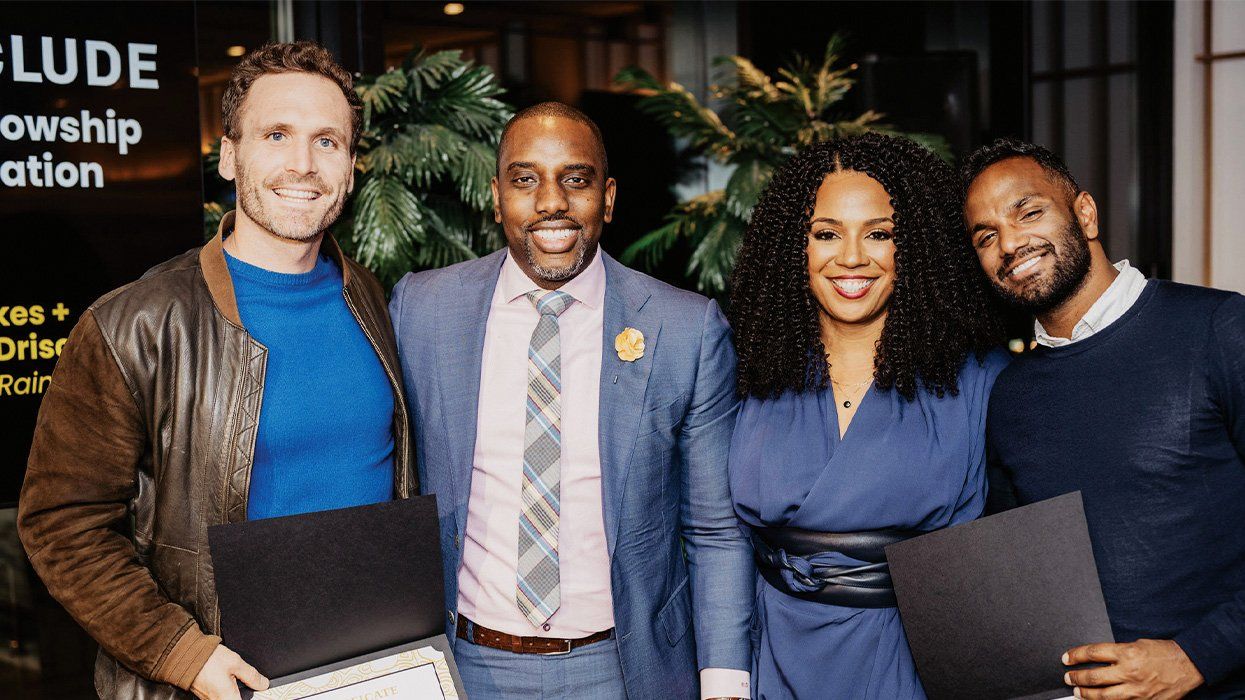
Many founders go back into the closet when pursuing funding to appear less controversial, says Patrick Driscoll, general partner at Chasing Rainbows, a venture capital fund. “Going back in the closet when raising capital means they’ll go to social media and take down any LGBTQ+ images, or they’ll take down a queer flag for fear of somebody seeing that and potentially not giving them money,” he says. “The sad part is that being LGBTQ+ is perceived as a risk to some investors. Founders want to de-risk themselves in every possible way to investors. In many cases, they unfortunately go back into the closet.”
In venture capital, investors who have different political or religious viewpoints might use a limited partnership agreement to discriminate against a founder, says Ben Stokes, founding partner at Chasing Rainbows.
“These clauses prohibit investment into things such as gambling or war but instead are being used to openly discriminate against our community,” he adds. “If founders do go back into the closet, that’s obviously code-switching. They’re spending a lot of wasted energy and time trying to fit in rather than just being focused on building their product and serving their customers. That’s what’s going to make them successful, not whether they can code-switch during meetings.”
Some of the barriers queer folks see in the earliest idea stages of entrepreneurship are similar to the problems female-identifying founders face in terms of not being taken seriously, says Megan Kashner, general partner at Colorful Capital, a venture capital firm.
“Once folks get into actual conversations with angel and VC investors, that’s when we get into the heuristics of bias,” says Kashner, referring to closed-minded decision-making. “So often, the predisposition of VC leadership around gender norms, race, or gender conformity may stop a conversation before it even starts.”
Kashner and her fellow general partners wanted an outlet to share their career experiences and network with up-and-coming founders, a sentiment that is common in VC. “One of the things that we like to say is that we were always queer professionals but had never been professionally queer,” she says. “In starting Colorful Capital, we made a decision to take our professional competencies and apply them to our own community.”
Think Like a Unicorn
Working with an LGBTQ+ venture capital fund isn’t a guarantee for funding, though. Your business idea still needs to have product-market fit and enough room to scale to get an investor’s attention.
“Any entrepreneur who wants to start their own business needs to understand that it’s not easy,” says Tristan Schukraft, the founder and CEO of the PrEP telemedicine company MISTR. “MISTR was not really a business I was looking to start. I was just trying to help friends get on PrEP, and then it turned into a business. When I did go looking for investment, nobody wanted to invest — like, nobody. Not a lot of people want to invest in gay businesses. I ended up bankrolling it myself.” Schukraft is a serial entrepreneur whose other companies include the Circo nightclub and Tryst Hotel in Puerto Rico and the Abbey in West Hollywood.
“Founders come to me with business ideas [for investment] and say they’re going to get 50 percent market share. I appreciate the enthusiasm, but that’s probably not going to happen,” he says. “So then I look at it and think about what would happen if this founder could get 10 percent of the market. Is that a viable business?”
How to Join the World of Queer VC
Driscoll explains that there are two main ways to invest into queer founders: venture capital funds or being an angel investor. “Angel investing is for when you really love a company or founder, or it’s in a vertical you’re passionate about,” he says, whereas funds are a more diversified option. Investors are often drawn to funds both to de-risk investment and have opportunities to mentor a variety of founders, sharing what they’ve learned in their own careers with the next generation of queer movers and shakers.
In exploring this entrepreneurial world, be sure to seek out the gays early and often. StartOut’s offerings include an online portal of resources as well as in-person events throughout the year. “Investors can join our Investor Portal, where they will have direct access to hundreds of talented LGBTQ+ entrepreneurs actively looking for investment,” says Richardson. Other business communities and VC funds include Out in Tech, Gaingels, the Pride Fund, and Arlan Hamilton’s Backstage Capital.
Also, take some time to clean up your information diet and prioritize quality sources. Surround yourself with smart people and smart commentary. “When I focus on a subject, I learn everything I can about that subject,” says Schukraft. “Some people don’t like surrounding themselves with smart people because they feel threatened. There’s an old saying: ‘Learn from other people’s mistakes, because you don’t have the time to make them all yourself.’”
A unicorn is a long-standing moniker for a company that achieves a valuation of a billion dollars or more. Often, those companies reach the stratosphere not just because they’re built on a good idea but also because the founder was able to get into the right rooms with the right people at the right time. More queer unicorns would cultivate both economic parity and a better world, and there’s a whole community of investors and mentors who want to help starry-eyed founders make it happen.
Nick Wolny is Out magazine’s finance columnist. He also writes Financialicious, an email newsletter on LGBTQ+ business, finance, and culture. NickWolny.com @nickwolny
This article is part of the Out May/June issue, which hits newsstands on May 28. Support queer media and subscribe — or download the issue through Apple News, Zinio, Nook, or PressReader starting May 14.