



Elon made news for becoming a trillionaire this year, and all you have is two extra inches of legroom in premium economy. Bloop.
But the two of you might have something in common. You both own shares of SpaceX — whether you wanted them or not. After going public in June, Elon Musk’s rocket conglomerate was fast-tracked into some of the most popular indexes, including the Nasdaq-100 and the Russell 1000. If your retirement or investment accounts have funds holding these indexes — and many do — surprise! You’re invested in SpaceX now.
Major indexes can have waiting periods of up to 18 months before a new company can roll on in. This is to allow the drama of going public to play out (most often during a reunion episode, in peak glam, with lots of yelling and finger-pointing), after which things cool off and stabilize. But the SpaceX IPO was weird. It’s kind of a franken-company, encompassing space travel, Starlink’s satellites, X (formerly Twitter), and xAI, which operates Grok. Also, deregulation is all the rage at the moment, so here we are.
As a result, millions of queer people are now holding SpaceX stock. Some don’t want to. And it’s not because of SpaceX’s current unprofitability, which is substantial, or its governance structure, in which power is probably too consolidated. It’s that the company’s founder disowned his transgender child, an experience many LGBTQ+ people have had with their own parents. (Other stuff, too.) Depending on who you talk to, some people care about this a lot. Others don’t care at all. Others still are in the middle, weighing personal ethics against long-term family and financial planning.
Whatever your feelings on the matter, SpaceX’s forced entry is a reminder that you do have some choice in where and how you invest your money. Since many of us manage our own retirement accounts and brokerage accounts, if we don’t agree with a company or industry’s practices, we can research alternative options and allocate our money elsewhere.
To get us all on the same page, let’s recap the essence of long-term investing, the pros and cons of investing your values, and what you might want to consider.
 Ben Galloway, a partner and senior financial advisor at Greenspring Advisors.Whitney Wasson
Buy and Hold
DIY retirement planning is still somewhat recent. When Vanguard founder John Bogle championed the idea of the index fund in the 1970s, Wall Street was not having it. People are too stupid to invest by themselves, complained the pros.
But Bogle’s ethos wasn’t only about making lots of money. His approach also emphasized exerting as little effort as possible (yas laziness) so that you’re more freed up to enjoy other aspects of life. In the years that followed, people who bought index funds on autopilot often performed just as well as professional investors, and sometimes better. The Bogleheads investment philosophy (a name probably coined by gays, because you know we love a portmanteau) emphasizes index funds, simplicity, diversity, tax avoidance, and low fees — a nice combo platter for people who just want to set it and forget it.
More recently, Environmental, Social, and Governance (ESG) funds have become an option for values-minded investors. Socially responsible investing has seen enthusiasm for decades — one mutual fund as far back as the 1970s assessed its holdings based on social and environmental factors — and the governance piece became of increasing interest after a few high-profile corporate scandals at the turn of the century. (Respect! Integrity! Communication! Excellence! These were the values of Enron, an energy company whose mass accounting fraud in 2001 led to about $74 billion in investor losses and over $1 billion lost in unsuspecting employees’ retirement accounts.)
ESG funds require more research and curation, so they sometimes have higher fees, and sometimes don’t perform as well. There’s also criticism of the criteria used to include a company in an ESG fund and how easy it is for corporations to game those requirements. Still, it might be an option worth looking into, says Ben Galloway, a partner and senior financial advisor at Greenspring Advisors.
“Many organizations, big custodians, and fund managers offer mutual funds and exchange-traded funds that can filter through an ESG lens or a values-based portfolio,” he says.
Examples of values-minded funds include prison-free funds, weapon-free funds, and gender equality funds. For a while, there was also an LGBTQ+ fund, the LGBTQ100, which measured companies’ commitments to queer rights, but it shut down in 2022. That’s too bad, because stock market pressure has historically been one of the more effective ways to get companies to bend in favor of LGBTQ+ rights and economic parity.
Adjusting Your Investments
If you have a 401(k) or other employer-sponsored retirement plan, you’re limited to the menu of investment options that are offered within that plan. This is so companies can’t be held liable for investment losses if employees do something risky and/or stupid. (You can’t go dump your entire 401(k) into the $TRUMP crypto. The “alpha male” finance bros are not OK.)
There are still a lot of options though. Sites like PrisonFreeFunds.org have self-service databases you can use to look up your current funds. Find funds that are more aligned with your values, then see if your retirement plan offers them or something similar. Brokerage accounts usually have a wider selection.
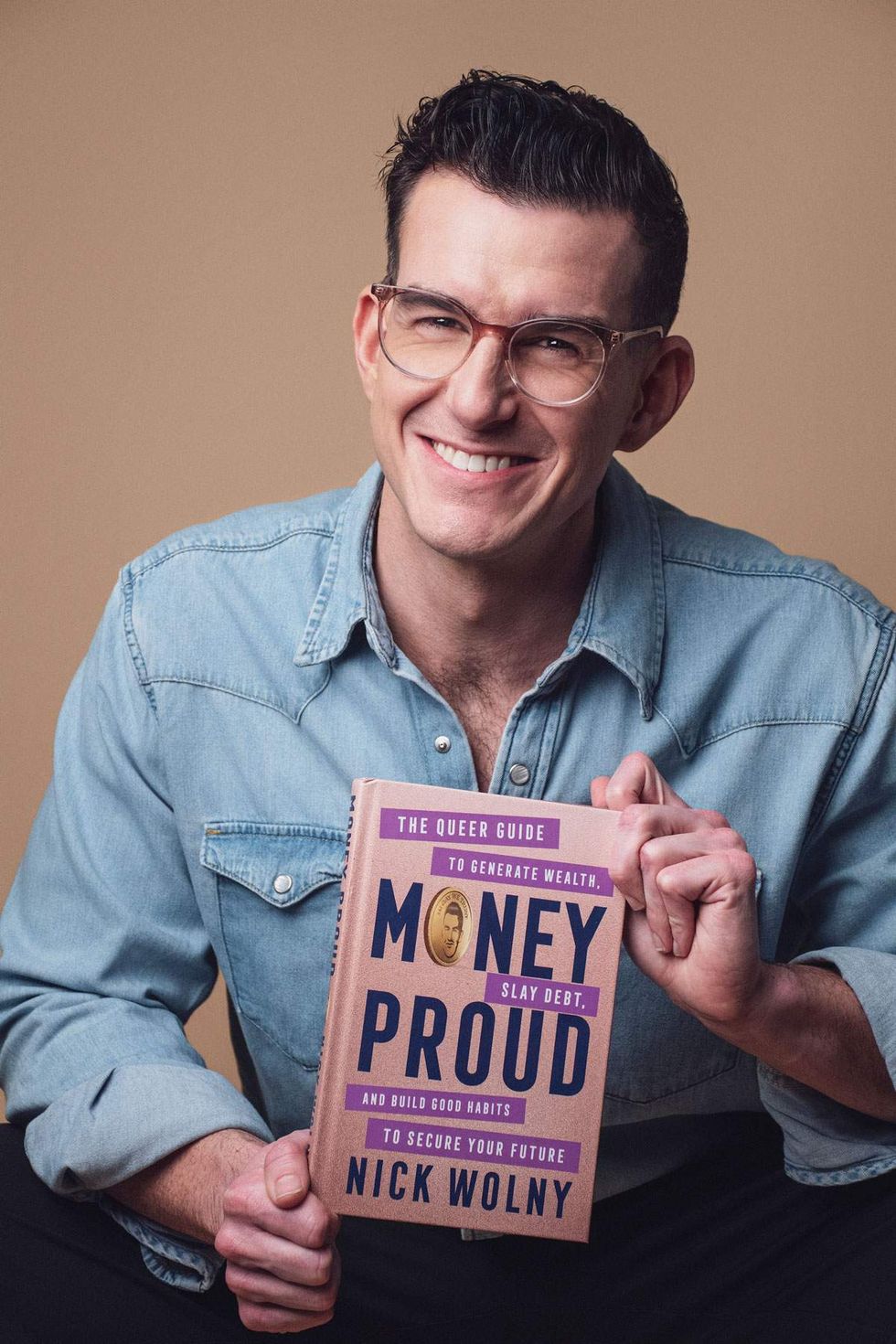 Author and finance expert Nick Wolny.Cameron Thrower
Robo-advisors have been around for a while, but AI has been like a thunderstone, evolving them into something stronger with just one touch. Separately, AI interfaces like ChatGPT, Claude, and Gemini have become directional tools that point us toward sources of information and give context. But they can also hallucinate, and not in the fun shrooms-kinda way. AI hallucination is when chatbots sometimes give incorrect answers (confidently, like, with their whole chest).
Galloway says he likes the education potential but also wants you to tread carefully. “It can be a helpful reference point and a great place for people to initiate the conversation if it has not happened yet,” he says. “I am cautious on it being the solution that we’re making all of our decisions from. But I wouldn’t discount it.”
Spending Is Investing Too
How we invest our money creates impact, and this impact also happens when we spend or give with intention. Harvey Milk was big on this; he encouraged people to buy from gay-owned businesses, and to resist buying from companies that didn’t support gay equality, most notably through his alliance with the Teamsters Union to boycott Coors beer. The union agreed to hire gay truck drivers in return, creating employment opportunities at a time when employment and economic stability were precarious.
Seek out products and services from companies you want to support. Yes, Amazon Prime is convenient, but you’ll feel more engaged and less numbed out when you spend with businesses that actually give a damn about you, or founders in whom you see a version of yourself. This is a big priority for younger generations: Research from Morgan Stanley found that only 24 percent of boomers want options to invest in LGBTQ+ equity, whereas the numbers spike to 56 percent for millennials and 67 percent for Gen Z.
You can donate investments as well, and this might actually be a bit easier on your cash flow, because unrealized capital gains probably (I hope) weren’t being accounted for in your monthly budget anyway. A donor-advised fund (DAF) is a type of investment account in which you contribute money that can be written off as a tax deduction. But you don’t have to donate the money yet; you can let it sit, compound, and then have your impulsive charitable daddy moment later, like when Liza Minnelli makes a cameo at the GLAAD Media Awards (which she did earlier this year, btw). DAFs let you make donations as little as $50, and the investment growth is tax-free since you already donated the money.
Don’t let the egomaniac billionaires get you down. Take the time to set up and streamline your investments so you can get that gorgeous peaceful sleep at night while still securing your future.
This article is not investment advice and is for educational purposes only.
This article is part of OUT’s Sept-Oct 2026 print issue, on newsstands September 1. Support queer media and subscribe — or download the issue now through Apple News+, Zinio, Nook, or PressReader starting August 20.
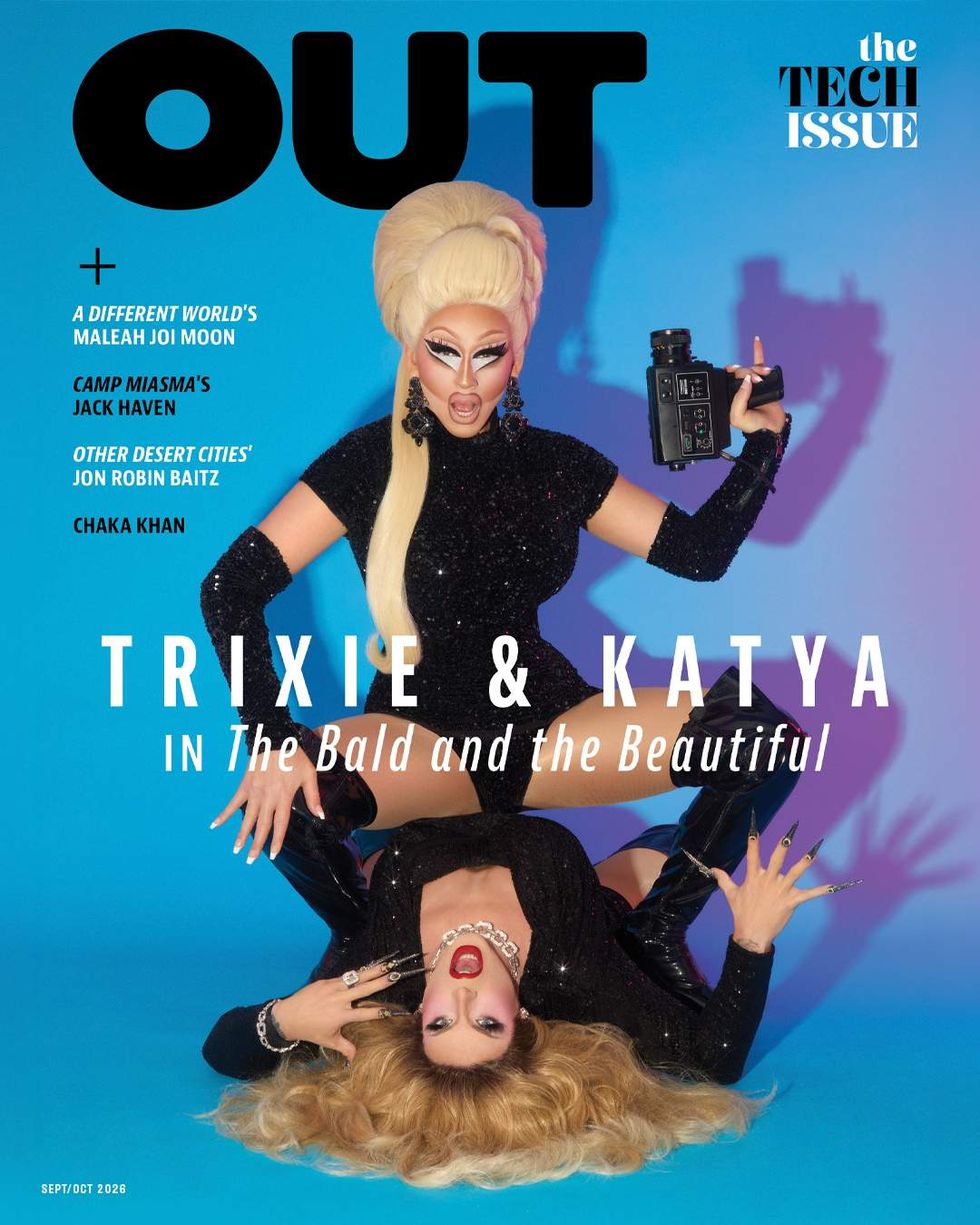 Out September/October 2026 cover with cover stars Trixie Mattel and Katya Zamolodchikova Albert Sanchez and Pedro Zalba