


Named after the Old Testament scripture so often used as a weapon against the LGBTQ+ community, Leviticus is the gripping new horror film from director Adrian Chiarella that takes the real-life trauma of conversion therapy and spins it into a literal, supernatural nightmare.
The film follows Naim (Joe Bird) and Ryan (Stacy Clausen), two small-town Aussie teenagers whose budding romance catches the eye of the conservative locals, triggering a religious, cult-like intervention. After their parents force them into a dogmatic "cleansing" ritual performed by a dubious preacher, the boys soon find themselves pursued by a violent, shapeshifting entity — a curse that only the inflicted can see. But the most psychologically cruel aspect of all is how this nefarious force stalks them: It takes the shape of the person they love the most — each other.
Leviticus — which hits theaters on June 19 — arrives at a time when the horror genre is experiencing a box-office renaissance, yet queer stories are still too often siloed as a niche category. Chiarella, however, has crafted a story where the cerebral scares are universal. At its core, the film is ultimately about young star-crossed lovers facing an unstoppable, demonic threat — something that should strike a chord with anyone regardless of sexual orientation. By framing the isolating experience of growing up as a vulnerable teen and the pain of parental rejection through a supernatural lens, Leviticus narrows the gap between terrifying genre conventions and an emotionally stirring coming-of-age story that resonates far beyond the LGBTQ+ community.
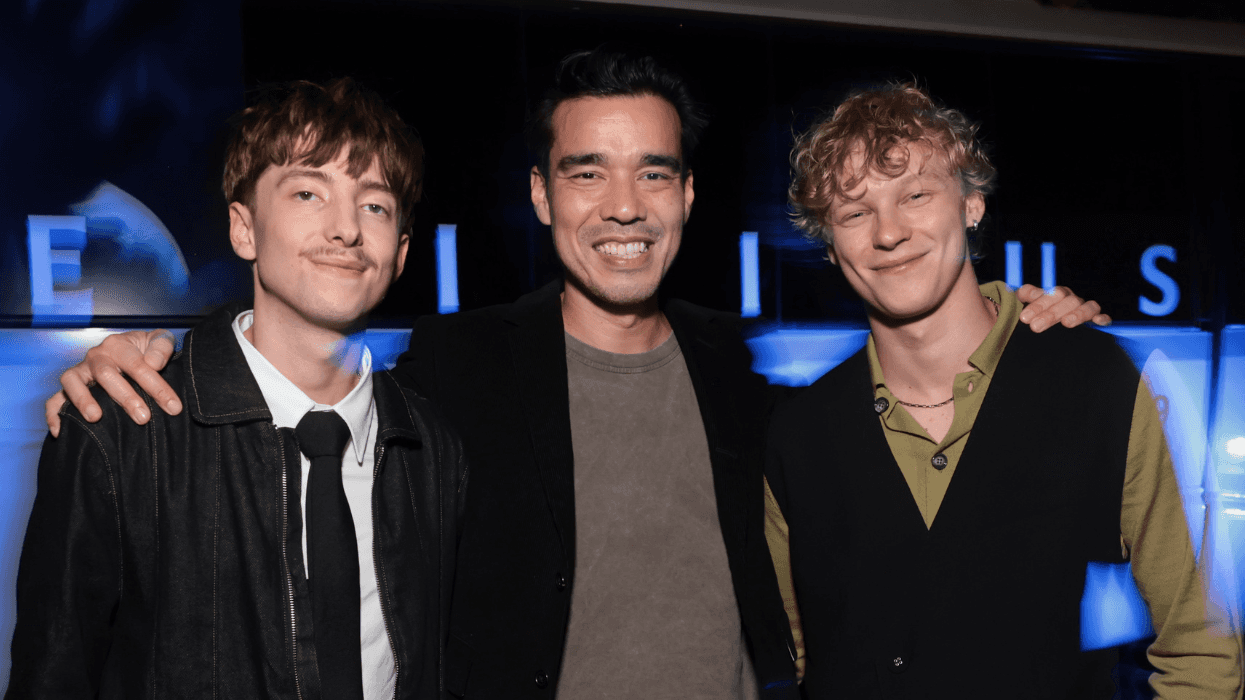
Just ahead of the film’s theatrical release, Out sat down for a virtual chat with Chiarella to discuss his harrowing global research into conversion therapy, how his own religious school upbringing informed the script, who the villain of the story ultimately is, and his thoughts on Leviticus spawning a horror franchise.
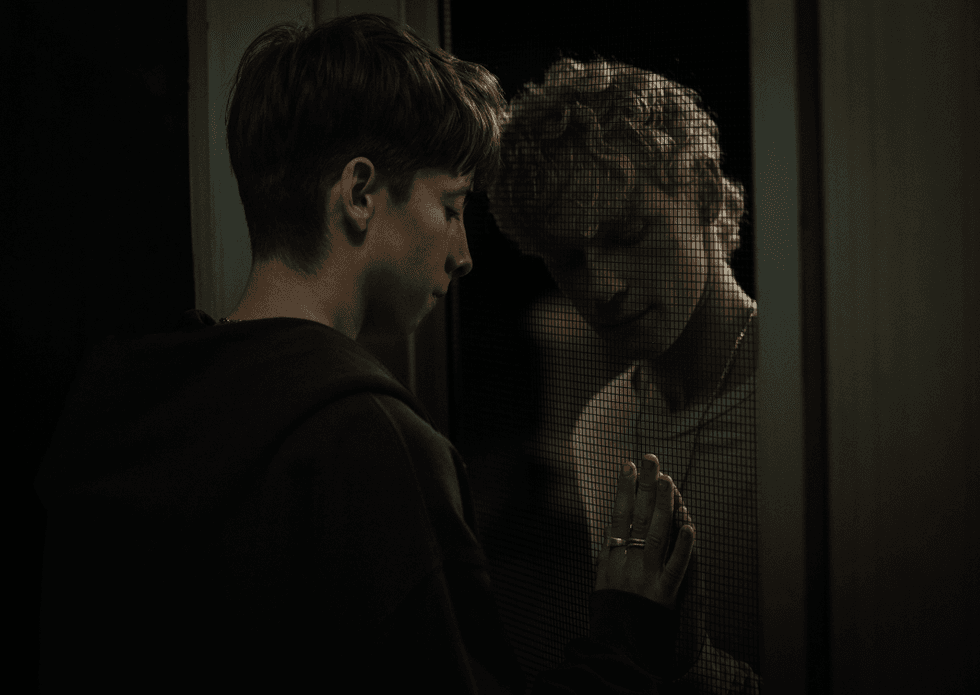
Joe Bird and Stacy Clausen star as Naim and Ryan in Leviticus
NEON
Out: When you were writing this movie, you did a lot of research on conversion therapy, not just in Western culture, but across the world. What were the most disturbing findings while you were researching that topic?
Adrian Chiarella: I heard about exorcisms performed in cultures all over the world. And then there was a very good friend of mine — his parents were actually Taoists, and I remember him telling me he went to a Taoist priest who was cutting the curse off of him with just a knife, and that sounded horrifying. There was a lot of imagery that just felt like it was out of a horror movie. It only reinforced for me that this is the genre to tell this story and to explore these ideas through.
Obviously, this film is going to resonate with the LGBTQ+ community. When you were writing the screenplay and coming up with these characters, did you draw from any of your own real-life experiences?
I can't point to anything specifically, but what I could say is that my parents were not religious, but they did send me to an all-boys religious school. And so the feeling of having homophobia thrown at you, not just from other kids, but in things that are said in classrooms and in church assemblies and having scripture quoted at you — particular lines, like the ones we referenced in the title of the movie — you just feel like it's coming at you from both sides. That is something that I found very, very difficult to get through, and I think I shared that with a lot of other queer people I spoke to when I was developing the film.
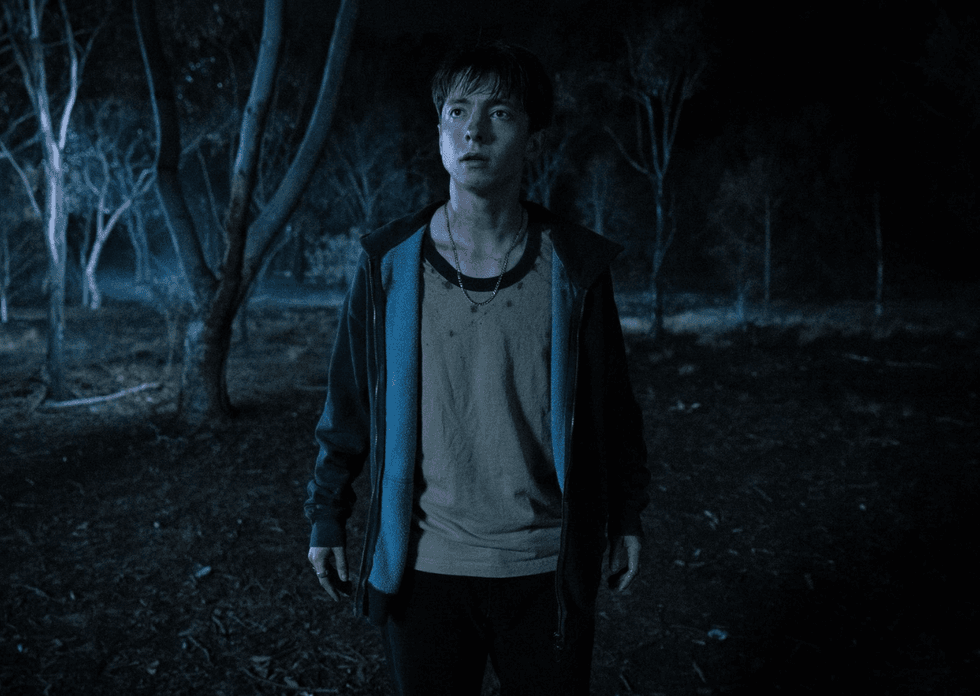
Joe Bird as Niam
NEON
I hate that this happens, but right now, we have two really strong horror movies out: Backrooms and Obsession. You don't see people in the gay community going, “Oh, that's a straight horror film.” There are people already labeling Leviticus as a gay horror film. I keep telling them, “Everyone should be able to relate to this and go see it.” So with that in mind, as you're writing your story, were you also trying to create a takeaway message that might resonate with people who are straight, or allies, or maybe parents who have gay kids? I would imagine you want to grab their attention too, not just the queer community.
Yeah, that's right. And one of the best compliments I've had from people who watch this film — people who are not in the LGBTQ community have said to me, "Oh, I really responded to it because it's not just about that.” It's about that phase in life we all go through when you're a teenager, when you're coming of age, and you're just learning how to have the confidence in who you are and how you feel."
I think hearing that from people has really made me feel a lot better about the film going out as wide as it is. I didn't expect this film to go out as widely as it is, and so, I really hope that people, however they identify, are able to really find something in this film.
If you take the conversion therapy analogy out of it, in a way you can argue that this supernatural entity in your film can be sent after anyone regardless of sexual orientation. I think there are people out there who have had that parent who has disapproved of who they love, whether it’s race, religion, or someone of a certain social status. This film should resonate with all people who have been told they weren’t allowed to love somebody.
Yeah, and you know what's really funny, you mentioned parents. I think that is a really interesting element to this story because one of the rules about this monster is that no one else can see it except the kids who've had the curse put on them. I think something that a lot of queer teenagers go through with their parents is this idea that they don't believe how they feel or they don't believe how they identify. They think they're just making it up or they've been influenced by other kids.
I think that's true of most young people. When they start to develop feelings for someone else, their parents might be a little bit like, “Really? Are you sure?” And it's a big step that I think families have to take in trusting that their kids are starting to develop their own feelings and their own emotions, and that's drawing them into their own relationships as they become adults.
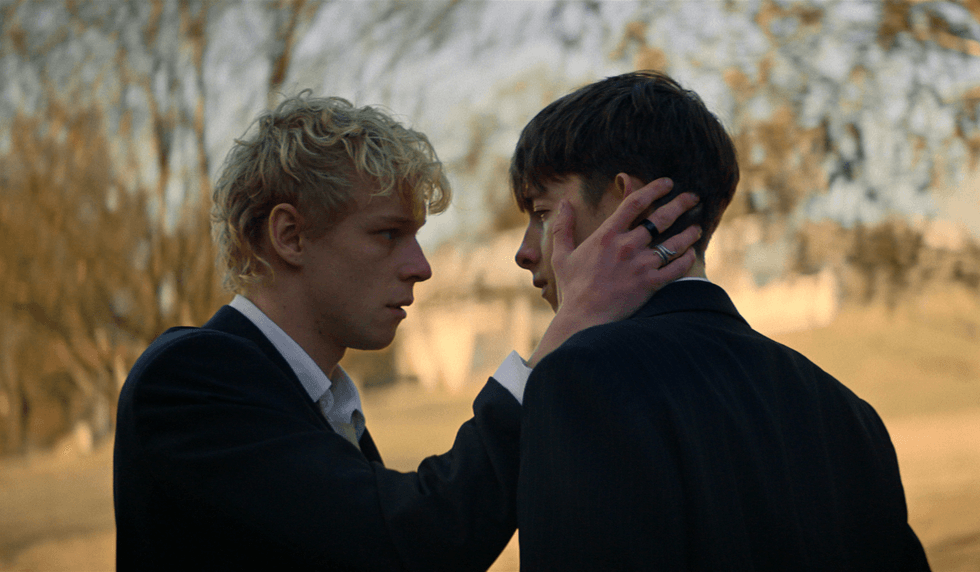
Joe Bird and Stacy Clausen star as Naim and Ryan in Leviticus
NEON
You mentioned how straight people have responded to your film, but have any gay people given you any strong reactions or feedback?
We've been lucky with this film. It's screened at festivals like Sundance and South by Southwest, which, to a lot of people, sound like really big, fanciful industry titles for festivals, and they are. You get a lot of industry people there, but people forget these are in states like Utah and Texas. The people who come to these films and come to these festivals, and see our film, they've grown up in those states, and particularly parts of those states where they've had to face a lot of very real-world trauma that our characters are going through. And so hearing from those people at the festivals has been the real highlight for me.
It’s a good thing this is just a horror film and the demon you came up with is fictional. But if this curse really existed and that preacher was really out there, do you think people would actually use a curse like this on their own kids? The answer to that is what I find scary.
I mean, I don't know. When you make a horror movie, you have to go there and explore the darker sides of humanity. So I think, while I was making this film, I maybe delved into that reality. That is what I had to accept: There are people out there who would probably do something like this, and already do something in the real world that is in a similar direction to what this curse is.
So who would you say is the real villain in the movie? You could say it's this entity, but in a way, it’s like an invisible golem. It's taking orders. There’s the preacher who is willingly inflicting the curse on teens, but then there are the parents who are OK with it.
It's funny. I talk to a lot of people or friends who, going into the movie, will say to me, “I don't really like horror movies. I'm only doing this for you, Adrian.” And then when they come out of the film, they're like, “Actually, I wasn't that scared. I think I managed to get through the horror scenes. There were some good scares and terrifying moments, but I think I got through it.” But those people are always the ones that say to me, "I just couldn't handle [the mother] Mia Wasikowska's character," and I think it speaks to where the real terror is in this storyline.
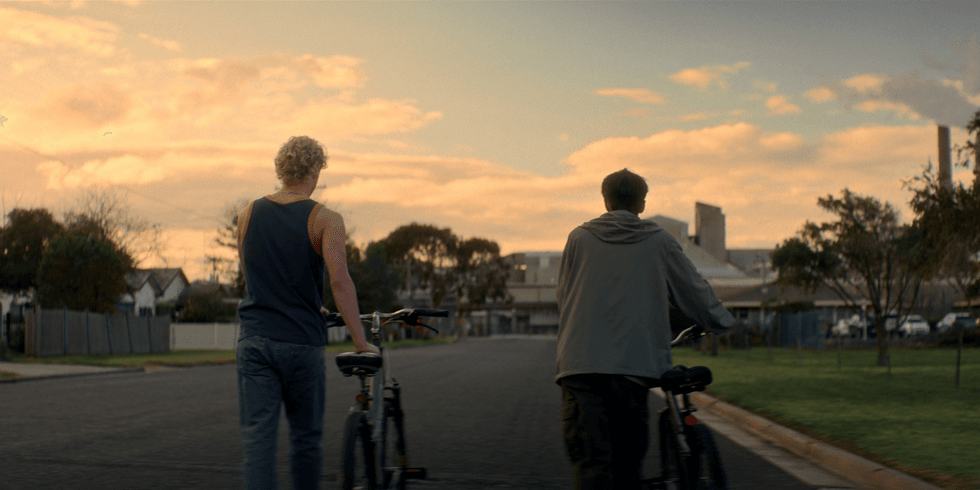
Joe Bird and Stacy Clausen star as Naim and Ryan in Leviticus
NEON
The film ends with Naim and Ryan staying together, embracing their fate, and deciding to face whatever's coming their way. Do you see this as a one-and-done, or could there be a sequel where we follow these characters, or you explore the origins of this entity, or do we follow different couples who are inflicted with this curse and turn this into a franchise?
I don't know. I can't really say. But I think there's a lot to be explored. I think there's a lot of interesting queer stories and experiences. It's not just about these two teenage boys. The idea of what this curse could do, I think it's something that's rich for all kinds of different experiences across the LGBTQIA+ community. One of the great things about this film is even before it's released, we're already seeing fans respond to that through all of their creativity — their fan edits, their fan fiction, and their fan art. So yeah, I think that's the bit that's already exciting to me.
Leviticus is now playing in theaters.