
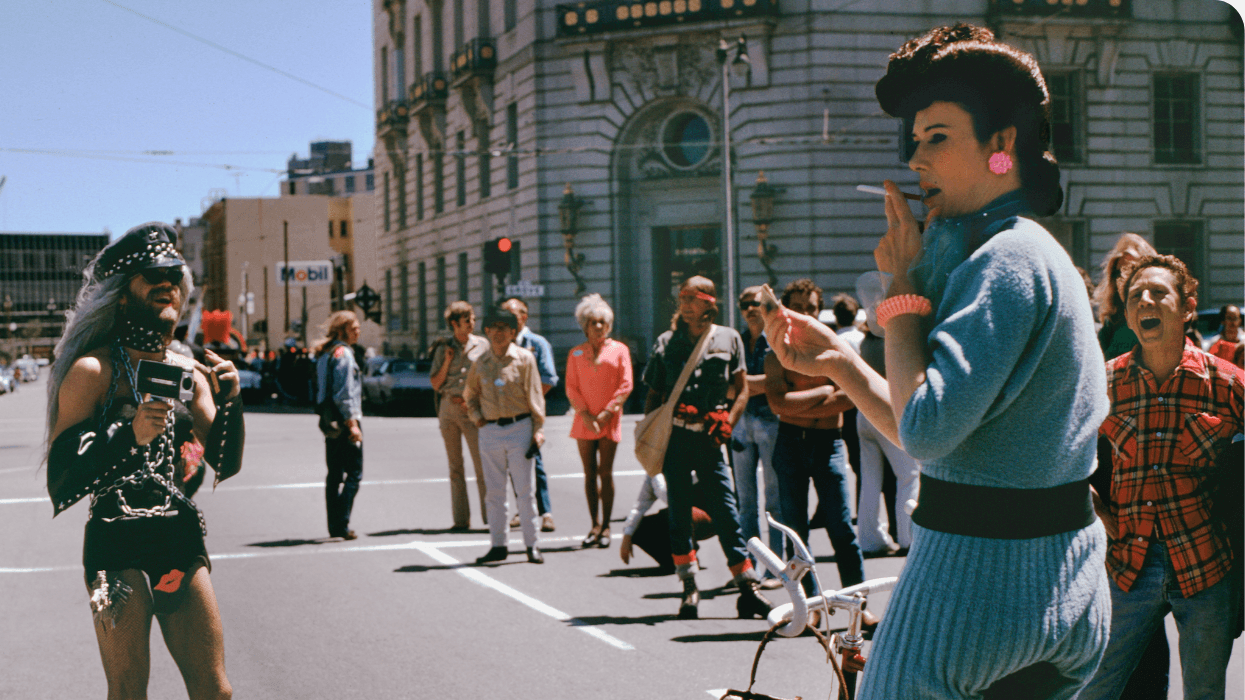
As Frameline prepares to celebrate its 50th anniversary, the San Francisco International LGBTQ+ Film Festival is looking both backward and forward. What began in 1977 as a grassroots screening series has grown into one of the most influential platforms for queer filmmakers anywhere in the world — while still holding tight to its community-driven roots.
Now led by executive director Allegra Madsen, Frameline continues to shape conversations around queer storytelling at a moment when LGBTQ+ visibility remains deeply political. Ahead of Frameline50, which will take place June 17 to 27 at S.F. and Oakland venues, Madsen reflects on the festival’s history, the power of queer audiences gathering together, and why queer cinema still matters so urgently.
And head to frameline.org to browse Frameline50's events, including screenings for Barbara Forever, I Want Your Sex, Girls Like Girls, Hunky Jesus, Teenage Sex and Death at Camp Miasma, and more new and old queer classics.
Frameline started with films projected onto a bedsheet, and now it brings together thousands of people each year. What elements from those early days still shapes Frameline today?
Frameline began as a free community event. The films were projected onto a bedsheet in an empty storefront. The program was assembled through word of mouth and handmade posters. The goal was simple and radical: gather queer filmmakers, create community, and insist that our stories be seen. What still shapes us today is that same founding impulse, that the act of gathering together in a dark room to share an experience is itself a political act. We have carried that community spirit with us even as we’ve grown to be an international festival, platforming filmmakers from countries all over the globe and bringing their work to San Francisco audiences who might never encounter it otherwise. We are still, at our core, a community event. The scale has changed. The spirit hasn't.
What’s a memorable moment from the festival’s early history that’s stuck with you, and why?
My favorite story from Frameline's history is the Lesbian Riot or the origin story of The Frameline Completion Fund. In the '90s, a group of lesbians, furious at the lack of lesbian representation in the festival, stormed the projection booth at the Roxie Theater and insisted that the festival hear them. And rather than dismissing that anger, the organization listened and built The Frameline Completion Fund to ensure that lesbian films were made and had equal opportunity to be seen in the festival. The Frameline Completion Fund has gone on to support more than 200 projects over the past 25 years. The riot worked.
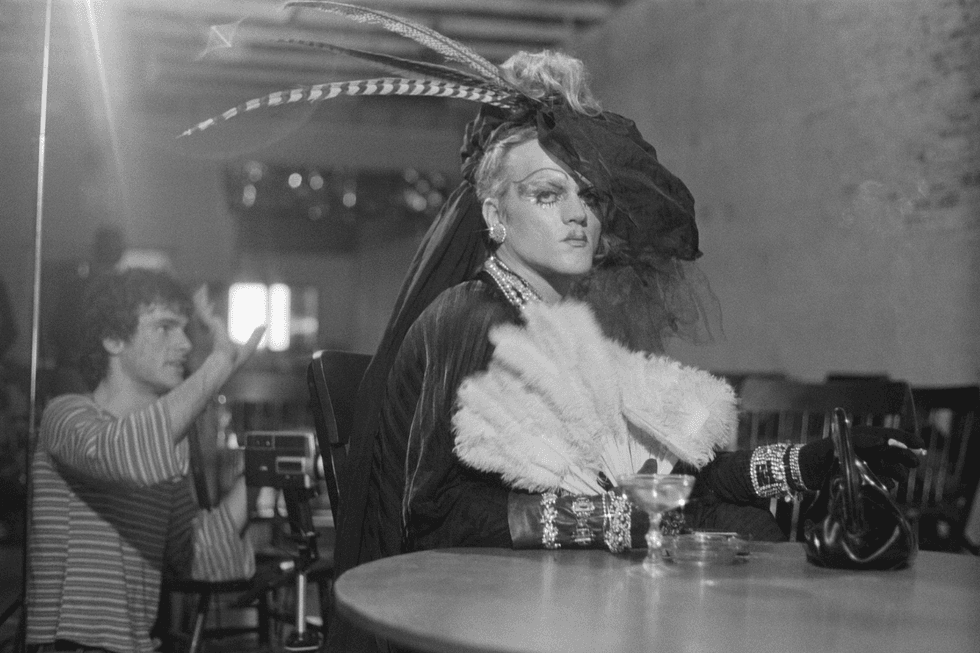 An archival portrait featured as part of Frameline’s historical celebration of queer culture and cinemaPhoto by Daniel Nicoletta
Since then, what’s a major way the festival has grown that has made you proud?
Frameline’s ability to grow, adapt, and reflect the current moment is what makes me the proudest. You can see this from the evolution of our name from The Gay Film Festival of Super 8 Films all the way to today's San Francisco International LGBTQ+ Film Festival. A particular example is the establishment of our Juneteenth Showcase. A few years ago, Frameline shut down Castro Street to celebrate Juneteenth. That night was a celebration, but it required honesty and it required that we reckon with the past of the neighborhood. I shared something I'd recently learned — that it was once common practice in the Castro for bouncers to demand three forms of ID from Black and brown men as a condition of entry. A way of keeping them out. I, unfortunately, can imagine what that must have felt like. To be a young Black gay man looking for a place to belong and to be once again denied entry into community for a part of his identity. After I spoke [at the Juneteenth event], a man came up to me and told me he was one of the bouncers who had refused to enforce it — who stood up to his employer and said no. He was proud the story was still being told. That is what bringing art and history into the community does. It keeps the stories alive. Queer spaces are only radical if they are actually for all of us. That's what I'm building toward.
The Bay Area is who we are. The desire to communicate through art, to tell stories on film, feels like something integral to San Francisco. It is no mistake that the first impulse to gather queer filmmakers and say our stories matter was born here. This city has always been a place that makes room for the people the mainstream refuses to acknowledge and Frameline reflects that back. Our 50th anniversary screenings tell a distinctly San Francisco story: the wild hijinks of Lady Champagne, the irreverent spirit of Hunky Jesus, the prolific insistence to be seen embodied by Barbara Hammer. And in turn, I think Frameline has shaped the city too — 50 years of insisting that queer culture is not subcultural, that it belongs on the biggest screens, in the most storied theaters.
How would you evaluate where we are in the progress of queer cinema?
People often credit the New Queer Cinema of the 1990s to a shift in technology with the prevalence of cheaper cameras and more accessible equipment. But movements don't coalesce around technology. They coalesce around people wrestling with the same questions from completely different angles. Around friction. What Frameline provides is a common starting point. Frameline is a space where queer people can casually meet others with common stories, build support networks from a place of shared understanding, and broaden their sense of what queer life can look like. You meet someone who thinks like you and it's electric. You meet someone who challenges everything you thought you knew and it's even better. You find your next collaborator from within a realm of shared understanding and you don't have to explain or defend your ideas.
That matters in any era and particularly right now. When the government is actively working to erase queer people from public life — from health care, from classrooms, from legal recognition — a physical space where queer people gather, see themselves, and find each other is the beginnings of a cultural movement. The friction is the point. The community is the infrastructure.
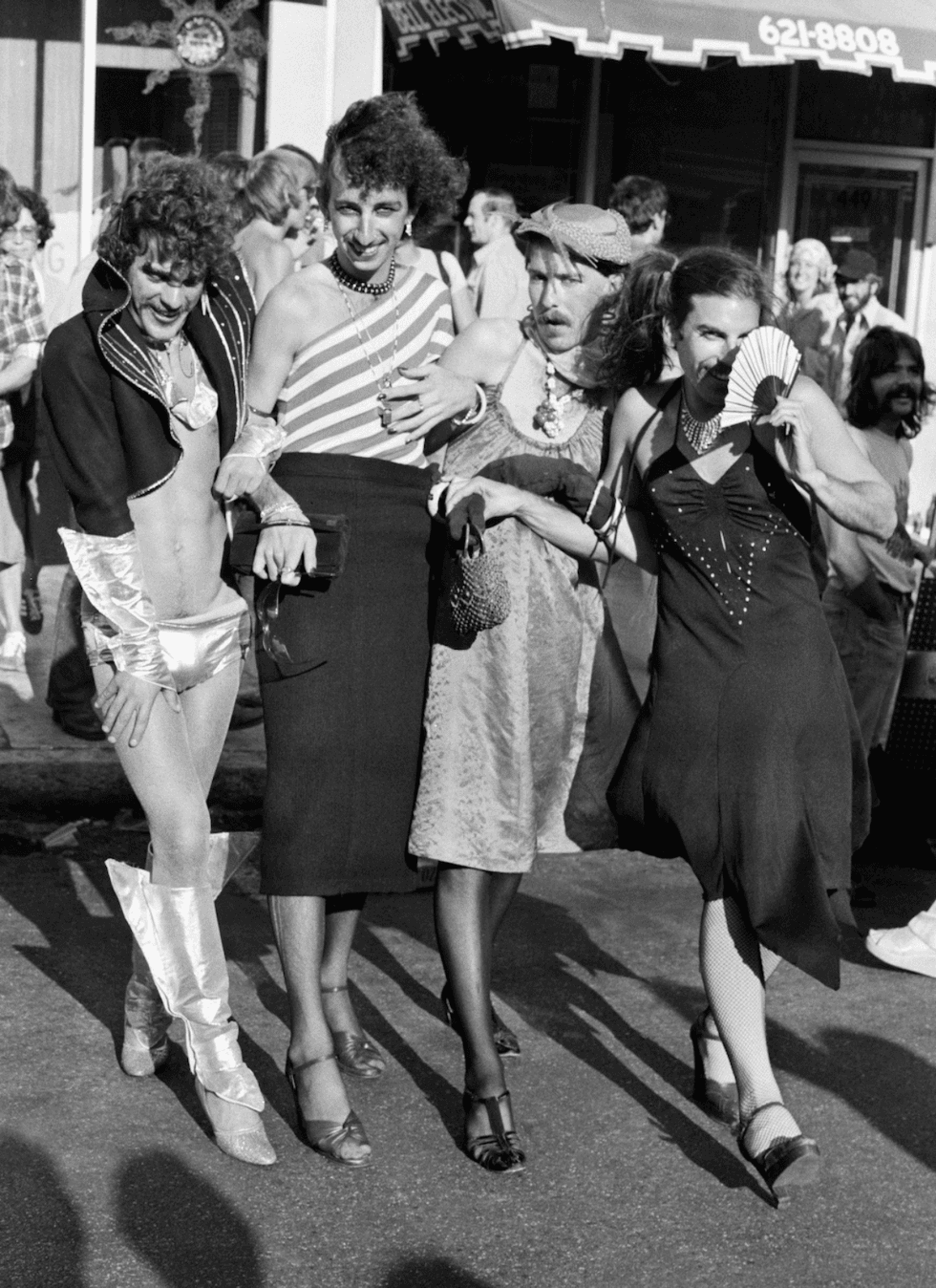 An archival image captures four friends walking through San Francisco’s Castro neighborhood.Photo by Daniel Nicoletta
What are some major obstacles facing these productions right now?
I think the biggest obstacle facing us right now is the massive consolidation that is restructuring our industry around algorithmic logic and market size. The result is an illusion of choice creating more titles than ever but with fewer genuine perspectives. The lesson of Frameline and queer culture in general is that when the mainstream fails to make room for us, we build our own room. We have seemingly infinite technology but what I think is important right now is to ground ourselves in first principles: the human urge to communicate, to be seen, to be known by others and build from there.
This is what made those first few festivals so successful — the word of mouth, the hand-made flyers, and our community’s invention in the face of adversity. All of those things are part of Frameline’s legacy and they’re all lessons in how to overcome today’s obstacles too.
Why is Frameline important in 2026?
Frameline is important in 2026 because it is the place where all of this happens. Where the story that couldn't get financed finds its audience anyway. Where a trans kid sees themselves on a screen larger than life for the first time. We are living through a coordinated attack on queer existence — on trans people's right to health care, legal recognition, public life. In that context, a 50-old queer film festival is necessary infrastructure.
What’s your favorite film?
Impossible to answer. Every film is an opportunity to see a whole new world, or a new way of looking at the world you already live in. But if someone put me in a headlock and forced me to answer right now: Portrait of a Lady on Fire. Every time.
Learn more about Frameline50 and this year’s festival programming at frameline.org