



This story originally appeared on The Advocate.
If you’ve ever taken a walk down Holloway Drive near La Cienega Boulevard in West Hollywood over the last few decades, chances are you spotted a silver-haired gentleman enjoying a glass of wine with his chihuahua on a second-story motel balcony. Occasionally, you might see a friend sitting and laughing with him on his perch, which is decorated with a string of colorful Christmas lights, a tiki mask, plants, and other kitschy décor. The balcony man’s name is Tony Powell, and he is, in fact, the last guest of the Holloway Motel.
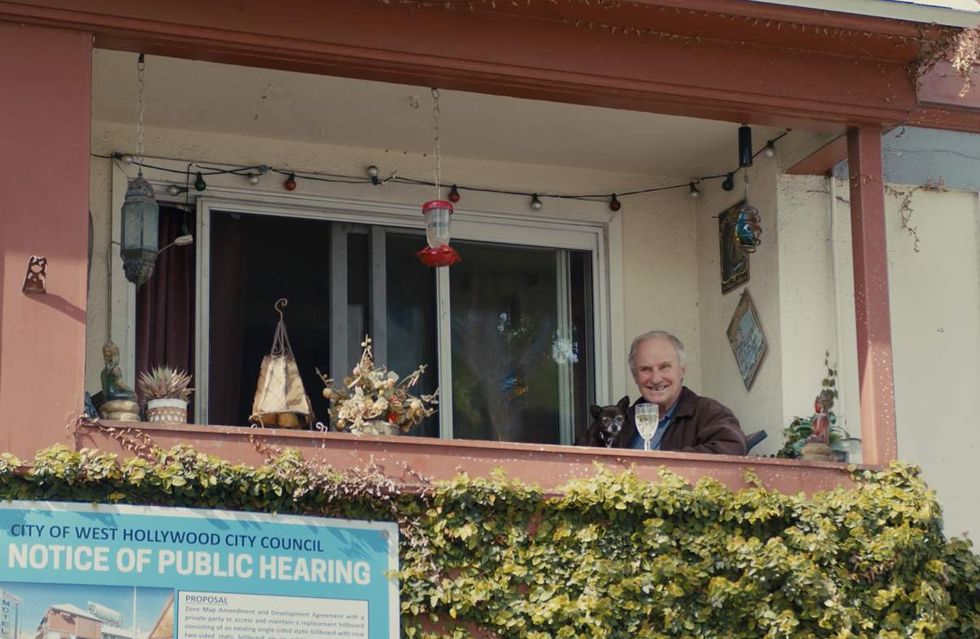 Tony Powell sits on the balcony of his former home, West Hollywood's Holloway Motel, with his beloved chihuahua Samantha.courtesy 'The Last Guest of the Holloway Motel'
Built in 1954, the Holloway Motel originally served as a glam lodging option along historic Route 66. However, over the years, the building became run-down and gained a reputation as a hotspot for drug use and criminal activities.
Powell’s path to the Holloway was a surprising one. In the 1970s, Powell became a local celebrity playing for the Norwich City Football Club, a professional soccer team based in Norfolk, England. He participated in 275 games for the club and was named Player of the Season in 1979. Then, in 1981, Powell suddenly left England. He first landed in San Francisco and played for the San Jose Earthquakes for two years, and briefly played for the Seattle Sounders. In 1983, Powell retired from soccer altogether and settled in West Hollywood. He became the Holloway Motel’s manager after residing there for several years.
Friends-turned-filmmakers Ramiel Petros and Nicholas Freeman were initially unaware of this history. But they were among the many locals who’d become accustomed to seeing Powell as a neighborhood fixture.
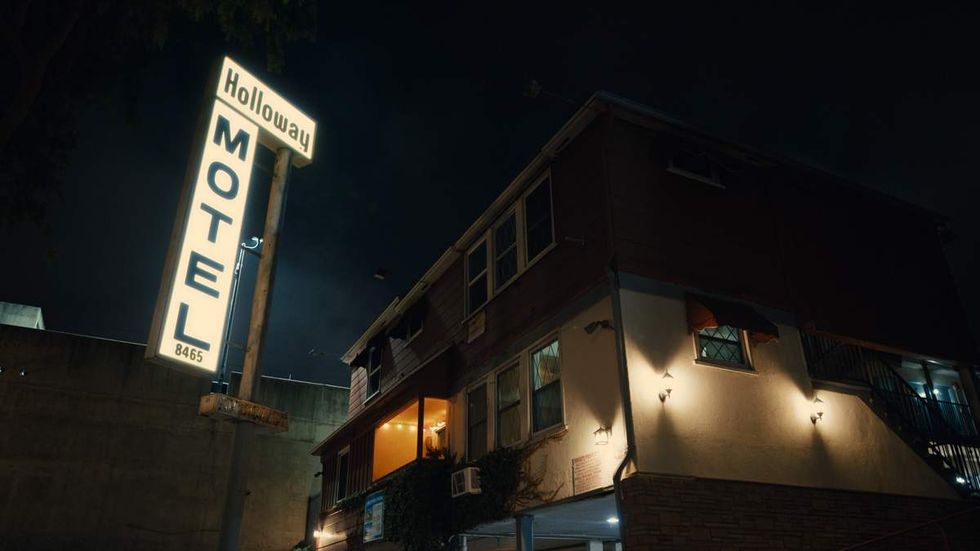 The Holloway Motel in West Hollywood, which is now being converted to shelter for unhoused individuals.Zayd Ezzeldine
Petros explains that he and Freeman, mainly out of curiosity, walked over to Powell’s outpost one day to ask him a few questions about himself and the motel. “He told us the city has purchased it [and] it’s about to become a homeless shelter.… And that’s just kind of where it began.”
In total, Powell lived at the hotel for over 20 years, and was facing eviction in a few months at the time he met Petros and Freeman. In their conversation, the two discovered that Powell, a charming gay man now in his late 70s, was once a very famous (and very closeted) footballer in the U.K. And thus, the idea for a project on the Holloway and its last resident was born.
Powell did not respond to their initial request to make a short film. But when the filmmakers randomly ran into Powell having a margarita on the patio of a local restaurant with Samantha (his chihuahua), they broached the subject once again. (It should be noted Samantha was not drinking a margarita nor imbibing wine.)
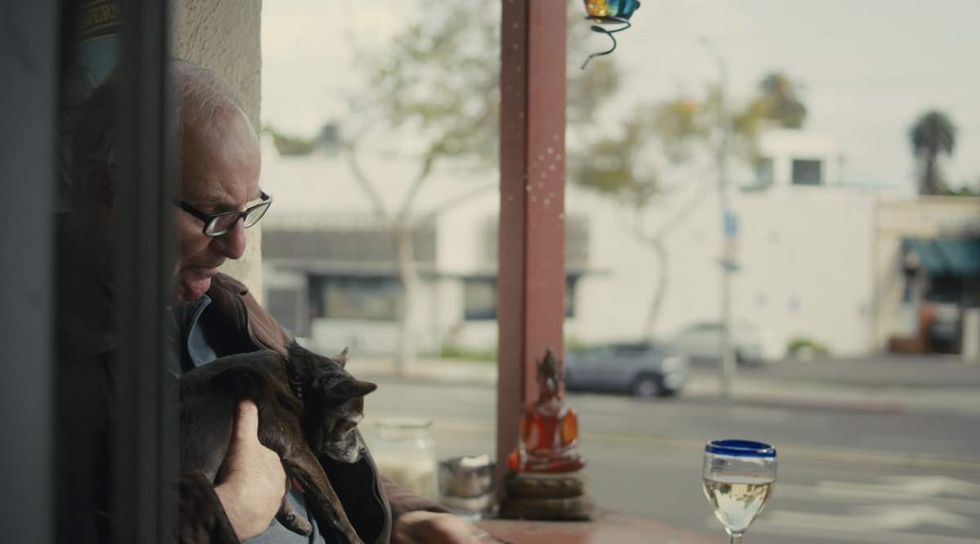 Powell and Samantha enjoying some more balcony time. courtesy 'The Last Guest of the Holloway Motel'
“We said, ‘So what do you think? Do you want to make a little documentary with us?’” Freeman recalls. “And he was like, ‘Sure.’ Just kind of nonchalant. I think he, you know, had been in that motel for quite some time alone. Since COVID, it had been shut down.”
Freeman says, regardless of whether it was because Powell was “a bit bored” or “maybe enjoyed our company when we had a great night having drinks on his balcony,” they were grateful and excited to forge ahead with the project.
The resulting film, The Last Guest of the Holloway Motel, which premiered at the 2025 Tribeca Film Festival, does not shy away from exposing the darker and more painful parts of Powell’s past. For starters, it reveals that he ultimately fled his homeland and successful soccer career after rumors about his sexuality spread, spurred on by sensationalized tabloid stories.
“I was living in fear in a lot of ways,” Powell laments in the film. “And the biggest fear is like my family [saying], ‘Oh, you’re gay? Get the fuck out of here.’ Today if you’re gay, you can come out to your parents, you know? Back in the ’50s and ’60s, completely different. And so, just keep it to yourself and pretend to be one of the boys.”
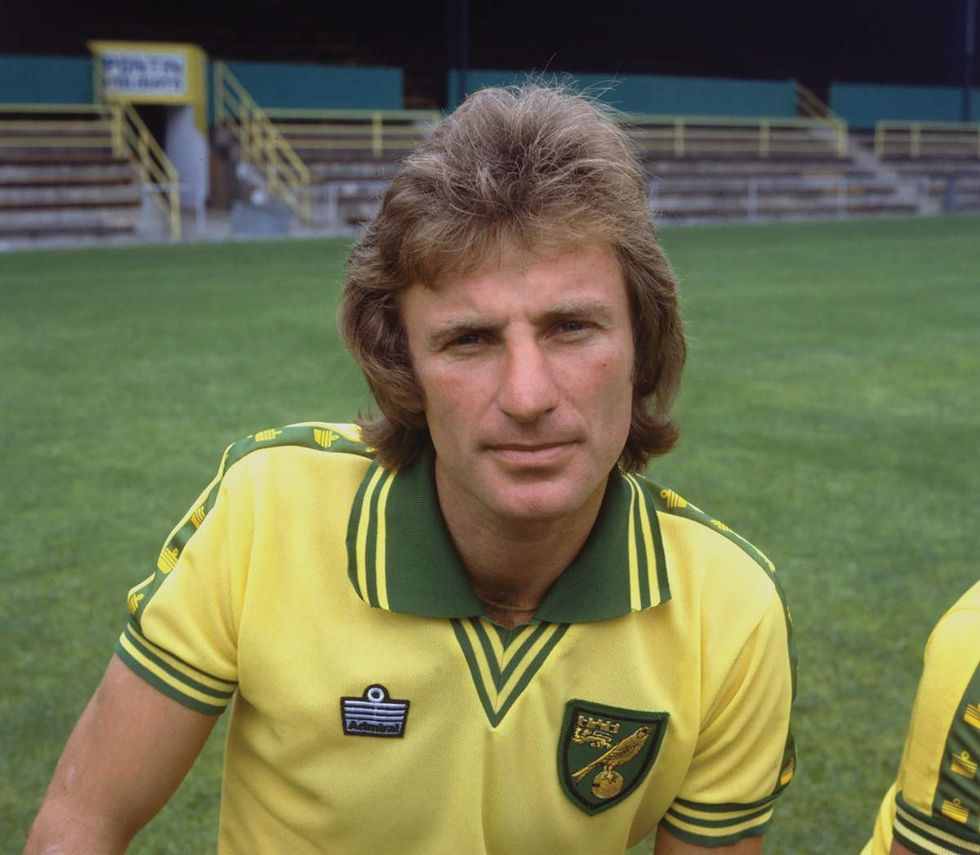 Tony Powell as a young pro soccer player in England.PA Images/Alamy Stock Images
Another uncomfortable truth shown in the film is that, after Powell left England, he didn’t just cut ties with his siblings and parents. He also abandoned a wife and two young daughters. One difficult scene shows Powell becoming emotional after struggling to remember one of his daughter’s names. Ouch. Or the section where he couldn’t continue speaking after opening up about losing the love of his life to HIV complications. Yet another sees Powell, who drinks heavily throughout the film, being rushed to the hospital by the filmmakers after having difficulty breathing and nearly passing out.
“When the opportunity came up for it to become a feature film, we sat with Tony and said, ‘Hey, you know, this 10-minute movie, we have the opportunity to make it a 90-minute movie,’” Petros recalls. “And the first thing he said is, ‘Why would you want to do that? Who would care about my life?’ And the second thing we said was, ‘If you want to go on this journey with us, we’re going to want to find your old teammates [and] try to find your family.”
The novice documentarians admit they were sometimes surprised by Powell’s willingness to accommodate their ideas after his initial reluctance to make the film — especially when they asked if he’d be willing to reconnect with people from his past. Without giving away too many spoilers, let’s just say there are some nice surprises that come with his decision (and make sure to watch through the end credits!).
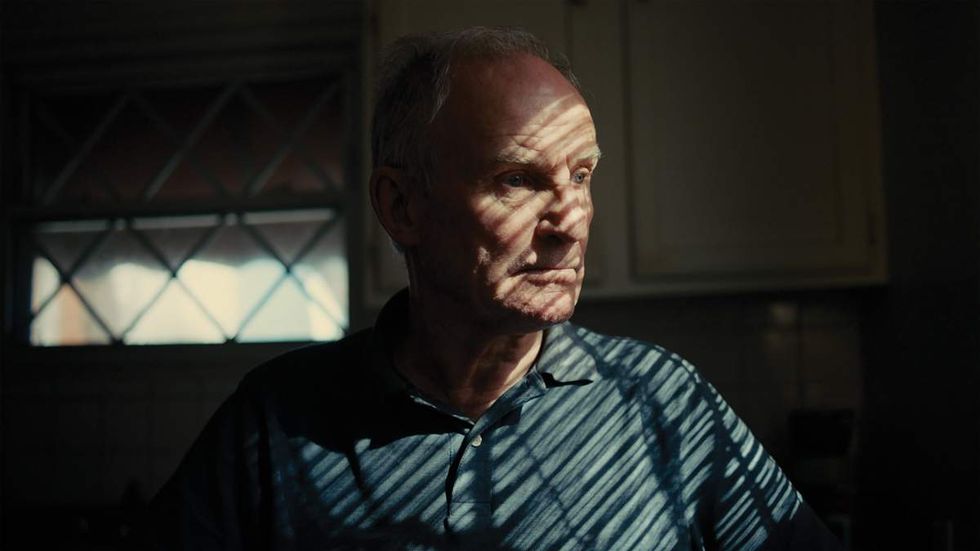 Tony PowellCassandra Giraldo
The film does a lovely job of balancing out the harder moments with ones of lightness and joy — like when its subject throws shade at his bestie Erica, a young transgender woman who describes Powell as a father figure, for not taking a big enough shot of whiskey.
“He knew [Erica] pre-transition, and really helped her along in that process,” Petros says of the pair’s found-family relationship. “I think there was just something about the environment of the motel and that ability to kind of caretake.”
“I think it’s interesting, given if you’ve watched the whole film, understanding when people say that he’s paternal and a father figure, I think there’s a lot of weight to that in hindsight,” adds Petros, who suggests that Powell “was trying to kind of fill the role of someone that, you know, could bring value to [people’s] lives and help them.”
Artistic flourishes add some fun and fancy too, like the scene showing Powell sitting solemnly in a locker room while sweaty young footballers in various stages of undress walk to and fro. It powerfully conveys, without saying a word, what it must have felt like to be a closeted gay man in a suffocatingly straight world.
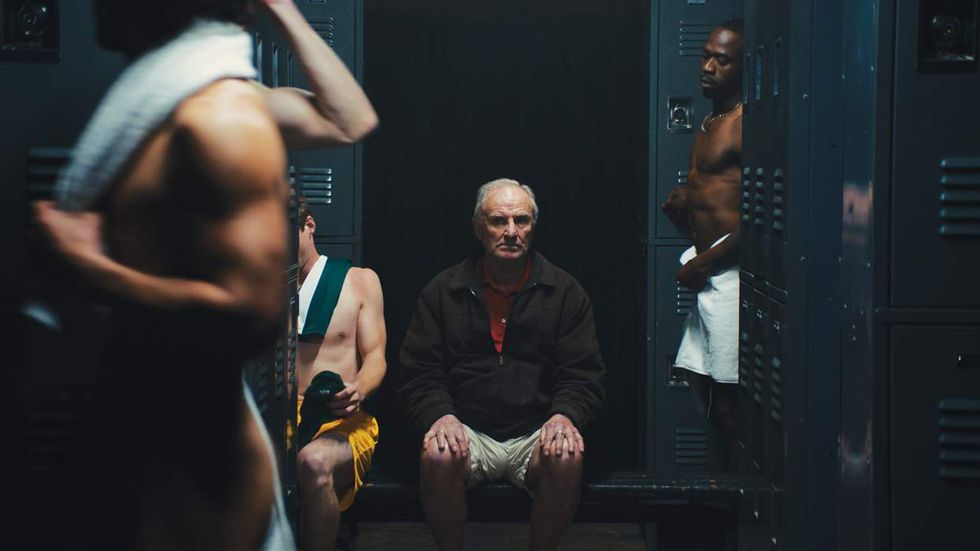 Powell (center) in a scene from 'The Last Guest of the Holloway Motel.'Gabriel Connelly
“I think it was really special and unique because with those set piece moments, that was also this opportunity to kind of have fun with Tony and make a movie together,” Freeman notes. “It was very much a participation.”
What’s most beautifully unique about The Last Guest is watching Powell’s emotional arc unfold in real time. While it certainly provides a detailed allegory of his life and the motel’s history, the most engrossing parts of the film involve one man’s journey to confront, and ultimately embrace, the ghosts of his past.
This article is part of The Advocate's Sept-Oct 2026 print issue, on newsstands September 1. Support queer media and subscribe — or download the issue through Apple News+, Zinio, Nook, or PressReader starting August 20.
 Nancy Pelosi on the Sept-Oct issue of 'The Advocate'