

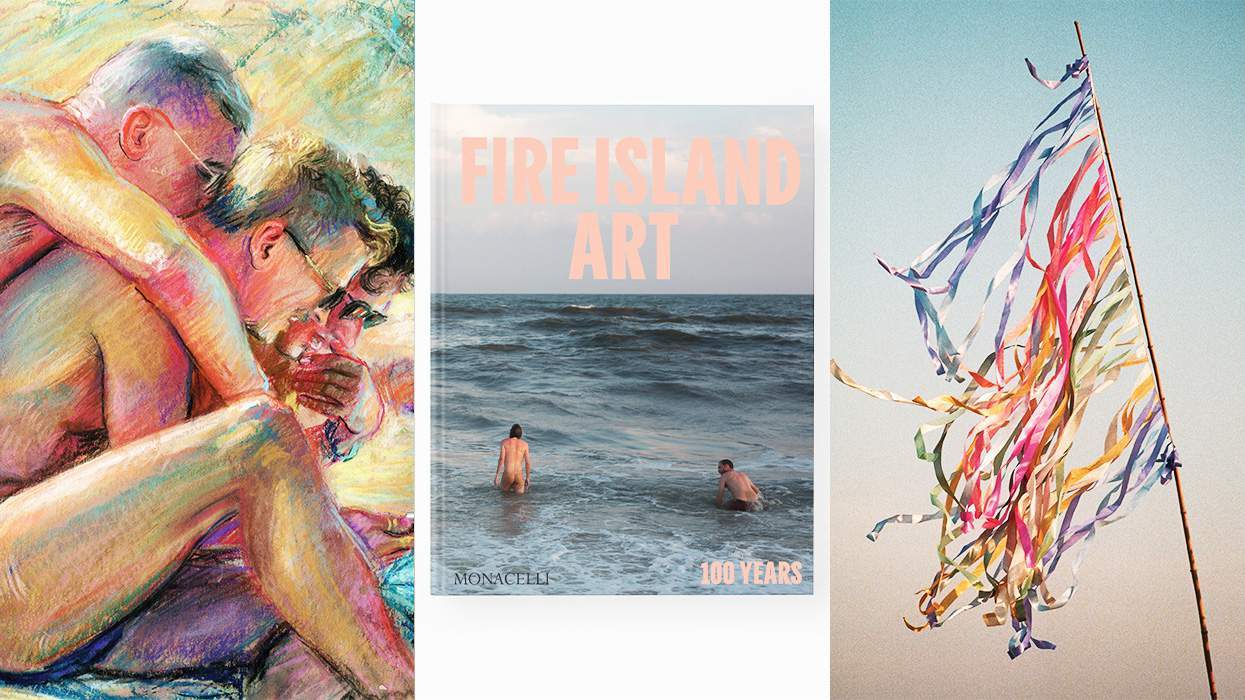
Fire Island’s status as a vacation (and haven) for queer people is well documented. But lesser known, perhaps, is the small barrier island’s outsized impact on the art world.
A new book, Fire Island Art: 100 Years, is the first major collection to document Fire Island’s contributions to art history. Stars like Richard Avedon, Andy Warhol, Paul Cadmus, David Hockney, Peter Hujar, and Robert Mapplethorpe are on display here. But there are also contemporary works from Nicole Eisenman, Lyle Ashton Harris, TM Davy, Doron Langberg, Salman Toor, and K8 Hardy, who are part of the location’s recent artistic renaissance. In addition to art and archival materials, the book features essays from writers including Sam Ashby, AA Bronson, and Michael Bullock that connect these works to queer culture and history.
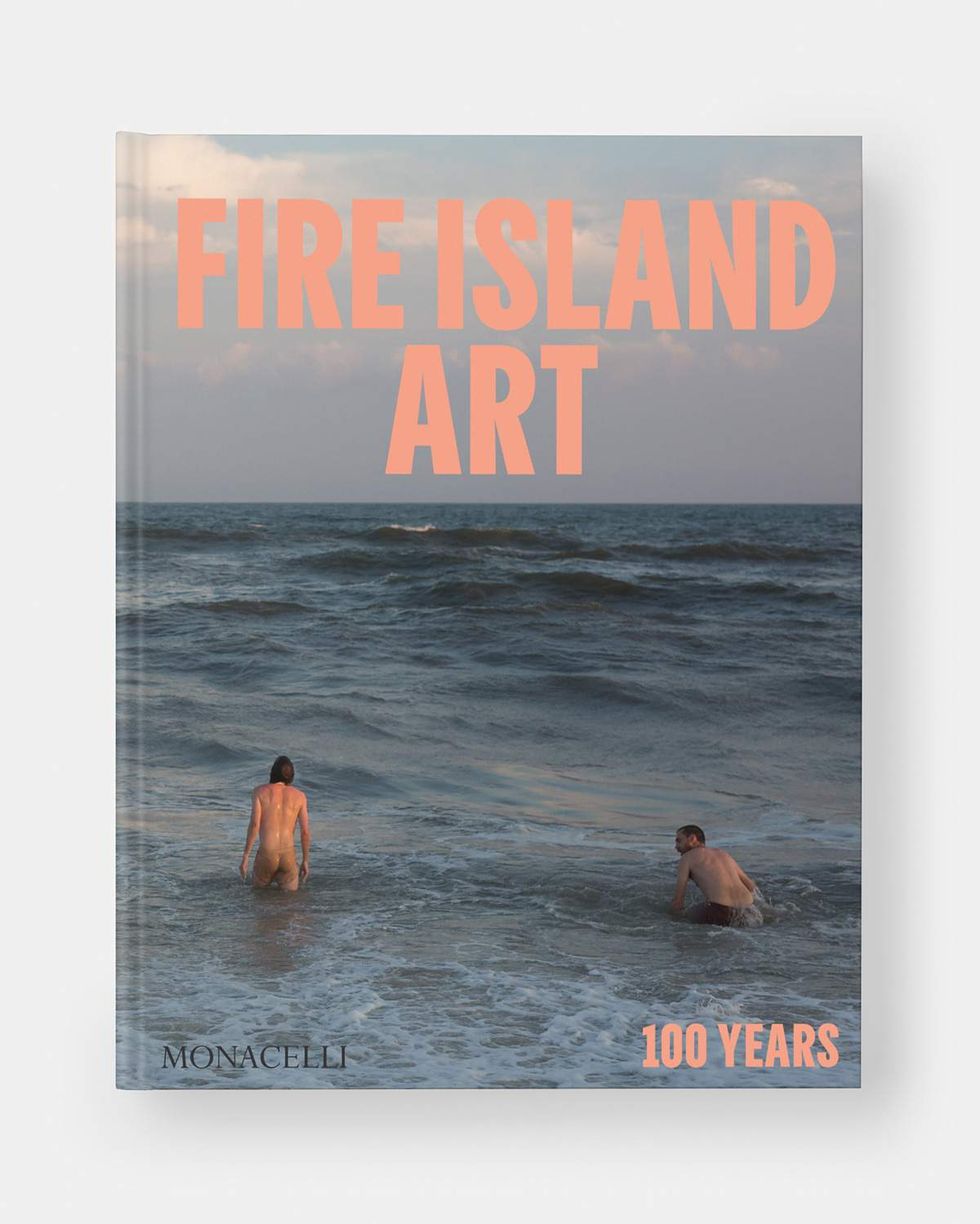 Front cover of 'Fire Island Art: 100 Years'
Ahead, editor John Dempsey, who is also president of the Fire Island Pines Historical Society, discusses the creation and curation of Fire Island Art: 100 Years — and how Out readers interested in this past can help support queer art’s future.
What inspired Fire Island Art: 100 Years?
Two things. The first was reading through the Pines Historical Society website, which is like a living archive of Fire Island’s most notable people and events. There are articles for each of the important artists who spent time on the island — I was surprised how many big names had some connection to the place. The second inspiration is what is happening today — seeing the creative energy of a new generation of artists coming to the island, due in large part to the residency programs of [the art and design nonprofit] BOFFO and Fire Island Artist Residency. It felt important to have a book that captured both and told the story as one continuous legacy.
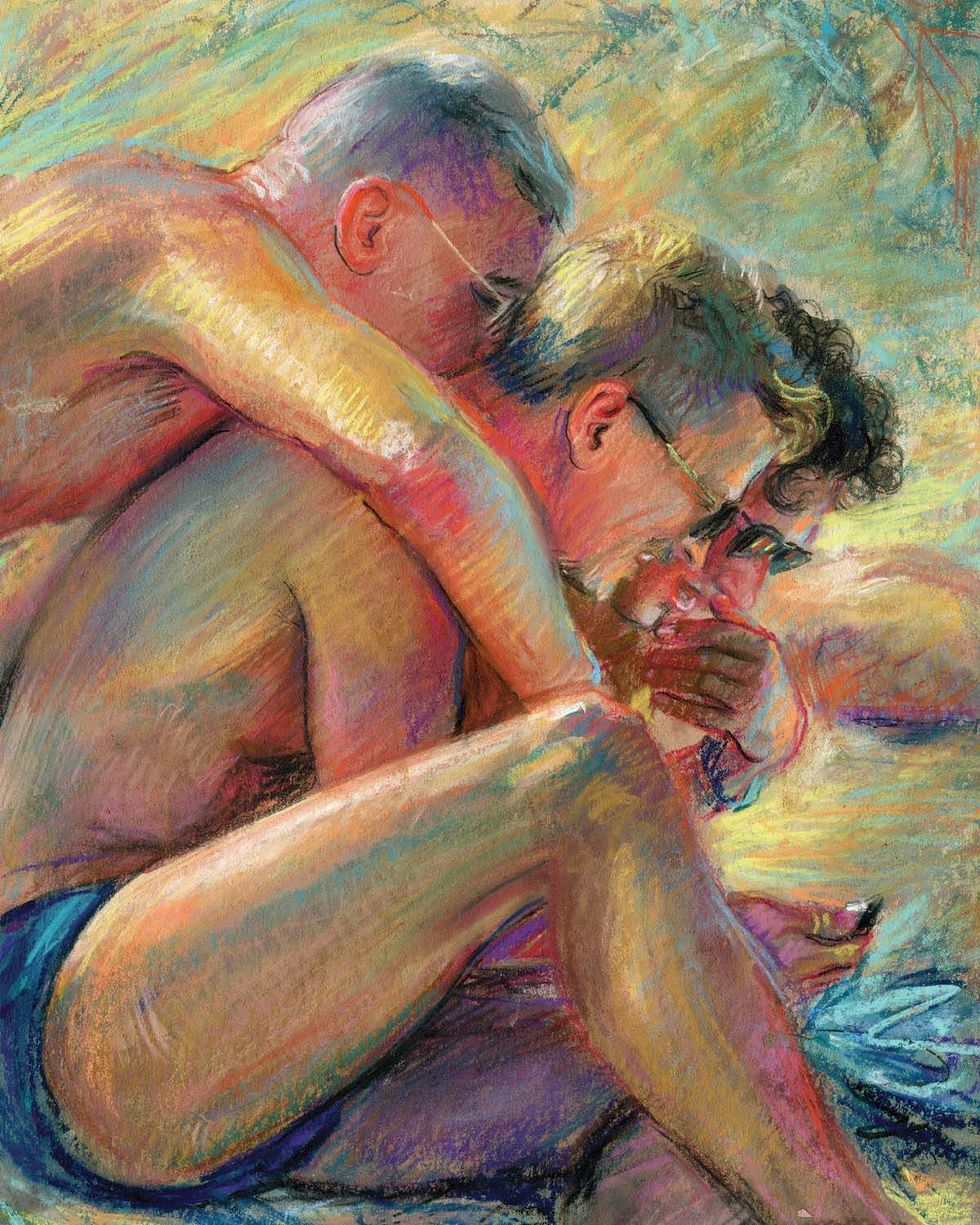 '635' by TM Davy, 2019, pastel on gouache toned papercourtesy TM Davy
How did you go about curating which artists to include?
It was challenging, frankly. I spent a lot of time talking to people deeply versed in the island’s history and built a list of creatives — not just art but dance, architecture, interior design — who were important to Fire Island’s story. I then narrowed the list to visual artists whose work felt the strongest but who also had the most compelling stories to tell. The hardest part was the contemporary era — how do you do justice to the present while hoping it will stand the test of time? I give a lot of credit to my collaborator Michael Bullock, who authored the final essay and helped curate the selection of contemporary artists'F.
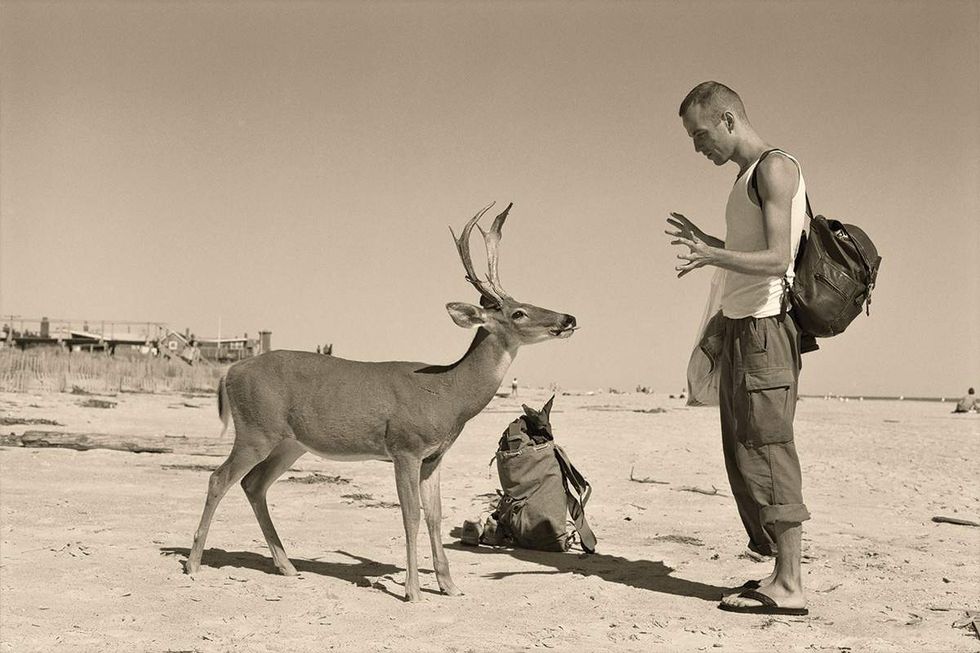 'Deer Hirsch' by Wolfgang Tillmans, 1995courtesy Wolfgang Tillmans and Galerie Buchholz; Maureen Paley, London; David Zwirner, New York
What did you learn through this process?
I was shocked by how much amazing Fire Island material exists, much of it never before published. At the beginning of the project, I was only aware of a fraction of the works we ultimately included. Once I started working with artist estates and archives, I realized how much high-quality material there was to choose from. I could have easily made a book twice the size.
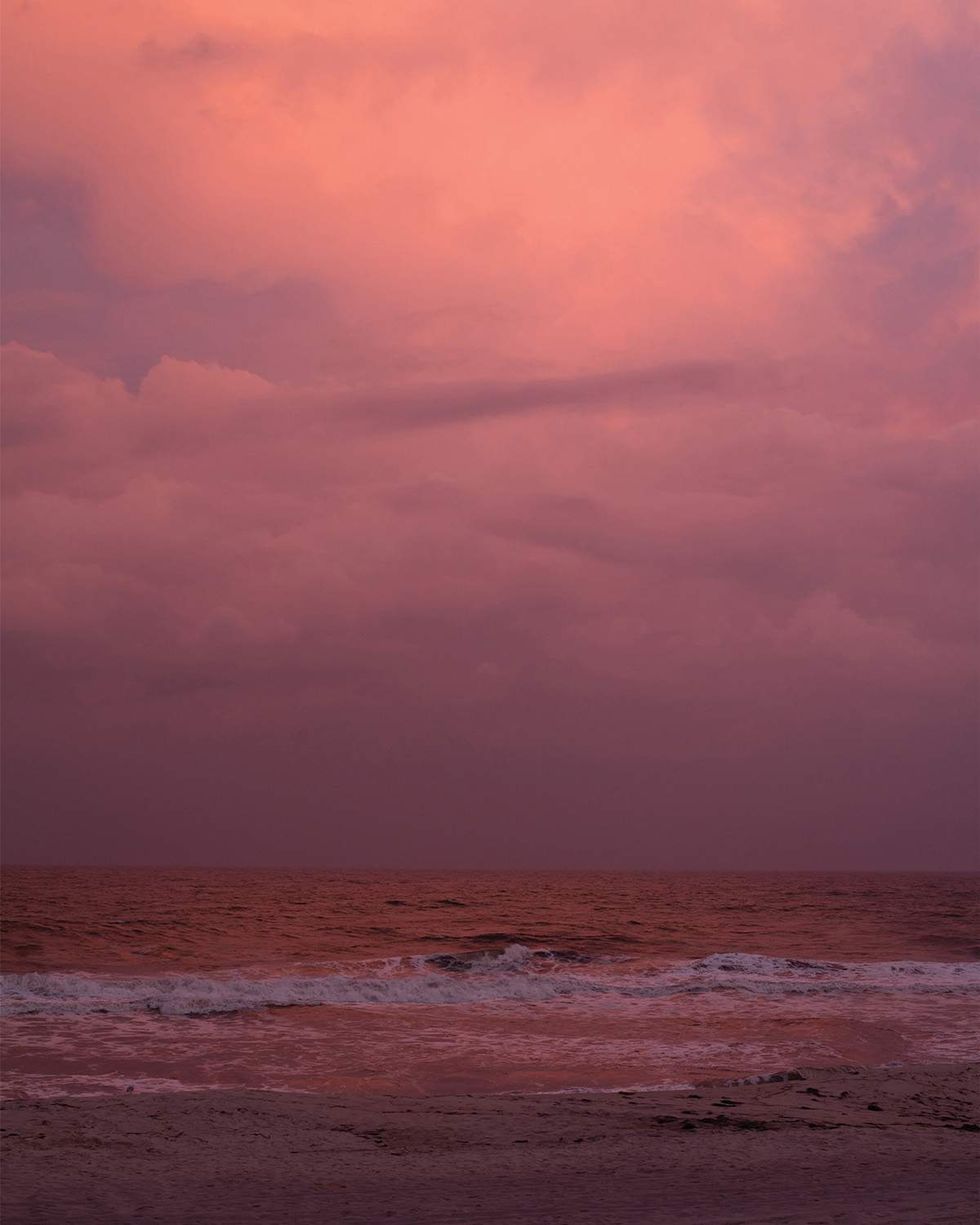 'Fire Island' by Wolfgang Tillmans, 2015courtesy Wolfgang Tillmans and Galerie Buchholz; Maureen Paley, London; David Zwirner, New York
Fran Lebowitz has talked about how AIDS didn’t just take a generation of artists — it also took the critics who would have understood, interpreted, and argued for their work. A lot of people have asked why this book hasn’t been done before, and I think part of the reason is that the people best positioned to make it were lost alongside the artists.
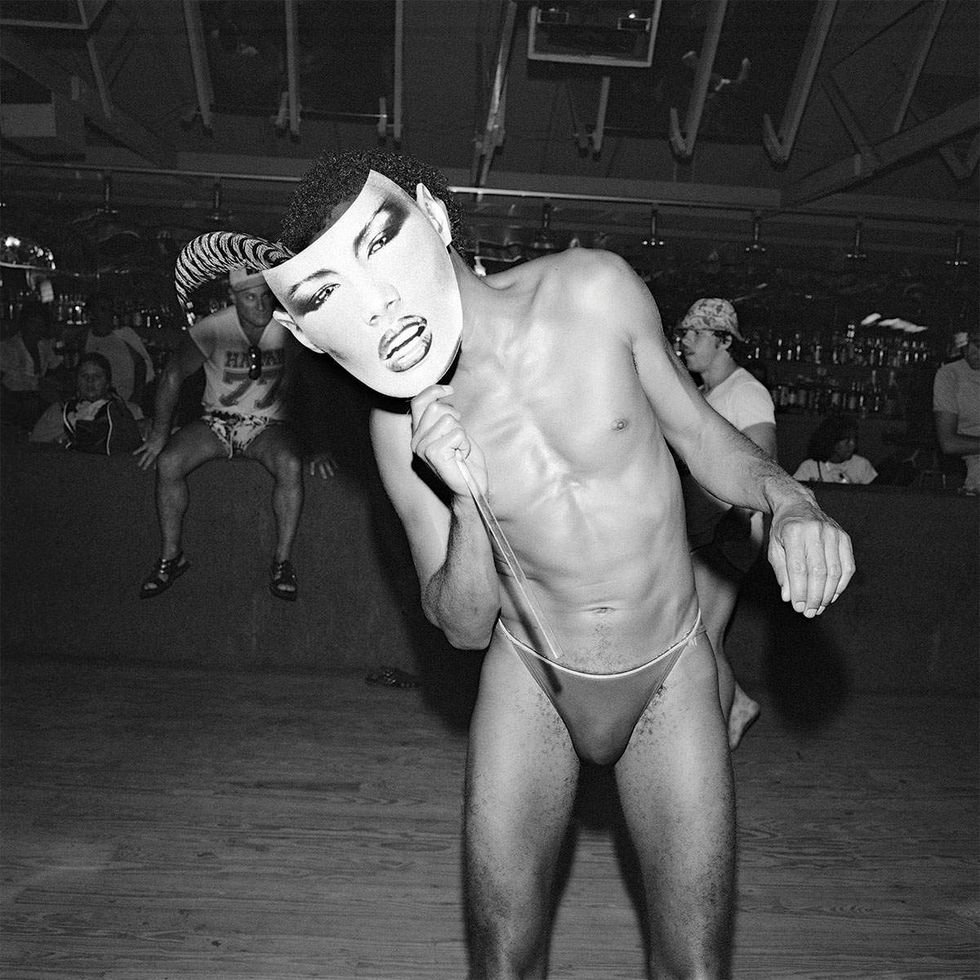 Grace Jones mask by Meryl Meisler, created from Richard Bernstein portrait, The Ice Palace, Cherry Grove, Fire Island, NY, Labor Day, September 1977courtesy Meryl Meisler and CLAMP New York
What is an artwork that changed your relationship with Fire Island?
When I bought my house in the Pines, it came with a painting by local artist Glen Wielgus. It depicts the boardwalk that takes you from the Meat Rack to the beach. The painting feels like part of the house — part of its history. As I visited more homes on the island, I started noticing work by other local artists like John Laub, Mark Beard, and Ferron Bell — people deeply embedded into the fabric of the island. We ultimately dedicated a full chapter to local artists.
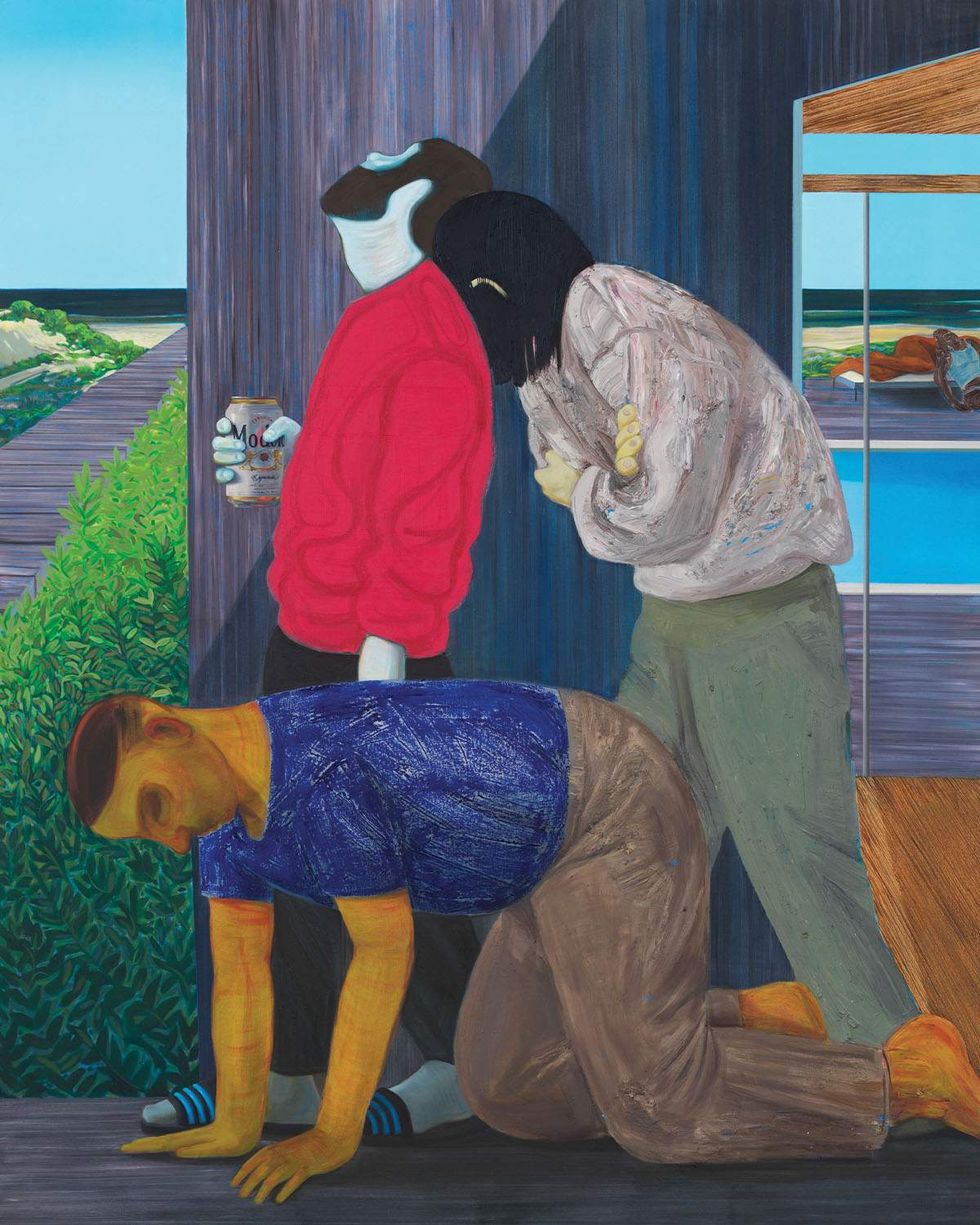 'Morning is Broken' by Nicole Eisenman, 2018, oil on canvascourtesy Nicole Eisenman and Anton Kern Gallery NY
What makes Fire Island such a muse for artists?
There’s this quote in the book by Thomas Mann from Death in Venice: “We artists cannot tread the path of Beauty without Eros keeping company with us and appointing himself as our guide.” Visiting Fire Island is like being transported to another world where the prevailing aesthetics are sun, sea, sand, and skin. You have some of New York’s most creative people gathered in a place of extraordinary natural beauty, combined with a sexually charged party atmosphere. That combination produces some pretty great art.
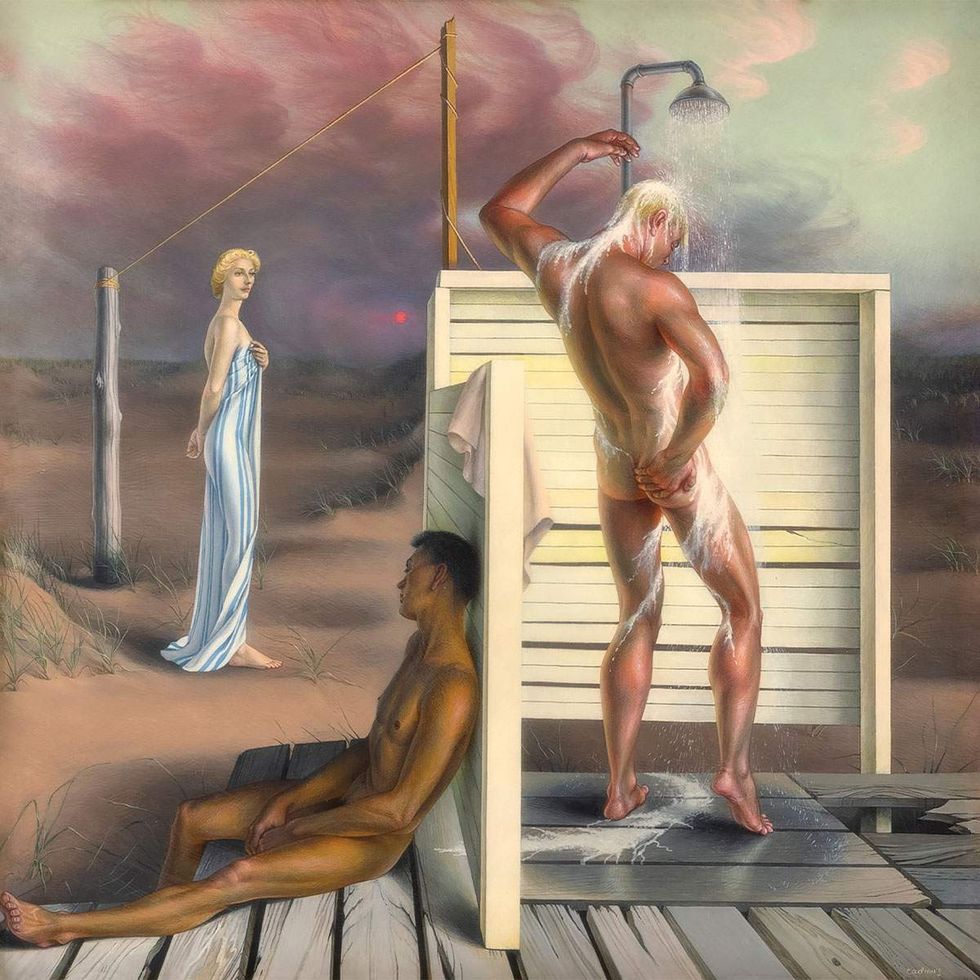 'The Shower' by Paul Cadmus, 1943, egg tempera on pressed wood panelcourtesy Ron Cowie/Oyster Farm Productions
Looking back, what does this century of Fire Island art say about the evolution of the location’s queer culture and community?
In the afterword, [artist and writer] Jarrett Earnest makes the astute observation that a lot of the art made on Fire Island, particularly the photography, feels like it could have been taken at any point in its history. The images show friends and lovers escaping their “normal” lives back in the city and having the most fabulous time on the beach. It has always been a place where queer people have felt uniquely free.
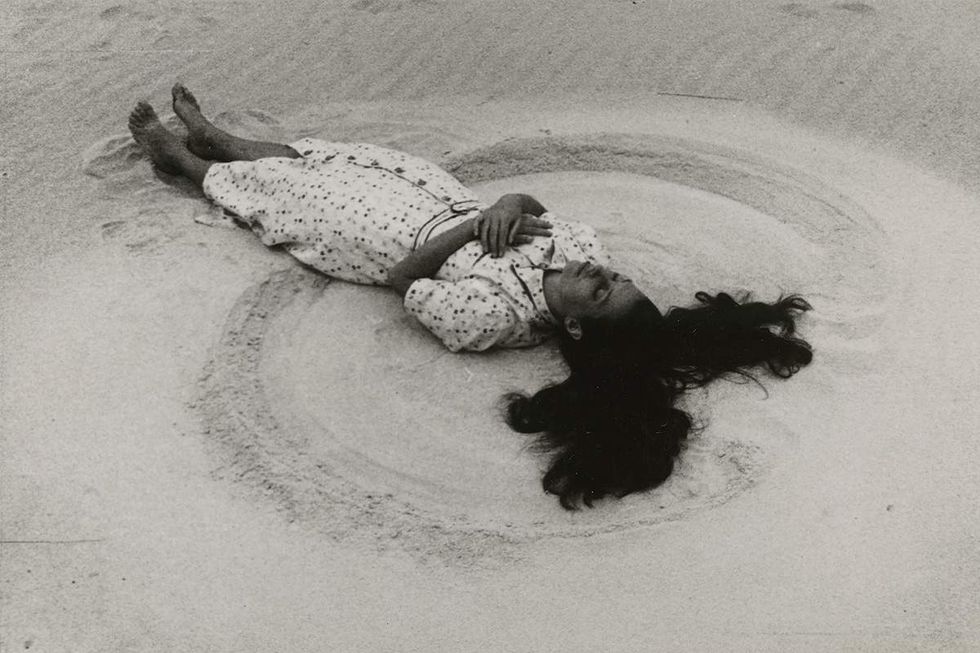 'Fidelma Cadmus, Fire Island' by PaJaMa, 1937courtesy Gitterman Gallery
How do you see artists today being inspired by Fire Island?
It’s been exciting to see changing demographics on Fire Island in the last five to 10 years as a more diverse range of artists and designers discover the island for the first time. My hope is that artists working today are inspired by the knowledge that they are building on a foundation created by generations of queer icons who came before them.
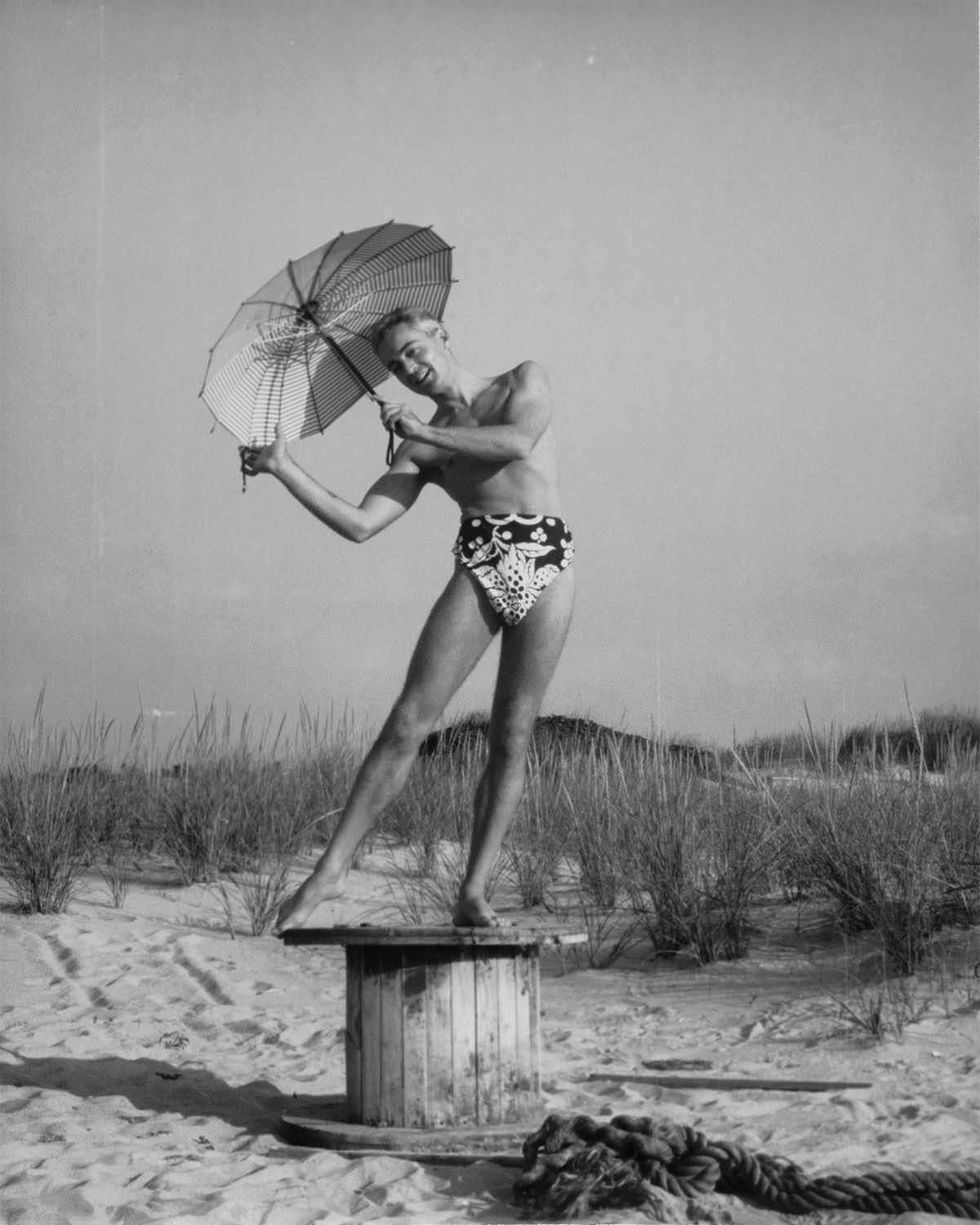 'George Platt Lynes on Fire Island' by PaJaMa, c. 1940scourtesy Daniel Cooney Fine Art
What are ways Out readers can support queer art on Fire Island?
Donate to BOFFO and FIAR and attend their events and talks, both on Fire Island and the city. Support local artists at art walks, the FIPAP Biennial Art Show, and at the visitors’ center gallery in the Pines. And most importantly, buy work from local artists whenever you can.
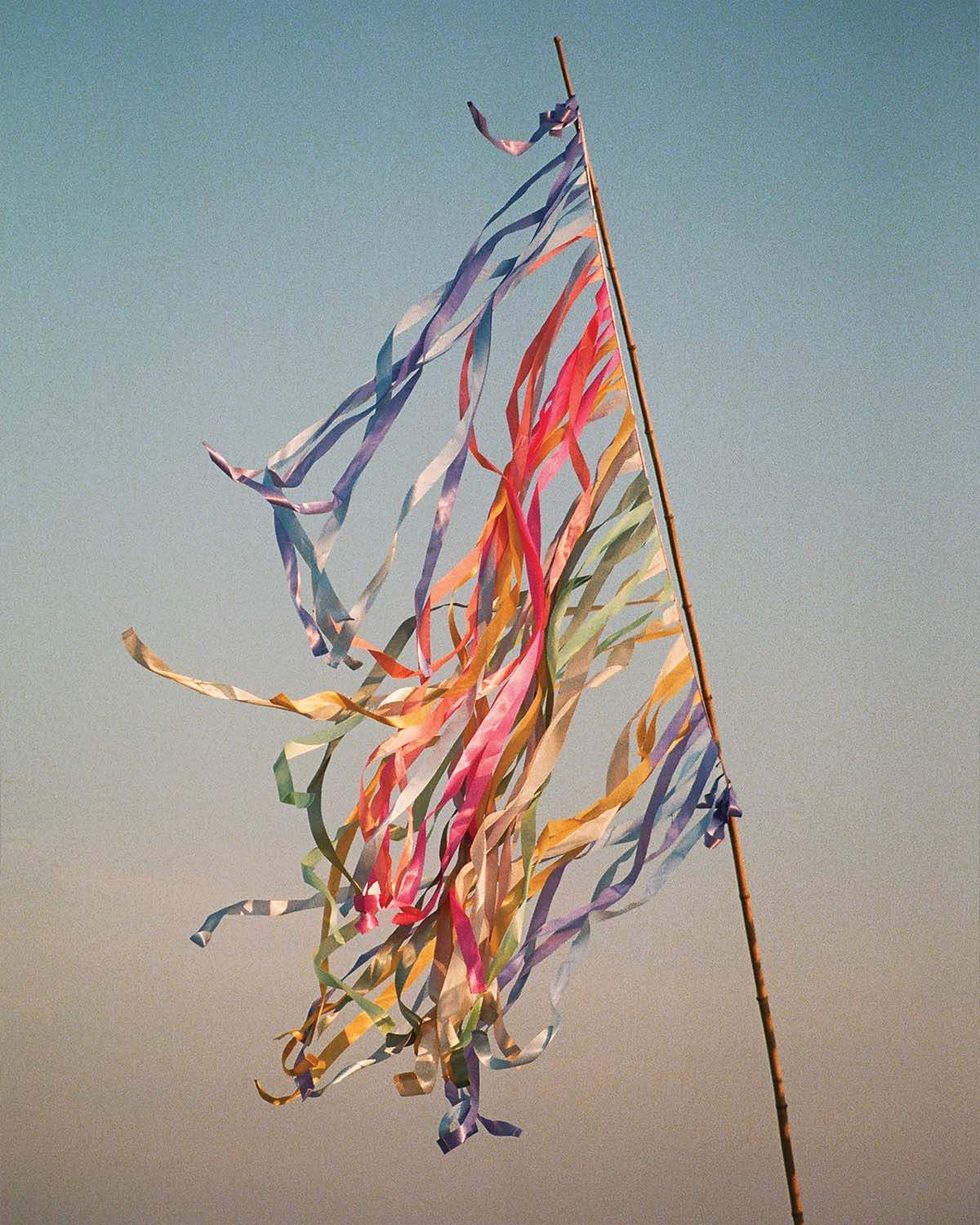 'Flag, Fire Island' by Joe McShea and Edgar Mosa, 2019, ribbon and bamboo installationcourtesy Joe McShea and Edgar Mosa
What do you hope readers take away from Fire Island Art: 100 Years?
My hope is that readers will pick up the book because of their love of Fire Island and discover artists they had never heard of before. The book is really a who’s who of major artists — Paul Cadmus, Peter Hujar, Robert Mapplethorpe, David Hockney, and many others — and I think a lot of people will be surprised to see how Fire Island influenced their work. I know it’s an art book, but I hope people actually read it. The stories are incredible, and each chapter is a quick, immersive read.
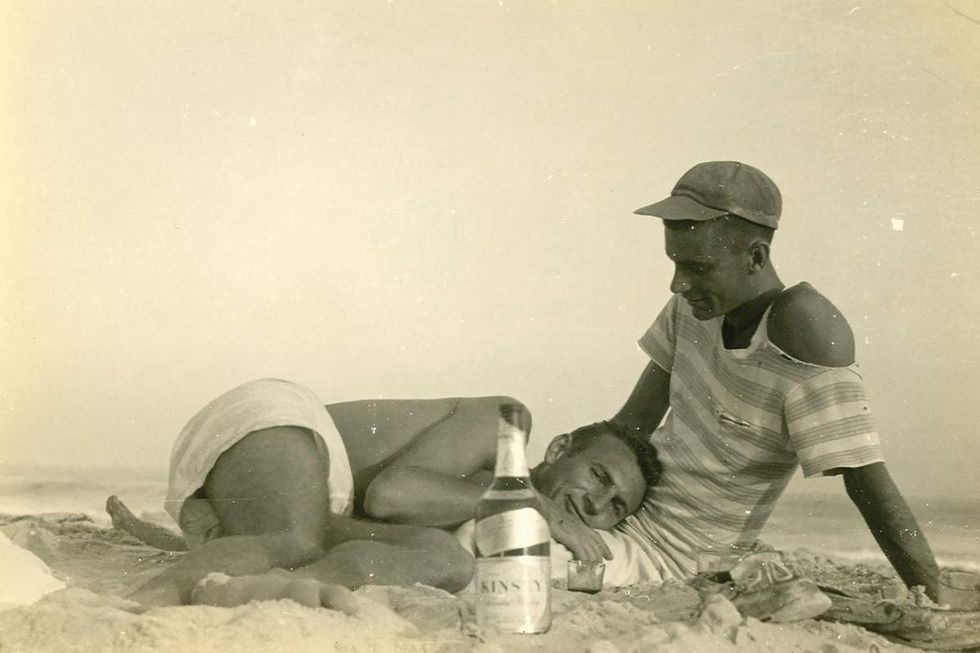 'Bernard Perlin and Wilbur "Billy'" Pippin on Fire Island' by Fred Melton, 1948courtesy the Estate of Fred Melton
Final thoughts?
I feel incredibly lucky to have been able to make this book. I’m not a traditional art writer or curator, but so many people put their faith in me along the way. Landing Phaidon as a publisher allowed me to bring in extraordinary writers as collaborators. I’m very proud of how it turned out, and I hope people connect with it.
This article is part of OUT’s Mar-Apr 2026 print issue, which hits newsstands March 24. Support queer media and subscribe — or download the issue through Apple News+, Zinio, Nook, or PressReader.