

In 2005, I was 24 years old, living in San Francisco, playing in a band, and beginning to realize that the thing that had once made me feel free was slowly becoming the thing that might destroy me. George W. Bush had just won a second term, the war in Iraq continued, and the political climate felt increasingly hostile to the queer communities that had given me a sense of purpose and belonging.
San Francisco was a place of extraordinary queer history, culture, and possibility, and I was grateful to be part of it. But I was also navigating my own identity, carrying a great deal of unresolved fear and shame from my upbringing in the conservative South. Drinking had become a way to quiet some of that fear, even as it was beginning to take on a life of its own. I had spent years searching for freedom, and in many ways, I'd found it. What I hadn't figured out was how to feel comfortable in my own skin.
That was the year I wrote "Water Under That Bridge."
I had also just started seeing a therapist for the first time. During one of our sessions, she handed me a pamphlet containing a checklist of warning signs for alcoholism. She told me that if I wasn't willing to confront my drinking, she couldn't continue working with me.
I was devastated. Not because I didn't recognize myself in that pamphlet, but because somewhere deep down, I did.
I grew up queer in a working-class, Southern Baptist family in South Carolina during the 1990s. Alcoholism ran through generations of my family: my father, my paternal grandfather, my maternal grandmother, and beyond. I knew what alcoholism looked like, or at least I thought I did. It looked like the world I was determined to escape.
As a teenager, I searched obsessively for signs of another life. I found them in punk rock, riot grrrl, feminism, and queer music. At 18, while still in high school, I was signed to Mr. Lady Records, the feminist label founded by Kaia Wilson of Team Dresch and Tammy Rae Carland. After graduation, I moved to Durham, North Carolina, and began touring with The Butchies, Le Tigre, and the Indigo Girls.
For a queer kid from the conservative South, it was nothing short of salvation. I was surrounded by people who understood me. People who challenged gender, sexuality, capitalism, and the political establishment. I was part of something radical, something that felt bigger than myself. Music was the ultimate act of resistance.
As many of my queer counterparts surely know, alcohol and substance use can become intertwined with the search for liberation. We're all trying to escape something, to build better lives for ourselves and the generations that follow. So much of the community we build happens in bars, clubs, and underground spaces. There's nothing inherently wrong with that. It's simply the reality of where many of us found each other.
On tour, drinking was everywhere. I was young, and people were constantly offering me alcohol. It quieted the anxiety, shame, and fear I'd carried out of South Carolina. It made me feel powerful, funny, fearless. By 20, I was throwing up in The Butchies' tour van while people I admired lectured me about my drinking.
I didn't understand their concern. As far as I was concerned, alcohol was working beautifully. I had escaped the South. I was touring with my heroes. How could something that made me feel so free also be destroying me?
There is a particular loneliness that comes from carrying so much unresolved pain into a life you've worked desperately to create. Queer punk had given me a language for rebellion, but I hadn't yet learned how to live with myself when the music stopped. Alcohol filled that silence, quieting something inside myself that no amount of liberation could resolve.
By 28, my life had collapsed under the weight of my drinking. I hit rock bottom and entered a 12-step program. What I found there surprised me: another community of outsiders, people whose stories I recognized immediately, people who understood the strange combination of shame, defiance, loneliness, and longing that had shaped so much of my life.
I no longer had to perform being fearless. I could simply be honest.
I stayed sober for nearly seven years.
Almost a decade ago, I began drinking again. The years since have been complicated, filled with attempts to negotiate my relationship with alcohol, periods of abstinence, rationalizations, and the persistent belief that perhaps this time I could make it work. But addiction has a way of bringing you back to the same questions, no matter how many different answers you try.
Now, more than two decades after writing "Water Under That Bridge," I'm releasing my first full-length solo album in 24 years on Don Giovanni Records. The album was produced by Ted Leo, who also sings backing vocals on the song. Recording it with him felt like a conversation between the 24-year-old who wrote it and the person I've become.
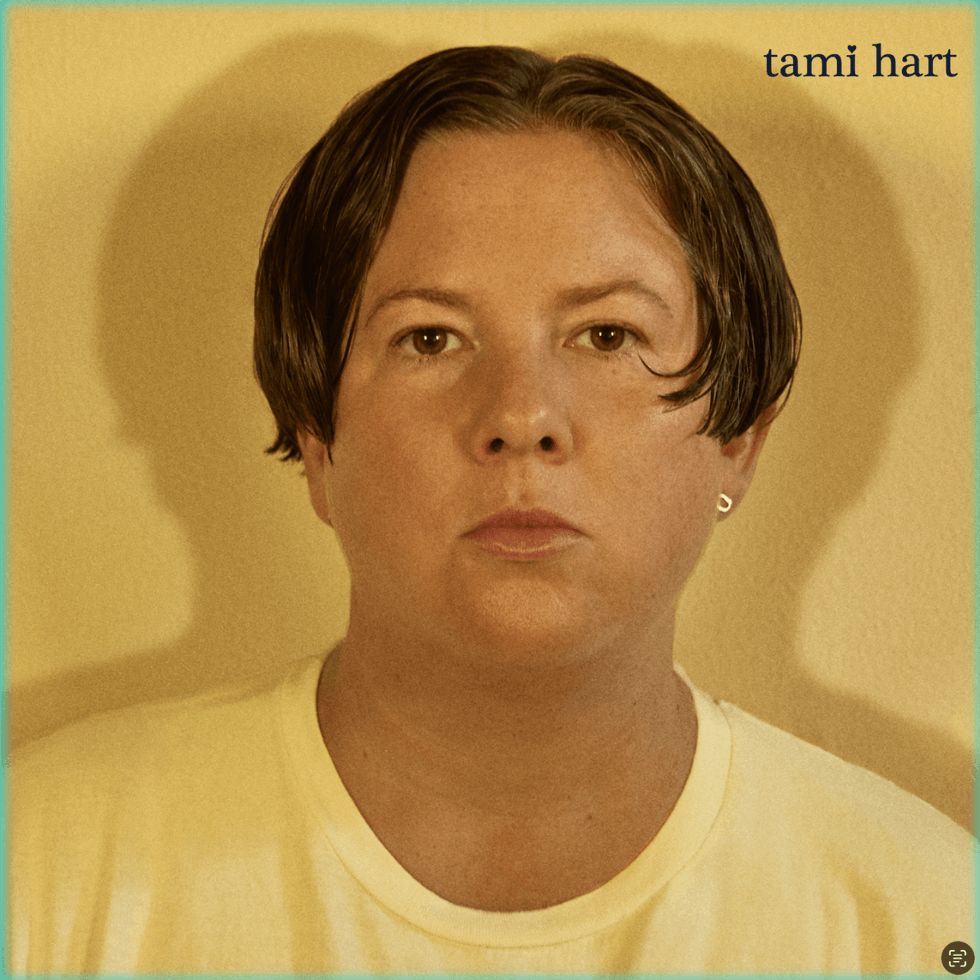 Cover art for Tami Hart's new self-titled albumDon Giovanni Records
I'm also realizing that the sober community, the one I found when everything fell apart, may be the community I've felt most deeply connected to in my entire life. Not because everyone shares my politics, my sexuality, or my taste in music, but because the foundation of that community is a kind of radical honesty I've spent my life searching for.
Queer punk taught me that I didn't have to accept the world I'd inherited. Recovery taught me that I didn't have to keep repeating it. And now I know that both are acts of resistance.
When I wrote "Water Under That Bridge" at 24, I wanted to believe I could leave things behind. The drinking, the shame, the people and places I'd spent so much of my life trying to escape. I wanted to believe that moving forward meant putting enough distance between myself and the past that it couldn't hurt me anymore.
More than twenty years later, I know it doesn't work that way. I've spent a lot of my life trying to figure out what to hold on to and what to let go of. Sometimes I've confused leaving with healing. Sometimes I've burned bridges I probably needed and held on to things that were destroying me. And sometimes I've found myself right back where I started, wondering how I got there.
I don't have a neat ending to any of this. My relationship with alcohol is still complicated. So is my relationship with the person I was at 24. But I'm beginning to understand that I don't have to pretend either one is behind me to keep moving forward.
I'm still learning how to do that.
I'm still looking for my people, one day at a time, sober today.
- YouTube www.youtube.com
Tami Hart is a queer singer-songwriter and longtime member of the riot grrrl and queercore underground. Her forthcoming album, produced by Ted Leo, marks her first full-length solo release in 24 years on Don Giovanni Records. "Water Under That Bridge" is the album's third single.
Opinion is dedicated to featuring a wide range of inspiring personal stories and impactful opinions from the LGBTQ+ community and its allies. Visit Out.com/submit to learn more about submission guidelines. We welcome your thoughts and feedback on any of our stories. Email us at voices@equalpride.com. Views expressed in Opinion stories are those of the guest writers, columnists, and editors, and do not directly represent the views of Out or our parent company, equalpride.