


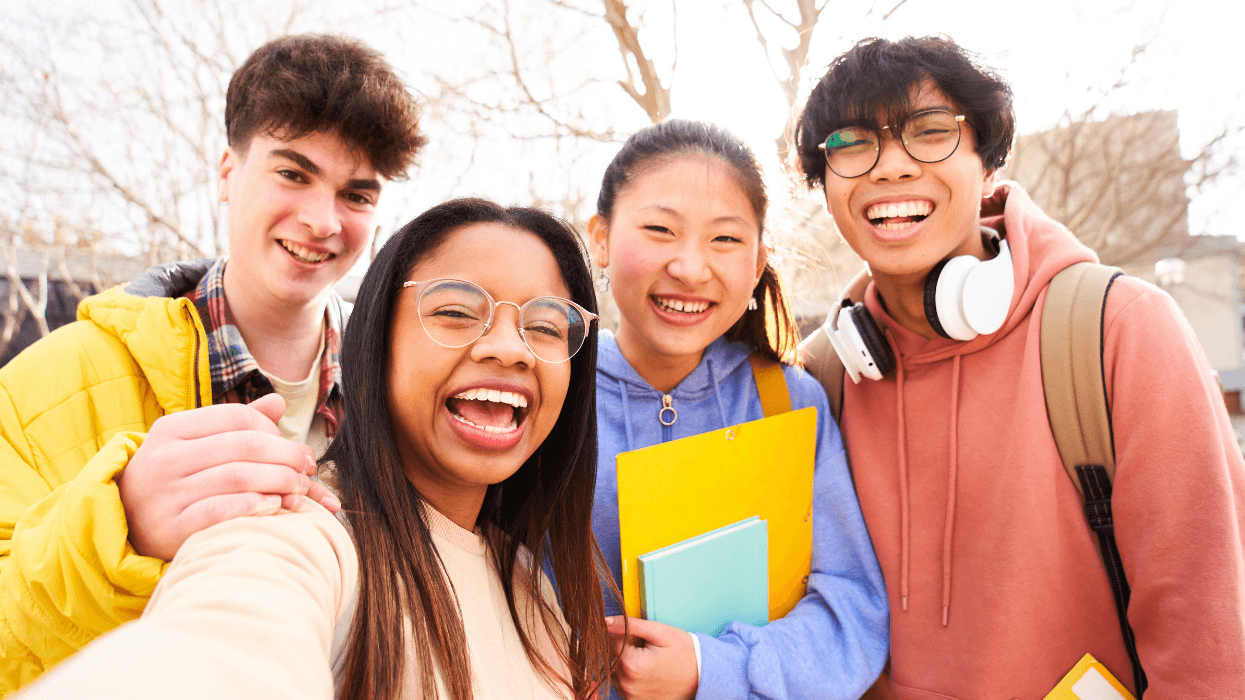
I've spent eight years in the classroom (virtual and in person), and every semester I watch my students navigate the realities of school. Amid the excitement of the year, there is a subtle fear that exists for our students who live on the margins of the margins, including our LGBTQ+ students. At a time when systems are actively working against our historically marginalized students, I wanted to provide a list of tips to help ease the transition into the school year.
If you're a parent, guardian, or adult in the life of an LGBTQ+ student, here's a working list based on what I've seen actually move the needle.
1. Educate yourself (and continue to). Many resources exist to help schools be more LGBTQ-inclusive. Two top organizations for continued learning are Glisten (the leading national K-12 education organization dedicated to creating safe and respectful learning environments for youth of all sexual orientations, gender identities, gender expressions, race, and abilities) and PFLAG (the nation's largest organization dedicated to supporting, educating, and advocating for LGBTQ+ people and those who love them).
2. Know the policies of your student’s school and district. School districts usually post these on their website. Find the policies, read through them, and ask questions. Pay close attention to the anti-bullying policy and any policy that names sexual orientation or gender. Policies set a standard, but they aren't always followed, so knowing what the policy states can help you advocate for your student if an issue arises.
3. Don’t out your student without their permission. As LGBTQ+ people, we have the right to decide when, how, and who we want to come out to. This same principle should apply to your student. If your student is not ready to be out at school, that’s OK. Trust their instinct and affirm that if or when they are ready to come out, you will support them.
4. Find community. You’re not alone as someone supporting an LGBTQ+ student. Find a community to help support you when things get tough and to share resources. Supporting students in 2026 requires a village and a half, so find your village. Some great spaces where you may be able to find community are Glisten and PFLAG chapters.
5. Locate one adult at your student’s school who gets it. Most schools have at least one, and often more. Think beyond just teachers and counselors; it could be a librarian, nurse, custodian, etc. Having a connection with this adult can be an invaluable resource for both you and your student. Your student will have an ally on their side, and you can gain a greater understanding of the school culture.
6. Empower your student to take action on their school journey. As the adult in a student's life, you may feel like you need to protect them, but remember that they are their own person. We need to give them the skills and autonomy to take charge of their journey. A simple way to start is by asking, “If a kid says something to you at school, do you want me to call, or do you want to handle it and tell me after?” This opens up the conversation and gives the student an opportunity to take charge.
7. Pay attention to the quiet signs. According to the 2025 National School Climate Survey, LGBTQ+ students are more prone to experience hostile school environments than their heterosexual peers. We need to be aware of the quiet signs such as dropping grades, sudden illness that keep them home from school, or shifts in friend groups. These quiet signs are usually indicators that something is wrong, and from personal experience, nine times out of ten, the student is dealing with some form of bullying.
8. Remind your student that they are loved and matter. Name this explicitly and not implied. School is hard for all youth, but especially for LGBTQ+ youth. This reminder can be a beacon of hope when school gets tough. They'll know that you are there and will continue to be a champion for them no matter what.
This list is not exhaustive, but at the end of the day, knowledge is power. The more you and your student are in the know, the easier the school year will be. As an educator who is here to support all my students, I want you to know that there are more of us in your corner than you might realize, and you are not alone.
Damon R. Carbajal is the director of Organizing & Training Programs at Glisten, a nonprofit dedicated to creating safe and respectful learning environments for youth of all sexual orientations, gender identities, gender expressions, race, and abilities. Learn more at glisten.org.
Opinion is dedicated to featuring a wide range of inspiring personal stories and impactful opinions from the LGBTQ+ community and its allies. Visit Out.com/submit to learn more about submission guidelines. We welcome your thoughts and feedback on any of our stories. Email us at voices@equalpride.com. Views expressed in Opinion stories are those of the guest writers, columnists, and editors, and do not directly represent the views of Out or our parent company, equalpride.