


Someone called me an elder, as if I’d crossed the finish line of a race I never agreed to run. “One of our elders,” they said — like a museum piece with a pulse. I’m still discovering what that word asks of me. It’s not resistance, more a pause to understand its weight. I’d rather keep the right to speak truth to power than join its ranks.
And if I’m honest, part of me knows exactly how to perform that role in a way that would be applauded — and I don’t entirely trust that part of myself. There’s a version of this identity that fits cleanly, that reassures, that confirms what people want aging to look like. I’ve spent a lifetime learning how to be legible. I’m not sure I want to get better at it now.
Some mornings I catch my reflection on the subway glass. I see both the face of my past and another that asks what’s next. I think how odd it is to still be becoming. I’ve spent a lifetime unlearning what we once called survival: tightening the jaw, holding the line, making sure we looked respectable enough to be tolerated. So much denial disguised as code. Now I’m trying to loosen, to listen, to remember curiosity as a practice.
I think back to the first Pride I marched in — the summer of ’79, Pittsburgh, maybe 120 people in all, a procession of mismatched courage. I joined because silence had become unbearable. We passed brownstones with curtains trembling from cautious eyes, and storefronts that pretended not to notice. There were barricades, no floats. Just breath and fear and a few borrowed tambourines, smiling for the cameras and the weeklies that ran what the networks ignored. That day I learned what scale could mean: A small crowd can hold the whole world if everyone’s heart is tuned to survival.
That same summer, I stood in the scale of it — New York’s Pride, the March on Washington — where our numbers translated into something legible, something the world could recognize as movement rather than risk. Not the capital-letter moments on the Mall, not the national headlines, but the sound of those 120 footsteps echoing off the pavement. History remembers the parades; I remember the sidewalks branching outward from them. Those early years shaped me, but only in the way clay remembers a potter’s first touch. The rest of the shape came later — in what we dared to become after the parade dispersed, in the cracks and tiny fractures of the museum piece we’ve become, since.
What we built then wasn’t designed to be easily understood. It was messy, uneven, sometimes illegible. I think about Pride now — the scale of it, the clarity, the way it can be read at a glance. There’s power in that visibility, of course. But there’s also a script. A way of appearing that risks becoming its own expectation.
I wonder, sometimes, if “elder” carries a similar script. A version of the self that is easier to receive than to question.
I came out speaking an old dialect, inherited. Gay or lesbian — those were the sanctioned boxes. “Bi” was the word you whispered, like a confession — too shapeless to be trusted. I would flinch when I said it, as if I’d handed the world an unfinished sentence. Years later, when our community began to fracture and expand at once — when gender became conversation instead of category — I felt something inside me ease. For the first time, the words didn’t feel borrowed. I could say bi-queer and mean it as a celebration, not an apology.
The change wasn’t only in language; it was in the energy around it. You could feel the old order loosening. Pronouns multiplied, bodies became pronouncements, and what used to frighten began to feel like permission.
Some grumbled. They wanted the revolution to keep its old vocabulary. I enrolled in this new grammar — the one that refuses endings. After decades spent perfecting the art of translation — between straight rooms and queer bars, between the masculinity expected of me and the tenderness my body craved — I knew how to switch codes. I just didn’t know that one day I’d get to write my own. What fascinates me now is the sanctioned disobedience of it all, the way audacity no longer needs apology. I keep the freedom to call myself unfinished, still studying the ways our language keeps changing shape.
I’ve been told the body slows and the spirit grows serene. Mine refuses. My body has never been quiet. It hums differently now, but the song is still loud — desire and curiosity in duet. Some days I believe that fully. Other days, I hear the old language creeping back in — decline, loss, less — and I have to translate myself again.
I think of these changes less as decline and more as enhancement, though even that feels too tidy. What I’ve done isn’t shedding the past so much as outgrowing it. Each evolution I’ve lived left traces, soft and deliberate — kept within reach, not to mourn but to reuse. Some nights I feel their presence, layers of myself humming under the current one — proof I’ve survived by transforming.
When I was younger, I thought reinvention meant escape: new cities, new lovers, new mirrors. I mistook motion for transformation. Reinvention now happens under the surface, like cells quietly rewriting themselves while I sleep. I don’t grieve what’s gone. I keep it close, folded into the fabric. The boy who marched in that small parade still walks beside me; his pulse now keeps time with mine. The man who once struggled to say “bi” out loud still whispers it sometimes, just to hear how the word has changed temperature on his tongue.
I’m learning to thank every version of myself that brought me here. None of them were mistakes. They were prototypes — drafts of the same wild curiosity, each one a little braver than the last. There’s a steady fire that’s burnt through age, and they were its kindling. This version of me is only the latest translation of persistence — and of permanence.
I used to think rebellion ended once we found the right words. Now I see it just changes syntax. It becomes the choice to keep learning when everyone expects you to lecture. Gen Z calls it radical joy — the art of declaring softness as power. I’m not standing at the edge of the crowd trying to decode their language, worrying my fluency has expired. This is a new canon, and the invitation is extended. They’re not asking for approval; they’re offering collaboration. And I’m choosing to be in the room, not the feed — grateful the feed was a lifeline when the room disappeared.
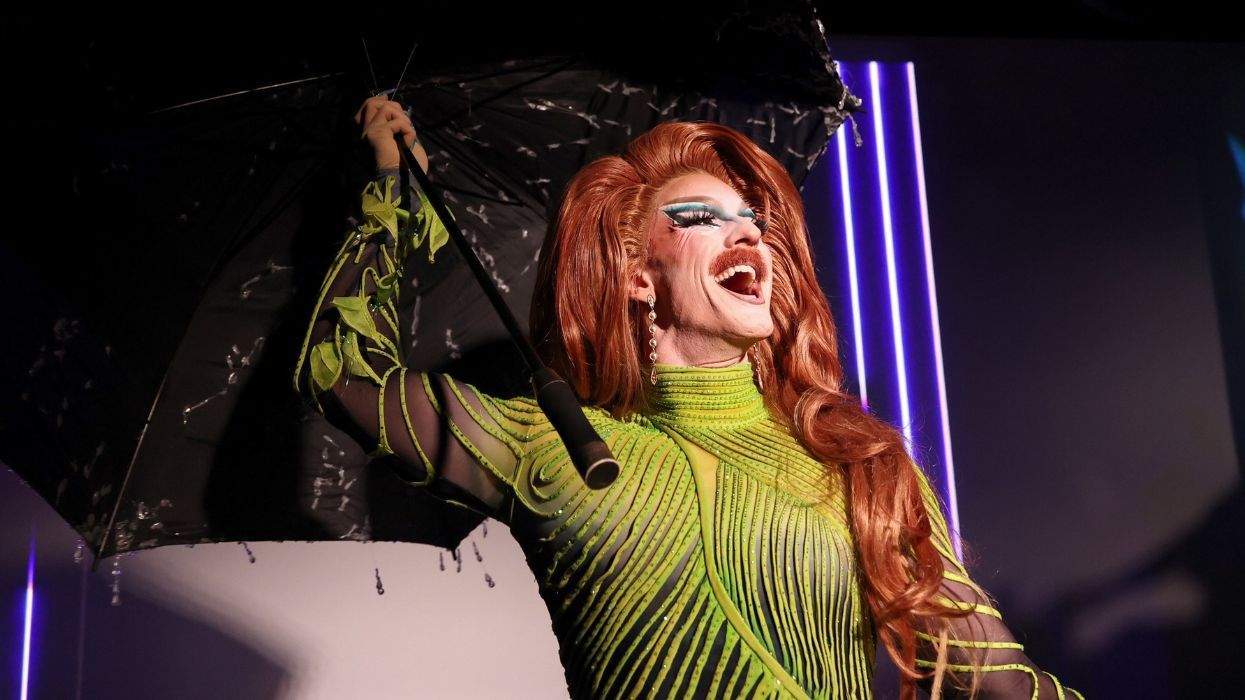
I started showing up again, this time as a student. At readings where poets stretch gender until it sings; at drag shows where the canon is revised in marabou and metaphor; at workshops where someone born into a freer grammar explains how syntax itself can bend like a body. I take notes. I ask questions. I try not to talk too much.
What I appreciate today — the art, the certainty, the chaos — is the reminder of defiance made flesh. We performed resistance with signs and slogans. They do it with syntax, pronouns, and the sheer audacity of not asking permission. Subversion used to mean getting away with something. Now it means being seen doing it — and refusing to apologize.
I don’t want to mentor anyone into my version of freedom. I want to keep earning the right to exist beside theirs. That’s the real rebellion: staying porous, refusing to fossilize, letting language and desire reeducate me daily. And that pulse of discovery? It’s still here — thumping through the bass lines and syllables of a new generation.
I used to think wisdom meant having answers. Now I know it’s learning how to remain curious. Curiosity is my discipline now.
I wake to a world already humming with someone else’s invention — a new pronoun, a new protest, a new way to tell a story that hasn’t been told enough. I don’t need to keep up; I need to keep open. Sometimes it’s as simple as reading a poem and feeling my pulse sync with the poet’s, untroubled by how little we look alike. This, I remind myself, is what a living lineage looks like. Not inheritance — exchange.
I hope they’ll say I stayed curious. Though I know how easily curiosity can harden into certainty if you’re not paying attention.
And if anyone asks, I’m still conjugating — trying to keep the language alive without letting it settle into something too easily understood.
Opinion is dedicated to featuring a wide range of inspiring personal stories and impactful opinions from the LGBTQ+ community and its allies. Visit Out.com/submit to learn more about submission guidelines. We welcome your thoughts and feedback on any of our stories. Email us at voices@equalpride.com. Views expressed in Opinion stories are those of the guest writers, columnists, and editors, and do not directly represent the views of Out or our parent company, equalpride.