

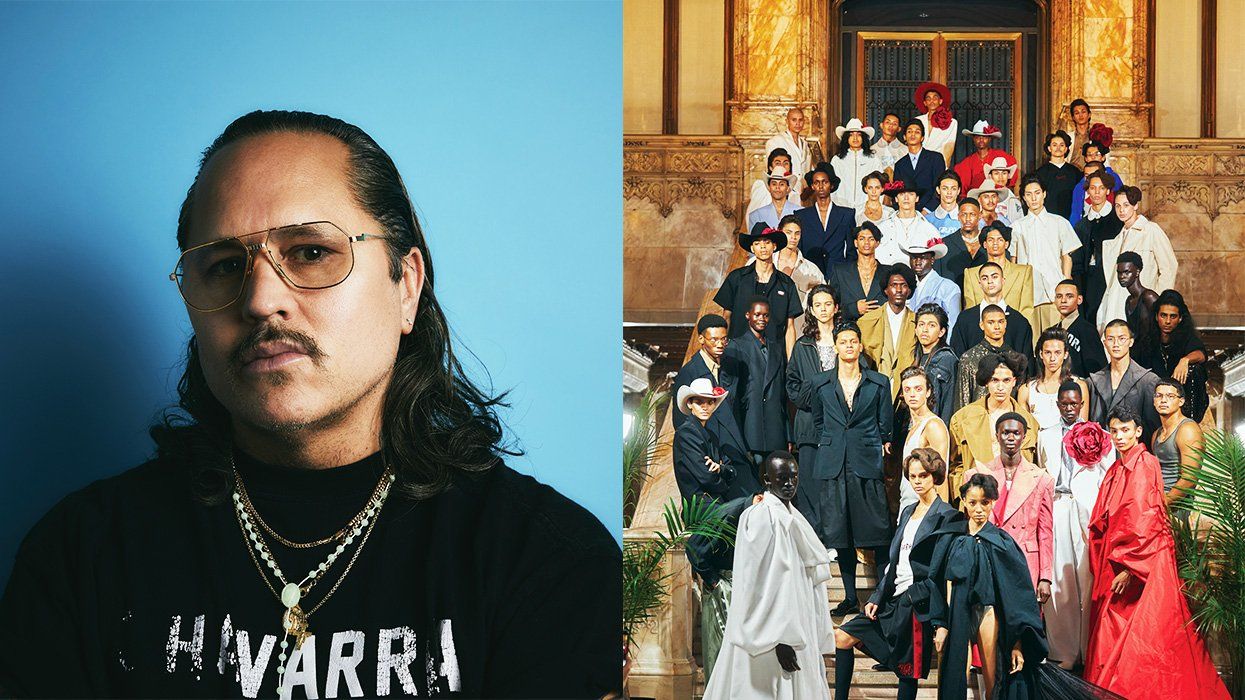
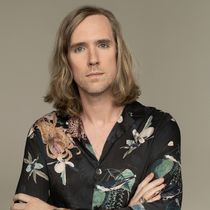
When Willy Chavarria was a child in California’s Central Valley, he would ask his mother to buy him address books from the dollar store. Afterward, “I would draw dresses in them, because I thought they were ‘a dress’ books,” he recalls with a smile.
The drawings reflected an early fascination with clothes as a means of expression and identity. “I was just really obsessed with the way people would dress to define themselves, to show themselves aligning with a certain group or a certain culture,” he reflects.
Those dollar investments paid off. Today, Chavarria is a star of the fashion world. In 2023 he was named CFDA’s American Menswear Designer of the Year, a top honor in the industry. (In addition to founding his eponymous label, Chavarria is the senior vice president of design at Calvin Klein.) His clothes, which challenge racial hierarchies and blur traditional lines of gender, have attracted celebrity fans like Billie Eilish, who sported an oversized blazer, khaki shorts, shirt, and necktie from Chavarria at this year’s Golden Globes.
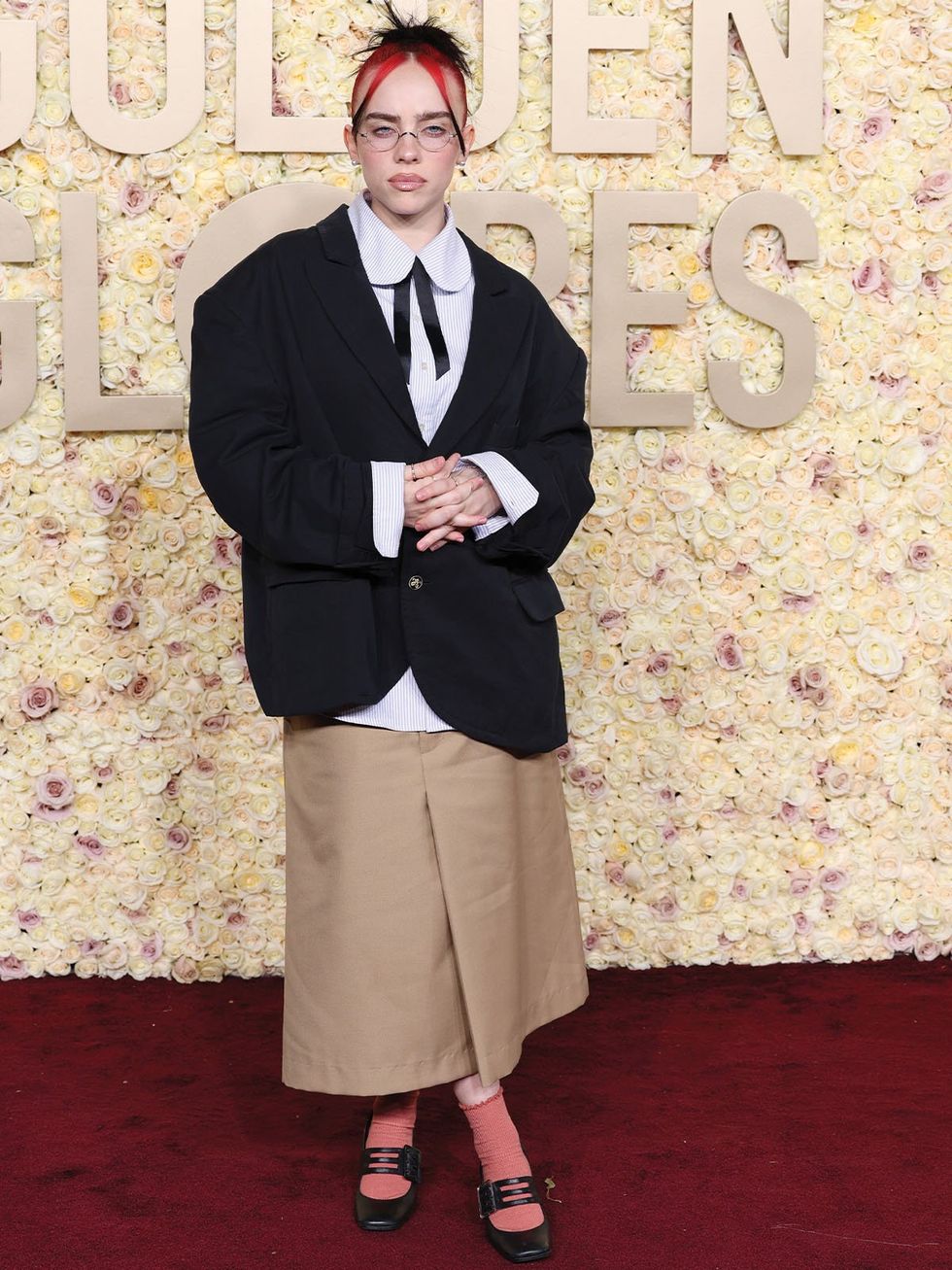 Billie Eilish attends the 81st Annual Golden Globe Awards at the Beverly Hilton on January 7 wearing Willy Chavarria.Kevin Mazur / Getty Images
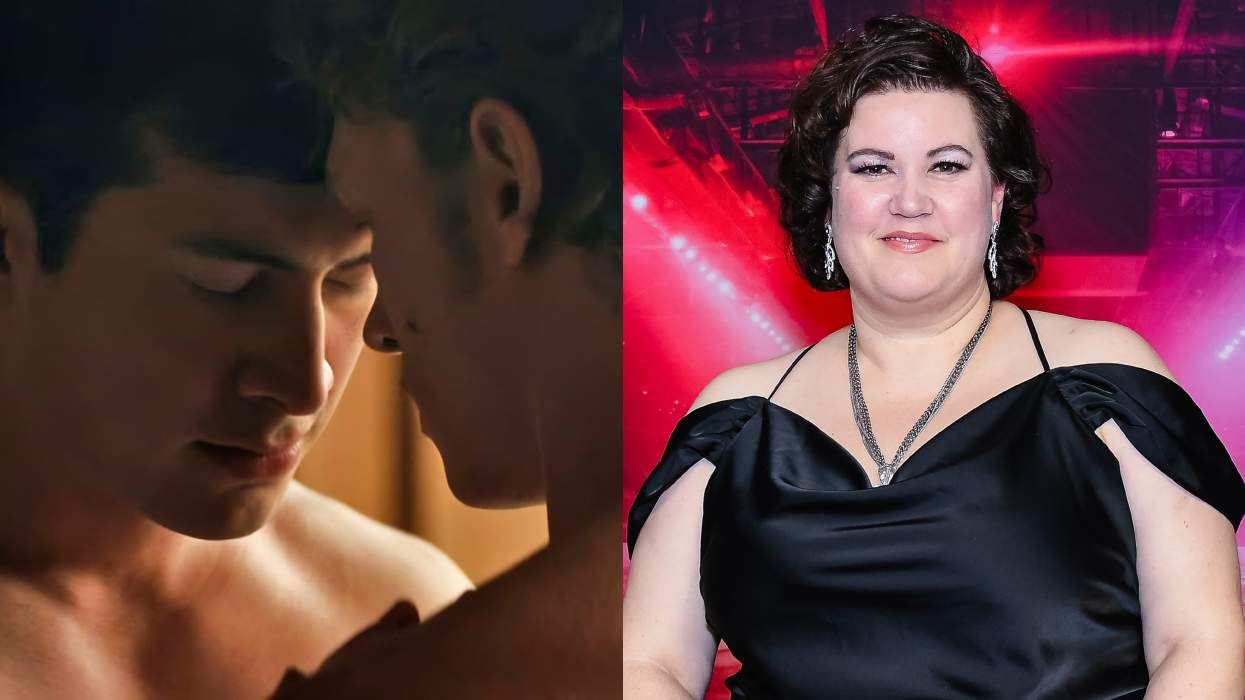
For Chavarria, politics is just part of the runway. Notably, his summer 2019 show at New York Fashion Week took aim at Donald Trump’s immigration policies. “Have you ever seen a human in a cage?” boomed a voice over the loudspeaker. His shows are now must-attend events for both their artistic innovation, commentary, and surprise. Recently, he made his filmmaking debut at his fall show by screening a homoerotic short film, Safe From Harm, about the pain of being an outsider.
These demonstrations reflect “a core message of the brand…which is essentially love,” Chavarria says. And this message extends to 2024. “My greatest expectation for this season is really to connect with people on a very sensitive emotional level and make people feel seen and heard in my presentation,” he says.
A queer son of a Mexican-American father and Irish-American mother, Chavarria weaves a history of historically marginalized people into his work. For example, in a 2023 op-ed in The New York Times, Chavarria praised the zoot suit, with its pleated trousers and capacious tailoring embraced by Black and brown men in 1940s America. The zoot suit could “take up space through silhouette and style” and had a “capacity to make powerful political statements primarily through visual means,” he wrote, a vital expression as these same groups remain under attack nearly a century later. Today, he can be credited in part for the loose pant’s cultural revival.
There’s also his queerness, “a huge part of how I present my brand,” says Chavarria, who aims for the “blending” of masculinity and femininity in his collections, so the gender of the wearer becomes moot. “Ultimately, it’s fit I think [of] way more than gender, because clothes have no gender — they’re just clothes,” he says.
Accessibility is important to Chavarria. Known for streetwear, he has expanded into the world of luxury tailoring. But he makes sure to have “approachable price points… so that everybody can get a piece of the vibe,” like a $29 hoodie available at PacSun in addition to merchandise at Bergdorf Goodman and WillyChavarria.com.
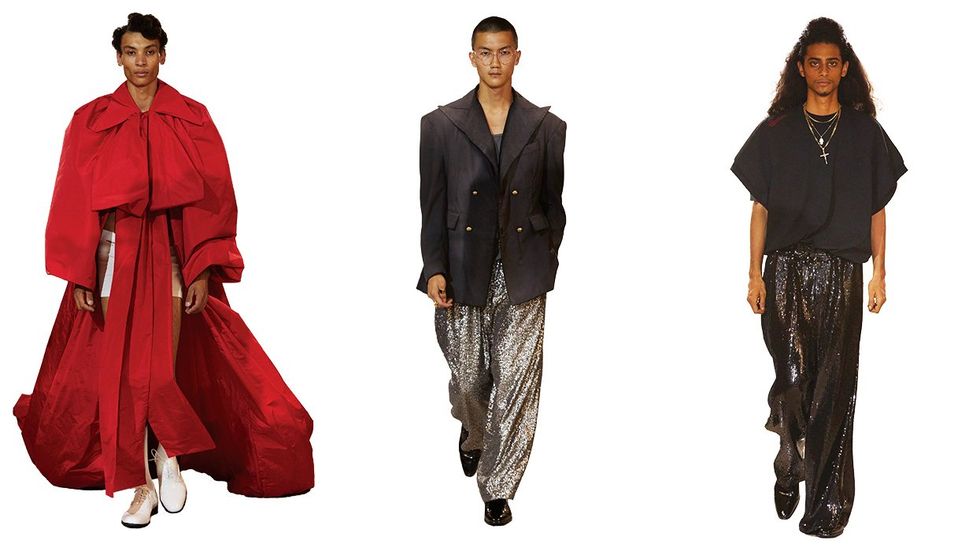 Willy Chavarria Spring/Summer 2024Willy Chavarria
While Chavarria sees honors like the CFDA award as validating, he also laments a fashion landscape suffering from both an identity crisis and a surfeit of soulless marketing. “There’s a heart that is missing, I think, from a lot of art and music and fashion right now in the world,” he says. Which isn’t to say that Chavarria doesn’t consider how, say, a viral moment at a runway show or star power can elevate his brand.
“At the end of the day, it’s a business, and I need to examine every aspect there is to...actually make money to live on and have employees and build a business,” he notes. “But I think that so many people are really doing the same thing that there’s room for new ways of thinking. And I think when new ways of thinking and presenting are introduced, the reception is good.”
The dream reception to his own clothes? “This isn’t just another distraction from what is going on in the world. This is an awareness of what’s going on in the world, and I’m included in this. And I can find ways to dress, to make me feel good and feel strong and feel beautiful during these times.”
These times may soon get tougher. In an election year with the possibility of another Trump presidency on the horizon, Chavarria is already planning ways to get out the vote using his platform this fall. It’s work that gives him purpose. “
As much as we have risen as queer people and trans people and POC people and LGBTQIA+ people, it’s almost like just alongside of that, all of this hate has been rising. So I think it just becomes even more and more important for people like us in the media, in fashion, who do have a voice, to make people feel differently and think differently.”
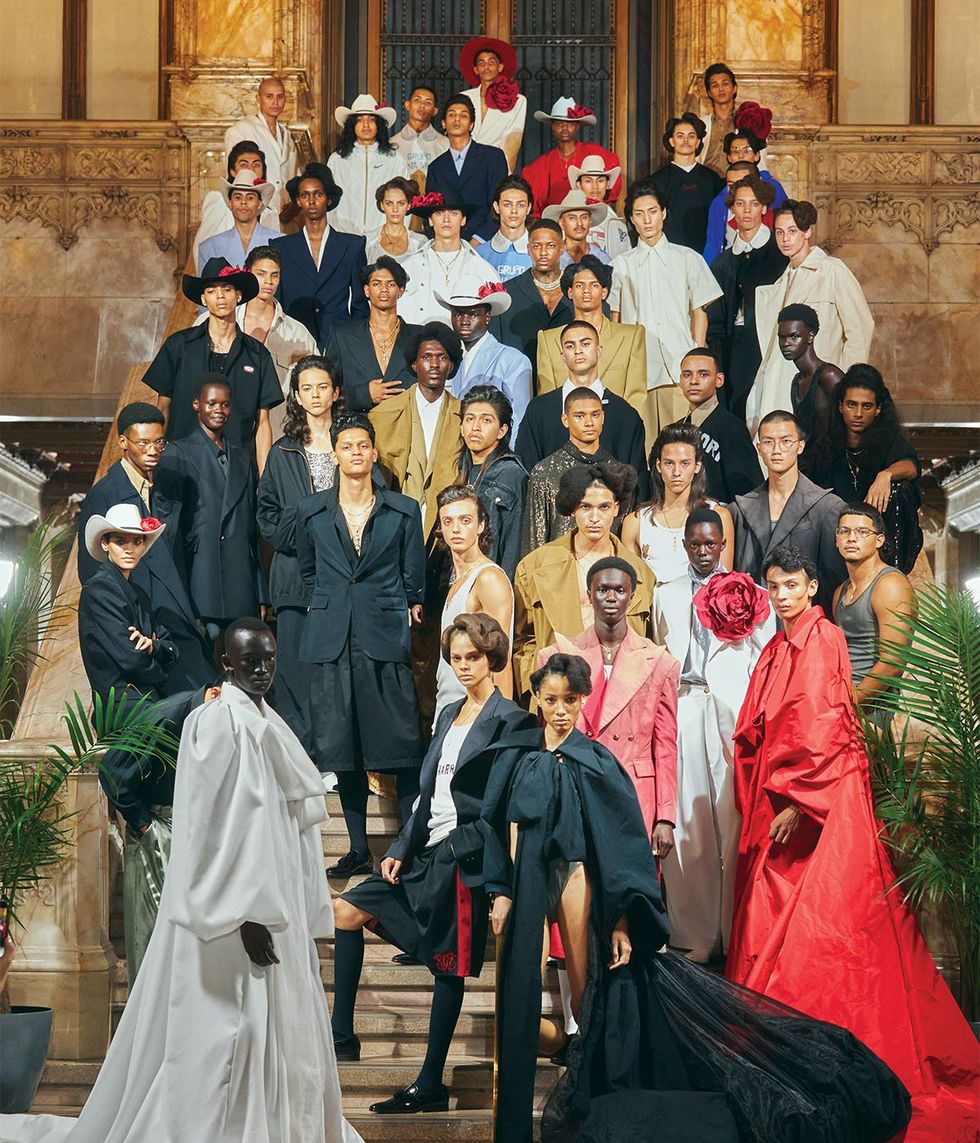 Willy Chavarria Spring/Summer 2024Willy Chavarria
This story is part of Out's March/April issue, which hits newsstands on April 2. Support queer media and subscribe — or download the issue through Apple News, Zinio, Nook, or PressReader starting March 18.