


Dan Levy writes, directs, and stars in Good Grief — a new genre-pushing Netflix film about love, loss, and friendship that will have fans saying, “David, I have a feeling we’re not in Schitt’s Creek anymore.”
“Good grief” is an expression of surprise, disappointment, and annoyance, which are all emotions carefully examined in Good Grief. The title is also literal, as Levy’s protagonist, Marc, grieves the death of his husband, Oliver (Luke Evans). The story begins in London, which is also where Levy finds himself for his Out interview.
“I came here in my early 20s escaping a breakup — funnily enough — and made a lot of friends here,” the Toronto-born creative notes of his affection for the city. “Sometimes when you need a place and it shows up for you in a big way, you just always tend to come back to it. I love it. And I date more here, so that’s always a plus.”
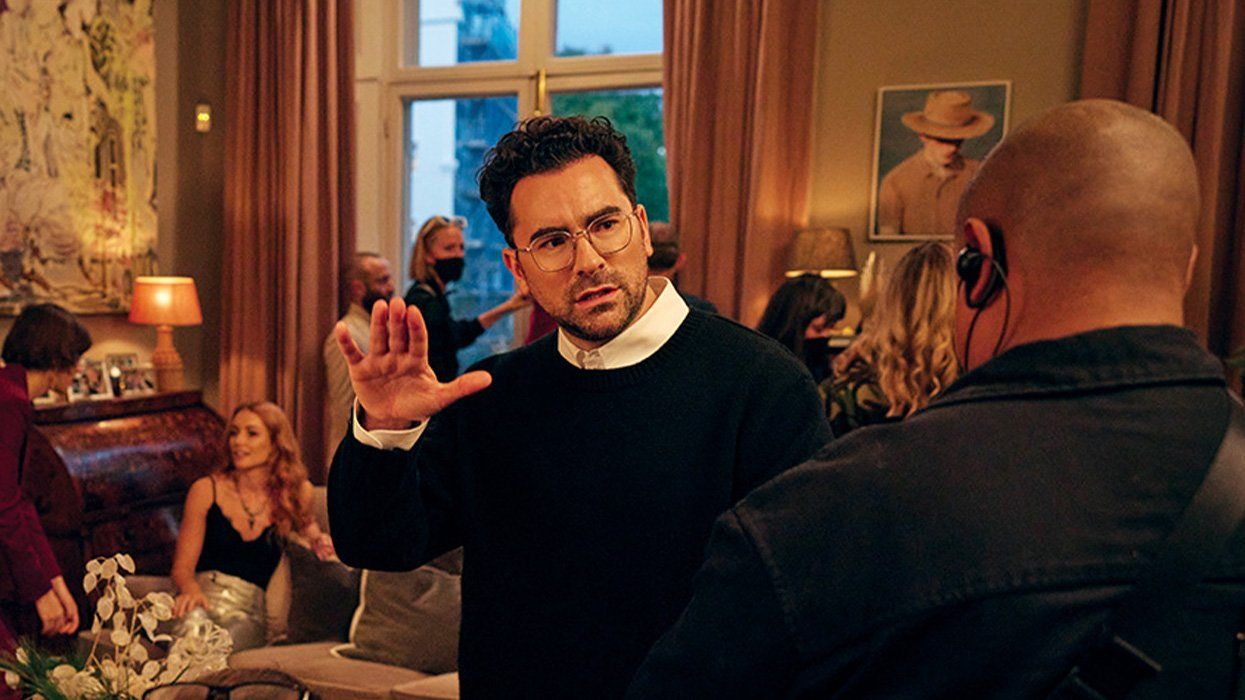
Levy is a true multihyphenate. He’s an actor, writer, TV host, producer, and director. Notably, he directed four episodes of Schitt’s Creek, including the series finale. With Good Grief, he directed his first feature film, which he decided to do after penning the screenplay.
“I’m pretty selective in terms of what I direct. At this point, it’s just Good Grief and Schitt’s Creek. For me, it’s only when I feel like I know it better than anyone else could,” he says. “When I wrote this script, I just knew that anyone else who came in to direct this thing would probably have me circling around in the background, and that would be really annoying. I just knew how I wanted it to look. I knew how I wanted it to feel. It just felt like an inevitability. It felt like an easy next step, and I was glad I did it.”
 Netflix
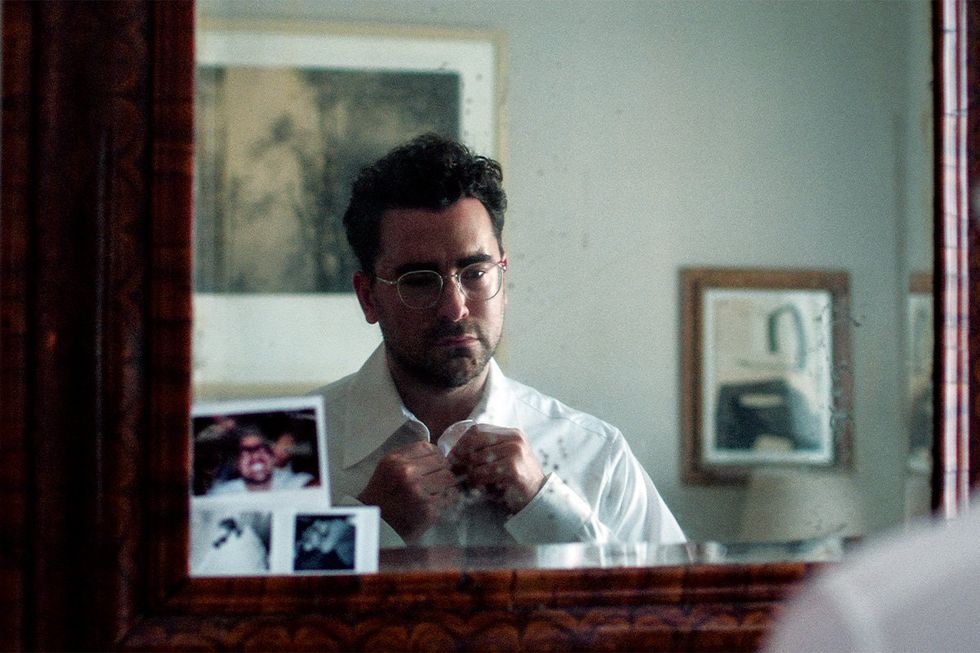
As for acting, Levy stepped outside of his comfort zone in his portrayal of Marc in Good Grief, who is a far cry from the fabulous and fashion-forward (and financially struggling) David Rose on Schitt’s Creek.
“I think this movie is going to be a very different experience for [fans of Schitt’s Creek], and I hope that they’re willing to go on that journey with me,” Levy says. “Whether it’s comedy or drama, the truth of life has always been very interesting to me. Whether it’s a family losing their money or a man losing his husband, there’s always comedy.”
“That was the great challenge of playing Marc as well,” he adds. “I played David Rose for 80 episodes of television, and you get into bad habits when you play those characters. They stick with you. I had to physically restrain myself from some of the physicality that David brought out in me in order to play Marc, who is so physically different.”
As for Levy returning to the Rosebud Motel for a Schitt’s Creek reboot? Rumors abound, but Levy spoke candidly when asked of potential ideas he’d like to explore in a sequel. “If I had that idea, we would be making that movie. I don’t have an answer for you. I wish that I did,” he explains. “I feel very proud of the work that we did. I do not feel inclined to continue the conversation, but I love those people. I’d love to work with them again. We had the greatest time. It’s very easy to want something…and yet, as a culture, we’re not very kind when things disappoint us. I’m very conscious of the fact that if we can’t improve upon what we did, there is absolutely no point in doing anything else. I feel very happy with where we left things off.”
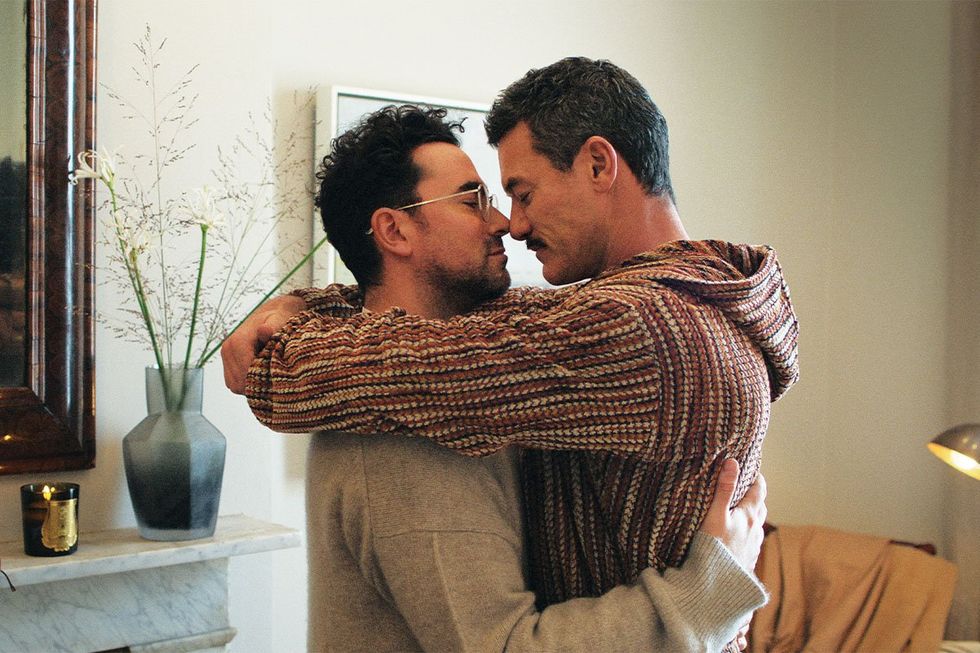
Yet with Good Grief, Levy remains at the vanguard of reinventing the Hollywood love story, which traditionally centers monogamous straight couples embarking on new relationships. Between All of Us Strangers, Fire Island, Spoiler Alert, and Bros, viewers are now finally seeing more nuanced storytelling about queer love on the big screen. Good Grief deliberately subverts familiar tropes and plays with audience expectations as each layer of these characters is peeled back. For instance, when Marc finds out that Oliver had met someone new in Paris, the viewer initially feels the sting of cheating. But it is revealed that Marc and Oliver had an open relationship, which unlocks a door to a deeper understanding of modern love. The issue proved to be rich subject matter for Levy.
 Netflix
“I’ve never been in [an open relationship]. I know people that are, that have been, that probably will be,” Levy says. “I think whatever people want to do with their relationships is totally on them, and it made sense for this relationship. It was a conversation I wanted to explore: the idea that this happened, and also why people choose to be in open relationships. I thought it was interesting that in the end, Marc revealed that he did it out of fear, not trust, which I think is a dangerous choice to make. At no point did I ever want to put judgment on open relationships at all. I wanted to have it live in this very normal place. It just happened to collide with such tragedy.”
“When I was writing the script, I always thought, if he hadn’t died, what would’ve happened when he came home from his trip to Paris and they had that conversation? Would it have been repaired? Would Marc have finally said, ‘I don’t feel comfortable with this.’ And would Oliver have said, ‘That’s fine?’ I don’t know.”
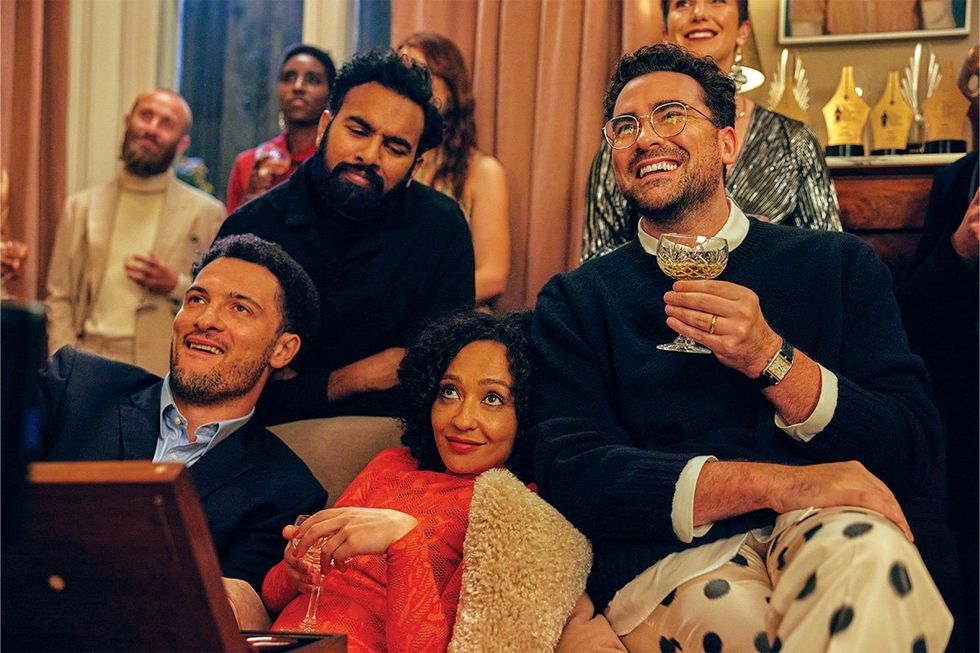
In Good Grief, the scope of love is expanded beyond the romantic kind. Marc’s best friends are Sophie (Ruth Negga) and Thomas (Himesh Patel). In the hands of other storytellers, these characters might have been delegated to supporting roles in a romantic comedy, without substantial backgrounds, storylines, or character progression. But Levy had other ideas in mind.
“Good Grief always felt to me like a drama with a little bit of comedy sprinkled in,” he says. “In conventional rom-coms, the quest for the love interest is the central focus of the movie. And the friends, oftentimes the quirky gay best friends who live on the sidelines, they’re always the most interesting characters in the movie. But they’re the characters we know the least about.”
 Chris Baker / Netflix
“The idea of centering friendship as the romance of the movie and celebrating how important found family is in our lives, that was the most important part of all of this,” he says. “As my character struggles with the journey of reconciling his grief, a lot of it is a celebration of his friendships. I have such a close group of friends, and I’ve been single for a while. You turn to your friends a lot in those moments, and I just haven’t seen a movie in a very long time that really gave that dynamic the spotlight. It felt important for me to tell this story. They deserve it. Friendships deserve the spotlight.”
From their very first scene together, the bond between Marc, Sophie, and Thomas feels remarkably authentic, which Levy credits to their rehearsal time prior to filming Good Grief.
"When you have a movie about old dear friends, it’s important to believably convey that. We rehearsed for two weeks, Ruth, Himesh, and I. We got together every day for eight hours a day and just talked about everything,” he says. “We talked about our fears, our relationship to grief, our relationship to love. Before we started shooting, we had that camaraderie, that comfort, and that freedom with each other to be open, physically and emotionally. The weekend before we started shooting the movie, Ruth, Himesh, Luke, and I went away to the country for the weekend. We stayed together and had an amazing time.”
With Good Grief, Levy formed new friendships and marked a career milestone. But what of his own dating life? “I wish it was going better than it was, to be honest, but I’m keeping my fingers crossed,” he says with a smile. “It’s the first time that I’ve been dating in a while, so that’s good. The movie took it all out of me. When you have a job that’s an intense responsibility, there’s not a lot of room for much else in your life. Now that the movie is over and I have some time to myself, I’m giving myself the luxury of going on dates. It’s been nice.”
Good Grief is now streaming on Netflix. This article is part of the Out January/February issue, which hits newsstands on February 6. Support queer media and subscribe — or download the issue through Amazon, Kindle, Nook, or Apple News on January 23.