

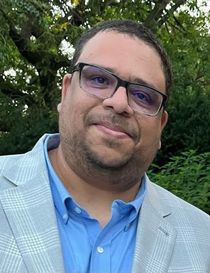
This story originally appeared on The Advocate.
When Betsy Driver’s mother took her to medical appointments as a child, she asked whether other children were like her daughter. According to Driver, doctors told her no.
Years later, Driver found people with the same intersex variation who had been treated at the same hospital.
“We were lied to, plain and simple, lied to,” she told The Advocate.
The discovery propelled Driver into work that connected people across countries and generations. She co-founded the online community Bodies Like Ours, helped establish Intersex Awareness Day, and became the first openly intersex person elected to public office in the United States.
On Monday, that observance marks 30 years since intersex activists and transgender allies protested outside an American Academy of Pediatrics conference in Boston. Their demand — an end to medically unnecessary interventions performed before patients could consent — remains unfinished business. Now, advocates confront policies restricting transgender healthcare while preserving exceptions for procedures on intersex children.
“Stop cutting our bodies,” Driver said. “Stop cutting us, please, and let us be.”
Related: How anti-trans policies are disrupting efforts to prevent genital mutilation
Finding community after a childhood of secrecy
Intersex people are born with variations in sex characteristics, including chromosomes, hormones, or reproductive anatomy, that differ from typical expectations for male or female bodies. Some traits are identified at birth; others emerge later. Intersex people can be women, men, nonbinary, or another gender. Some are transgender; many, including Driver, are not.Driver has congenital adrenal hyperplasia, an inherited condition affecting hormone production in the adrenal glands. Some forms cause excess production of androgens, hormones that influence sexual development. Exposure before birth can cause girls to be born with genital variations. The condition can also cause serious hormone deficiencies requiring medication; that treatment is separate from surgery to change genital appearance.
Driver wants readers to understand the people behind those medical terms: parents, partners, neighbors, and children whose lives extend beyond what happened in an examination room. She and her wife have two grown sons. She worked at CBS News and later served as mayor of Flemington, New Jersey.
For years, finding that ordinary sense of belonging required extraordinary effort.
“The whole reasoning behind Bodies Like Ours was to overcome that lie,” Driver said.
Its online forums let people compare experiences they were taught to keep private. Driver said some participants became movement leaders. First, they learned they weren’t alone.
Related: Health and Human Services takes stand against nonconsensual intersex surgeries
The protest that helped break the silence
An earlier generation had begun forcing those experiences into public view. During the movement’s formative years, Bo Laurent, known then as Cheryl Chase, founded the Intersex Society of North America in 1993. Her advocacy reached medical conferences, academic journals, and courts.
In the book TRANS/gressive, Riki Wilchins recalls meeting Laurent after a New York reading and talking into the evening on brownstone stoops. Wilchins, a founder of Transexual Menace and founder of GenderPAC, saw a need to bring intersex people’s demands beyond medical circles.
“I responded with my customary answer to nearly every political problem: go picket someone,” Wilchins writes.
The account describes activists handing out leaflets and confronting conference attendees in Boston. Intersex activists Morgan Holmes and Max Beck participated alongside transgender allies on October 26, 1996.
In an interview with The Advocate, Wilchins described the practice advocates call intersex genital mutilation: medically unnecessary procedures performed on children’s sex characteristics before they can give informed consent. They argued that the harm extends beyond surgery to the shame and secrecy imposed on children afterward.
“It causes two kinds of damage to intersex kids,” Wilchins said. “One is, of course, the physical damage, which can often be profound.”
Wilchins also criticized the premise that children’s bodies should be altered to satisfy expectations of what male or female anatomy should look like. They distinguished cosmetic interventions from treatment needed to address a functional medical problem.
“The answer to intersex genital mutilation is not to do it,” Wilchins said.
Driver and activist Emi Koyama began developing an awareness day in 2003, choosing the protest’s anniversary. Koyama founded the Portland-based Intersex Initiative after working at the Intersex Society of North America.
Related: Op-ed: The 'only two sexes' argument is a political myth, not a scientific reality
Thirty years later, the fight for bodily autonomy continues
Today, that history collides with a federal government asserting rigid definitions of sex. President Donald Trump’s January 2025 executive order directed agencies to recognize only male and female, described as unchangeable, and apply those definitions across federal policy, including identification documents. The administration presented the order as a way to protect women.
In its anniversary release, interACT: Advocates for Intersex Youth warned that restrictions involving identity documents, sports, bathrooms, and discrimination protections also affect intersex people. The organization says exceptions in gender-affirming care bans preserve nonconsensual surgeries intended to make intersex children’s bodies conform to binary expectations.
“It comes down, I think, to consent,” Driver said.
A 2017 Human Rights Watch and interACT investigation documented harms from medically unnecessary childhood procedures, including scarring, loss of sexual sensation, and sterilization. Driver distinguishes those interventions from necessary treatment, including procedures addressing urinary problems.
Erika Lorshbough, interACT’s executive director, is an intersex lawyer who previously led statewide legislative advocacy as deputy director for policy at the New York Civil Liberties Union.
“Thirty years ago, intersex people stood up and demanded the right to make decisions about their own bodies,” they said in the release. “Progress has been made, to be certain, but that fight is far from over.”
Related: Intersex People Can No Longer Be Sidelined in the LGBTQ+ Movement
By next year, Driver wants at least one state to enact protections against medically unnecessary surgeries without the affected person’s consent. She also wants LGBTQIA+ organizations to make the “I” — for intersex — meaningful through programming and attention to the community’s needs.
“If you’re going to include that I, you’ve got to include our stories,” she said. “You can’t just include it because it’s cool to include it.”