

This story originally appeared on Them.
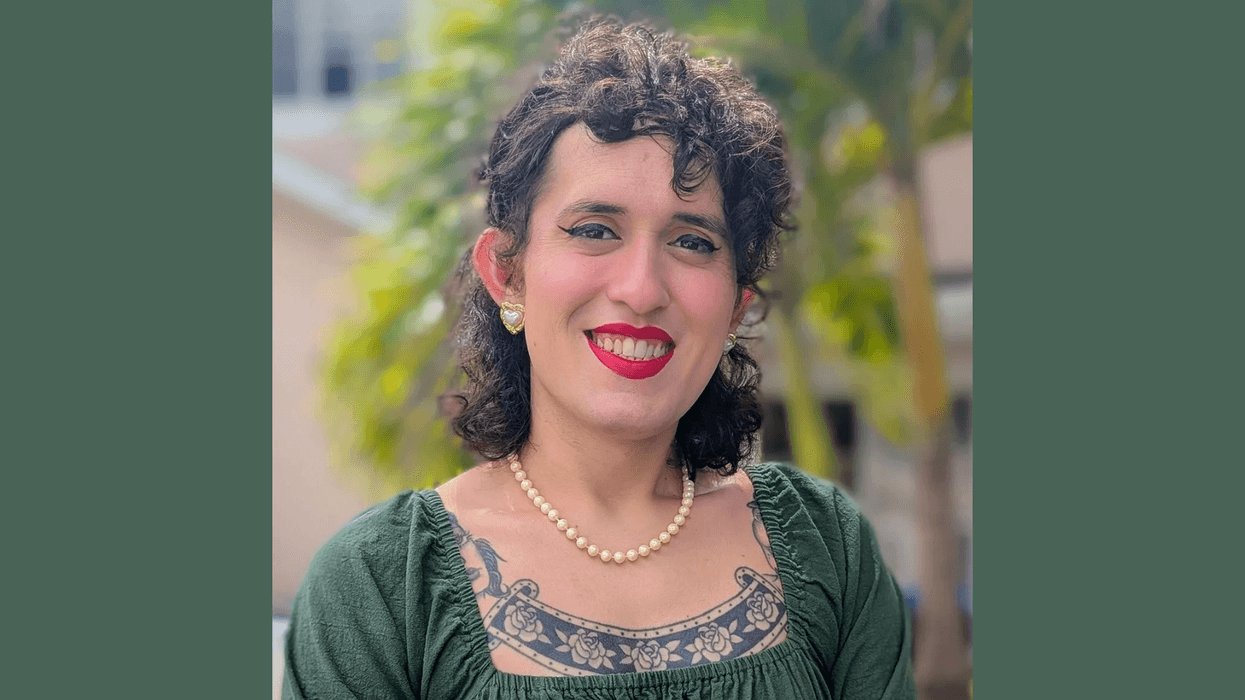
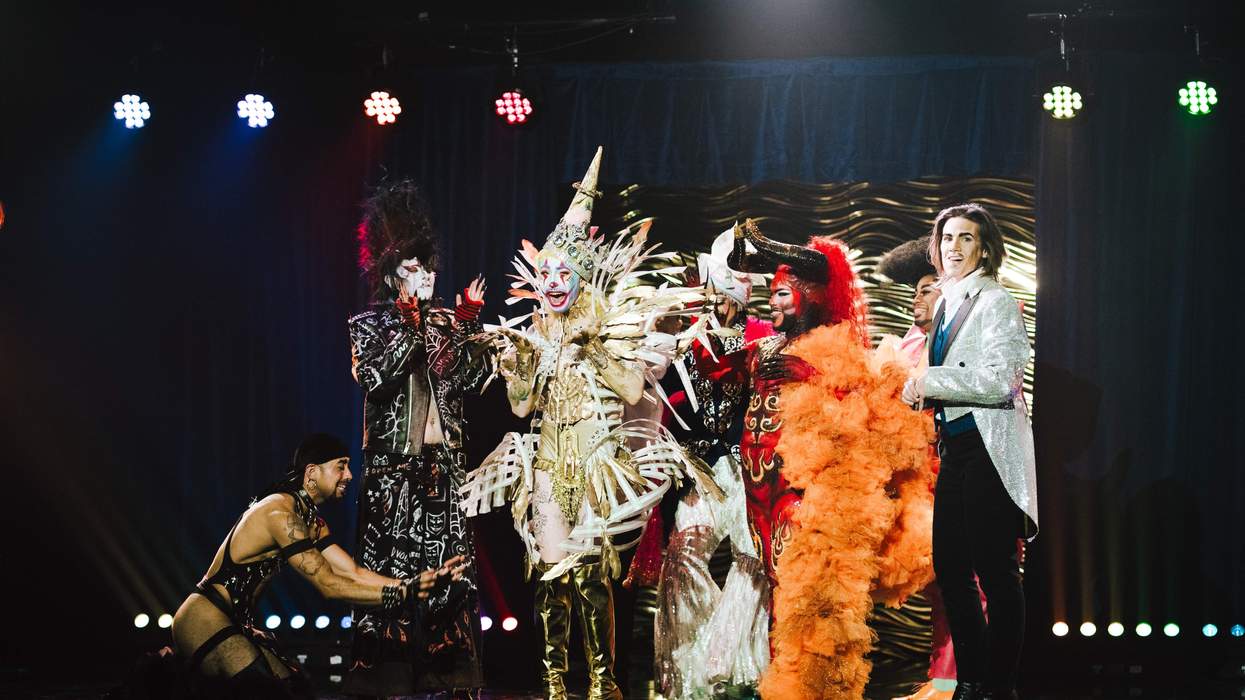
Competition show King of Drag crowned its season two winner on Sunday night: Lollygag, a multi-hyphenate Brooklyn-based clown, dancer, and tattoo artist.
Hosted by comedian Cameron Esposito, the show’s second season had a stacked cast of judges, including legendary drag performers like Gottmik, actor Vico Ortiz, and the show’s co-creator Damian Pelliccione. Its eight contestants hailed from drag scenes across the country and included a wide variety of artistic approaches to the art form. Papi Chulo, Chase Lounge, Trade, D. Vour, Twinka Masala, VERA!, Cyrus K. Stratton, and Lollygag all faced group activities, performances, and wildcard elimination challenges as they competed for the crown.
The entire cast of King of Drag us a breath of fresh air in the sparse world of transmasculine, queer masc-of-center, and drag king representation on screen, which is why there’s been over 200 watch parties across the country for this season alone. Much like King of Drag itself shining light on the underrepresented world of drag kings, Lollygag’s win is a spotlight on the irreverent and undeniably queer art of clowning.
From the second their vibrant green mullet entered the “Man Cave,” where contestants spent much of their time getting ready for challenges, Lollygag stunned judges and fellow contestants alike, making him a contender to watch. Incorporating not just a clown aesthetic but also the actual act of clowning into his performances, Lollygag brought physical humor, silliness, and sincerity to new challenges every week.
“Lollygag reminded us that drag king artistry has no single shape,” Christopher J. Rodriguez, King of Drag co-creator and Revry Chief Creative Officer, says. “They brought fearless comedy, real heart, and a completely original point of view to every challenge, and they used the clown tradition to say something sharp and honest about masculinity.”
Before celebrating his win at queer nightlife venue 3 Dollar Bill, located in his drag hometown of Brooklyn, Lollygag sat down with Them to talk about growing up as a professional dancer, attending clown school in Coney Island, and what winning the first-ever drag king competition shows means to them.
You can watch both full seasons of King of Drag on Revry.
This interview has been edited and condensed for clarity.
I have a fun question to start. First of all, are you into astrology?
I would not necessarily consider myself like an astrology gay, but I know a little bit because so many people just keep asking me questions.
Well, I have a different way I can ask this question then. If you had to hug, marry, kill a series of different clown props — like red nose, rubber chicken, clown shoes, anything else, — what would you do?
It would have to be marry the rubber chicken. Hug the clown shoes. What would I kill? You know what, I would kill those fuck ass wigs. Those fuck ass classic clown rainbow wigs. Kill that shit.
Where does your drag name come from? What does Lollygag mean to you?
When I first started drag, I was like, “What's my name gonna be, what am I gonna do?” But I actually started doing visual art under the persona of Lollygag, and the idea with that was that I was just trying things and experimenting with different forms of art, but in an unserious way.
Lollygag is a word that my mom has used in the past, and I've heard in SpongeBob, and so I just thought it was silly, like “quit your lollygagging.” It's fun to say. When I started doing a clown persona and started doing drag king work, I was thinking about what my name would be and my friends and family were like, “Obviously, it would be Lollygag.” The more I thought about that, I was like, “That is the perfect descriptor of what it is that I do with my drag and how I approach it in general.” As a clown, I love the idea of playfulness, and so I think that word is not only a fun name and it sounds fun, but it just felt like it was giving a description of what it is that my clown embodies as well.
Tell me more about your artistic background. I know you started as a professional dancer and I’d love to hear more!
I've been dancing my whole life. I started dancing when I was like 2, and I grew up doing dance competitions, and then I was pursuing it professionally. When I was transitioning and becoming more aware of my transness, I decided to take a step back from the dance world. That was the first time in my life that I actually did have space from dance, which allowed me to explore and take time getting to know these other art forms. Illustrating is something that I've always done. My mom is a professional visual artist, so she has put me in visual art classes since I was a child — even against my will — but you know, I am thankful for it now.
Taking a step away from dancing actually brought me to tattooing, and tattooing in a weird way brought me to drag. I was tattooing someone who was like, “I follow this drag performer who is looking to cast all trained, trans dancers for a dance theater show.” I was like, “That sounds really cool and interesting.” So I auditioned for that. I got cast in that, and there were a couple of drag performers and drag kings in that cast, and that was my first real exposure to the drag community. In a weird way, I feel very thankful that I met these people outside of a direct drag scene. I was meeting them in this dance world, and so there was the commonality there. There's a lot of drag performers who have a movement background, but I think there's such specific trauma associated with being a trained dancer and then having the experience of being trans. I was like, “OK, these are my people. I really love this.”
The first year and a half of watching drag as an audience member, I was like, “What is this?” Because people are dancing, people are lip syncing, people are creating amazing props and like these reveals. This opened up the whole drag universe world for me. And I was really, really nervous to start. I really deeply did not want to be perceived as a dancer coming into this drag scene being like, “This is easy. I got this. Everyone look at me, I'm so great at this,” because I was terrified and it's not easy at all. There are transferable skills, but it is extremely hard.
After being anxious and watching for a year and a half and taking notes, my now drag dad and my partner sat me down at a table at a dinner, and they were like, “My dear, when are you going to start doing drag?” Essentially I was like peer pressured into starting because everyone was like, “I think this is something you really want to do, and you're just really not allowing yourself to do it for whatever reason.”
How did it feel to take that leap?
The first time I ever did drag, I was like, “This has unlocked something within me, this feels so correct.” It's the first time that I was ever able to have so much control and freedom of self-expression in the entire product because, as a dancer, you're such a body and you are the vessel for the director's vision. This was the first time that I could fully express myself in all of these ways. It just felt right.
How did you come into clowning during this journey? You went to clown school in Coney Island?
I started doing clown makeup because I saw strippers on TikTok doing clown makeup and I was like, “that looks really fun and hot and I like that. Let me try it.” Then, when I was like, “I want to do drag, but I don't know what I would do,” people were like, “Obviously you would be a clown.”
I was actually at a drag gig one time and I overheard these people — who I'm assuming were more theater kids — they were like, “I'm not into these fake clowns, these people who put on being a clown because they love the aesthetic and they love just looking like a clown, but they don't know how to be a clown. They don't know how to juggle. They don't know what it means.” I was overhearing this, and thought “I don't wanna put on being a clown. If I'm gonna be a clown, maybe they're right and I need to straight up be a clown.”
That sparked my brain where I was like, I need to look into what clown classes are and then I got ads on my phone. Also, friends that I knew from clown community were like, “I went to this clown school” and I was like, OK, I'll learn how to be a real clown because not only will I be extremely fulfilled by that, but now it's going to add to this layering of performance techniques and arts that I'm smashing together — and I no longer will have this community of people potentially angry at me or perceiving me as a fake clown.
There's authenticity to the silliness.
That feels very important to me, too, because I was like, “I am really performing as a clown now, and there is an entire history that I actually am not super in touch with,” so I wanted to get in touch with that.
That makes so much sense. There's so much that you carry in the competition with your physical comedy and I'd love to hear more about how it was to be your persona on this television stage. How did that translate for you?
It was challenging. It was definitely a different situation than I usually perform in. It's a big stage. It's a big empty room with cameras. Cameras are very different than people, right?
I was really just trying to remember what it is about each of these looks that I was trying to bring out in my clown. What are all these clown pockets and niches that I can tap into that I learned about in clown school as well.
You could feel the brotherhood through the screen with your fellow contestants. Can you tell me about that?
I've only been doing drag for like just 2 years now and when asked about kings outside of my specific community, I was like “I really don't know anyone,” so I was really looking forward to meeting everyone. I feel like I have a special connection with everyone on the cast, which is really unique and sweet. We're all bonded in a very nice way.
What was like the most challenging challenge for you?
It had to be the country challenge because I'm not a singer like that. My gut was twisted, but I think I managed. I was like, “It's not that serious.” Being a clown helps me do that. That's always my strategy, to care but not hold on to being so serious.
You're gonna be receiving your crown in Brooklyn, your home drag base. How does it feel to be surrounded by your community?
I'm really excited because these people are how I got here. There's been so many beautiful moments leading up to coming on this show and just getting this package together. I really got the opportunity to become a lot closer to my community. There were designers and people I had known of and we knew of each other, but this gave me the reason to reach out and be like, “Let's work together.” To be able to celebrate the finale and do this at home feels very special because everyone can come together easily and we can all celebrate.
I get to say “thank you” because specifically the Brooklyn drag community has absolutely changed the trajectory of my life.
Get the best of what’s queer. Sign up for Them’s newsletters.