
A racial slur shouted while Sinners stars Michael B. Jordan and Delroy Lindo were presenting a prize at the BAFTA Film Awards — the British equivalent of the Oscars — has stirred controversy and sparked conversations online about the intersections of race and disability.
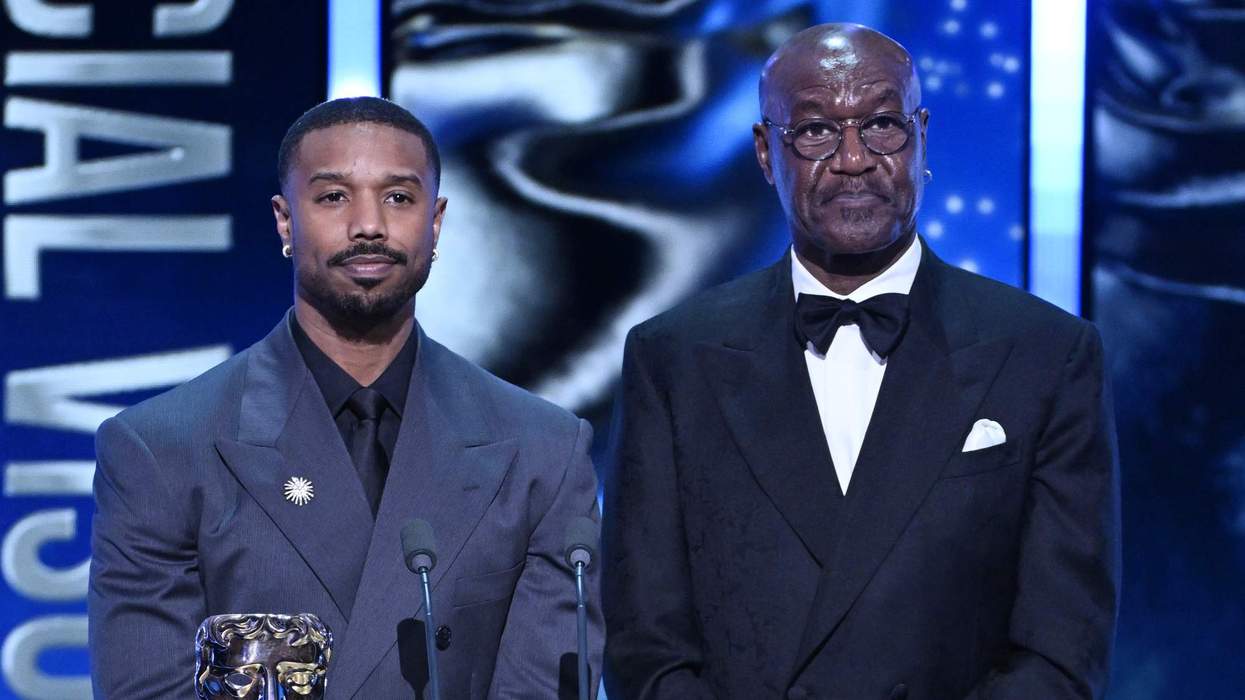
As the two Black actors were presenting the honor for best visual effects to Avatar: Fire and Ash, the N-word was shouted from the audience by Tourette syndrome activist John Davidson, who was the inspiration for the BAFTA-nominated film I Swear.
Davidson was diagnosed with Tourette’s when he was 25 and had symptoms first crop up at the age of 12, including tics and uncontrollable outbursts called coprolalia. Coprolalia is a medical term used to describe the involuntary outburst of “obscene words or socially inappropriate and derogatory remarks,” which for a small number of people, can manifest as “racial or ethnic slurs in the company of the very people who would be most offended by such remarks,” according to the Tourette Association of America.
Unlike filmmaker Akinola Davies Jr.’s “Free Palestine” comment made during his acceptance speech, the BBC failed to edit out the slur despite the broadcast airing on a two-hour delay.
Following the backlash to the racial slur being heard by audiences, the BBC apologized for failing to edit out the remark. “This arose from involuntary verbal tics associated with Tourette syndrome, and as explained during the ceremony it was not intentional,” the BBC said in a statement. “We apologize that this was not edited out prior to broadcast and it will now be removed from the version on BBC iPlayer.”
A number of other outbursts could be heard throughout the BAFTAs, including “shut the fuck up” being shouted while BAFTA chair Sara Putt was speaking, and “fuck you” being said while the directors of the coming-of-age film Boong accepted an award, Variety reports.
Psychiatrist Dr. Cooper Stone, a clinical assistant professor of psychiatry and behavioral science at the University of Pennsylvania who frequently lectures on Tourette syndrome, told Out that many people perceive these tics as “being intentionally disrespectful,” but that’s not an accurate representation of the disability.
“It is important to remember that this is a neurodevelopmental disorder with a genetic basis, and through no fault of their own, they were born with this condition,” he said. "Unfortunately, because the tics resemble normal human behavior in appearance only, people will often mistake this as a condition that is under their voluntary control, including the patients themselves, who may live with a great sense of shame.”
The audience had been warned prior to the start of the ceremony that they might hear swearing, and while on the red carpet, Davidson explained that large crowds and stressful situations can be triggers for his verbal tics. “Certain things — like today, lots of people around, I’m feeling very, you know, more tics in case I lash out,” he said, per CNN. “Different situations can trigger different emotions and tics and stuff.”
Lindo told Vanity Fair that he and Jordan "did what we had to do” and continued to present the award after hearing the slur, but wished that "someone from BAFTA spoke to us afterward.”
During the award show on Sunday, host Alan Cumming apologized after a number of outbursts had been shouted. “You may have noticed some strong language in the background,” he said. “This can be part of how Tourette’s syndrome shows up for some people as the film explores that experience. Thanks for your understanding and helping create a respectful space for everyone.”
In a thread on X, Hannah Beachler, the Oscar-nominated production designer on Sinners, said that another outburst at the event was directed at her and that a better apology was necessary.
“I understand and deeply know why this is an impossible situation,” Beachler wrote. “I know we must handle this with grace and continue to push through. But what made the situation worse was the throw away apology of ‘if you were offended’ at the end of the show.”
Davidson released a statement apologizing for his outburst on Feb. 23, explaining that his “tics are involuntary and are not a reflection of my personal beliefs” and that he left the event early because he was “aware of the distress” his tics were causing.
“In addition to the announcement by Alan Cumming, the BBC and BAFTA, I can only add that I am, and always have been deeply mortified if anyone considers my involuntary tics to be intentional or to carry any meaning,” he said in the statement.
Black disability activists and advocates have also taken to social media to provide a deeper understanding of disability while advocating for situations like this to be handled better so that both the disabled person and the actors could have felt supported and safe.
TikToker and Twitch streamer Shay Amamiya (@sh4ysgrwm), who has nearly one million followers on TikTok, has made two videos speaking out about the incident and explaining how coprolalia presents in people with Tourette syndrome. “I’m Black, and I also have the N-word as a tic,” she said. “I have other slurs as tics. Does this mean that I use them regularly? Does this mean that I mean them? Does this mean that I can control what I say? No it does not. That’s not how coprolalia works, that is not how Tourette syndrome works.”
Amamiya continued: “We’ve got to stop thinking with our feelings and start thinking with logic. It’s OK to be offended, but what is not OK is to be ableist and try to make it seem like people with Tourette’s, especially those with coprolalia, say their tics on purpose.”
Author and disability rights activist Imani Barbarin (@crutches_and_spice) also made a series of impassioned videos on TikTok speaking out about the incident, where she pointed out that some of the responsibility lies with Davidson, who should have asked for accommodations if “he can’t control saying the word in front of Black people.”
@crutches_and_spice Replying to @r that’s an option too, no? #Bafta
“If you know your disability results in you saying racist slurs at people and it’s beyond your control, then in my mind, personally, I would find ways and accommodations,” she said, “and ask for accommodations and ways for me to participate and still be present, but not be in the presence of people that I know that would be insulting to.”
Barbarin also said that the BBC and BAFTA Film Awards should have done a better job of preparing the audience and presenters about the "nitty-gritty of what it sounds like, looks like,” when people have Tourette’s “so people can be prepared.”