



Warning: This article discusses violence against LGBTQ+ people.
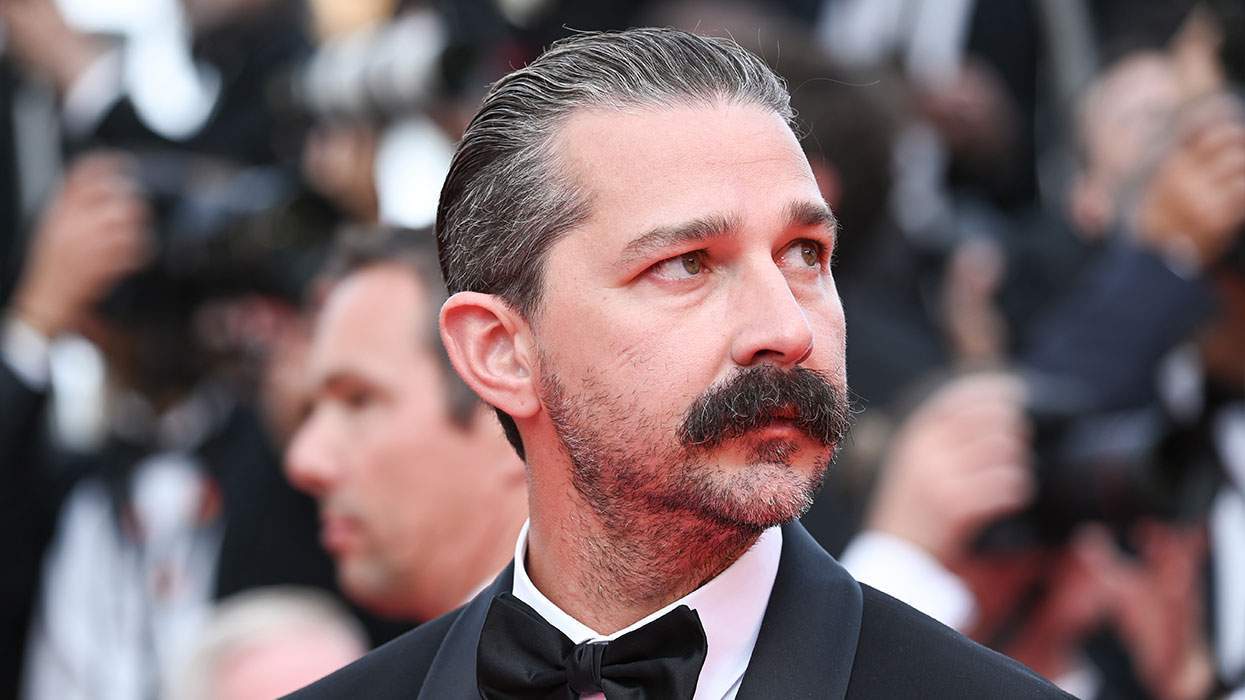
For the not-terminally-online, actor Shia LaBeouf commented in a recent interview that “big gay people are scary." The remarks were in regard to his arrest on allegations of assault during Mardi Gras festivities in New Orleans, and they position his legal team to argue the “gay panic” defense in court.
What is the gay panic defense, and why is it allowed? I unpacked it a bit for a video on Instagram earlier this week, but it deserves additional context.
For nearly 60 years, defendants charged with violent crimes against LGBTQ+ people have leveraged the gay and trans panic defense, a legal argument rooted in discrimination. At its worst, the argument asserts that gay and trans people’s identities are partially to blame for the violence inflicted against them.
When a perpetrator argues they were frightened or became mentally unstable in the presence of a queer person, it reinforces the narrative that they were not of sound mind at the time of the attack, which lets them angle for more lenient sentencing. It also condones discrimination against queer people as acceptable in society.
The gay panic defense
The word “panic” plays an important role in all of this. In 1920, psychiatrist Edward J. Kempf identified “homosexual panic” as a condition triggered by “uncontrollable perverse sexual cravings.” Kempf's framing had nothing to do with assault; it described someone overwhelmed by their own suppressed same-sex desires.
By the 1950s, the term had found its way into the first edition of the American Psychiatric Association's Diagnostic and Statistical Manual of Mental Disorders (DSM), cementing it as an official diagnosis. Defense attorneys began adapting Kempf's clinical language into courtroom strategy, repurposing the idea of a "panic" response to justify violence against queer individuals.
Even as the APA evolved its positions on sexual orientation and gender identity in later editions, the positioning persisted. In the hands of criminal defense attorneys, the gay and trans panic argument became a victim-blaming tool.
The first legally recognized use of the gay panic defense occurred in a 1967 California case, People v. Rodriguez, and later spread to other jurisdictions, appearing in court opinions in roughly half of all U.S. states, according to research compiled by the LGBTQ+ Bar Association.
The defense typically operates within one of three existing legal frameworks: provocation (arguing that the victim's behavior provoked a heat-of-passion response), self-defense (claiming the defendant feared imminent harm), or insanity-based defenses (arguing temporary loss of control). The gay and trans panic can’t be used as a standalone defense. Instead, it’s a tactic layered onto other defenses to support an overall narrative, according to the American Bar Association.
One of the most widely publicized early applications came in 1995, when Scott Amedure, a gay man, revealed a crush on acquaintance Jonathan Schmitz in a taping of The Jenny Jones Show. The episode never aired because Schmitz shot and killed Amedure three days later. His defense attorneys argued that Schmitz had experienced something akin to a "gay panic," diminishing his capacity to form the intent required for first-degree murder. The jury accepted the argument in part, convicting him of second-degree murder rather than first, which came with a reduced sentence.
Schmitz was released from prison in 2017.
The trans panic defense
As visibility for transgender people increased throughout the 21st century, a parallel strategy emerged in courts: the trans panic defense. It similarly seeks to excuse or mitigate violence by blaming the victim, arguing that the discovery of a victim's transgender identity provoked an overwhelming, uncontrollable response in the defendant.
The 2008 murder of Angie Zapata brought the trans panic defense into public discourse. Zapata, an 18-year-old transgender woman from Colorado, was beaten to death by Allen Ray Andrade after he discovered she was transgender. Andrade's defense argued the revelation induced a state of temporary insanity, a textbook trans panic argument. But the jury rejected it. In 2009, Andrade was convicted of first-degree murder and a hate crime, becoming the first person in the country to be convicted under a state hate crime statute for the murder of a transgender person. The Human Rights Campaign condemned the use of the defense and called for legislative bans nationwide.
Research documented by the Williams Institute at UCLA School of Law found that the gay and trans panic defenses were invoked at least 104 times across 35 states, the District of Columbia, and Puerto Rico between 1970 and 2020. Charges were reduced in roughly a third of those cases. The defense has historically not produced outright acquittals as often as critics fear, but it has reliably secured lesser convictions and shorter sentences, effectively communicating to juries that a victim's queerness was a contributing factor in their own death.
To be clear, the American Bar Association hates this strategy. In 2013, it passed a unanimous resolution calling on federal, state, and local governments to prohibit panic defenses in criminal proceedings. California became the first state to ban the defense in 2014, and as of last year 20 states and the District of Columbia have enacted bans. The defense is still allowed in Louisiana, where LaBeouf’s alleged assault took place.
The defense also still remains available in federal criminal proceedings. Bills have been introduced multiple times, most recently the LGBTQ+ Panic Defense Prohibition Act of 2023, but have stalled each time without a floor vote.
Why it matters
Today, the gay and trans panic defense still justifies violence against queer people in a majority of states. It’s one strand of the overall web of discrimination against us that affects our mental health, physical health, money, and overall wellbeing. By condoning discrimination as reasonable, we perpetuate it in queer people’s lives.
Abolish the gay and trans panic defense in all 50 states.
Nick Wolny is Out magazine’s finance columnist. He writes Financialicious, a personal finance newsletter tailored toward queer readers, and his first book, Money Proud: The Queer Guide to Generate Wealth, Slay Debt, and Build Good Habits to Secure Your Future, is available now. nickwolny.com @nickwolny


