

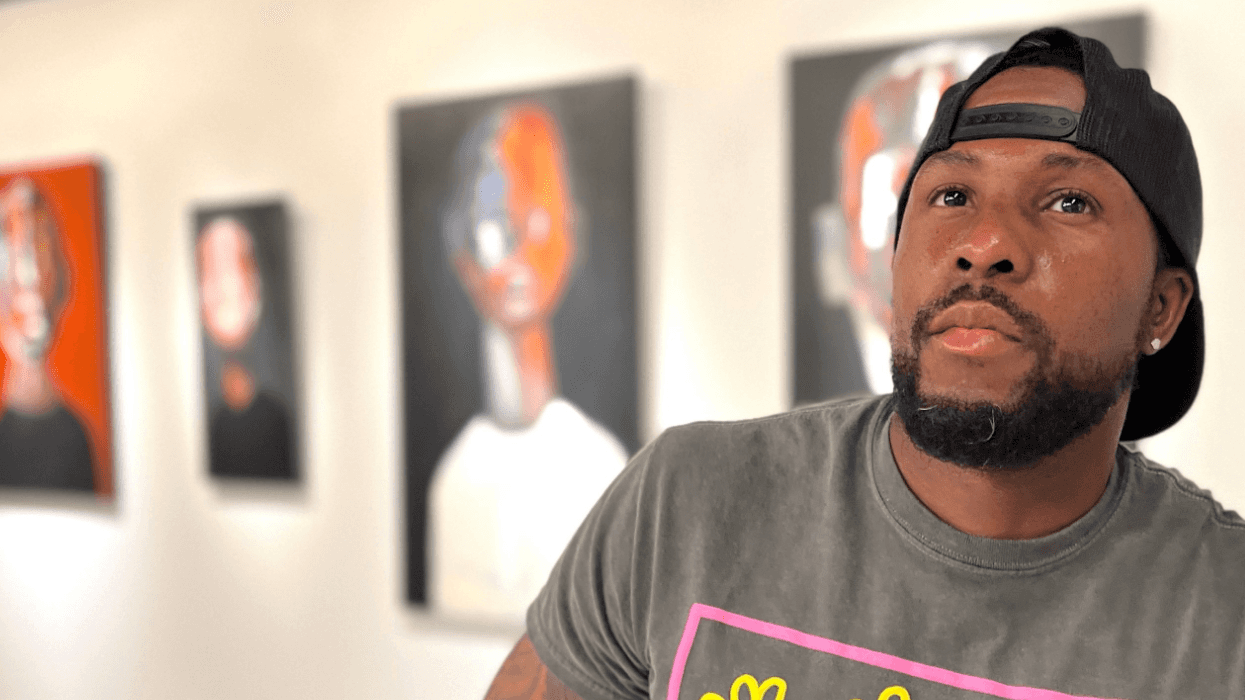
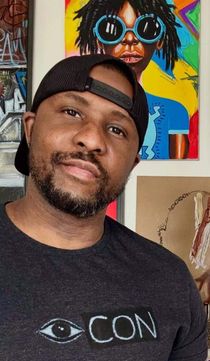
The inspiration behind this series comes from multiple places.
When I moved back to California, I began creating work that blended several styles while aiming to make something impactful in 2024. I started showing at the Palm Springs Art Museum with a piece depicting two Black men embracing in a loving way, using texture, bold color, and patterned backdrops that nod to Keith Haring. Having traveled to Europe and been deeply interested in fashion, I saw Haring’s work being used on clothing by several companies. While I thought that was cool, I wanted to honor the HIV awareness his work originally stood for, while also representing fashion culture and Black culture.
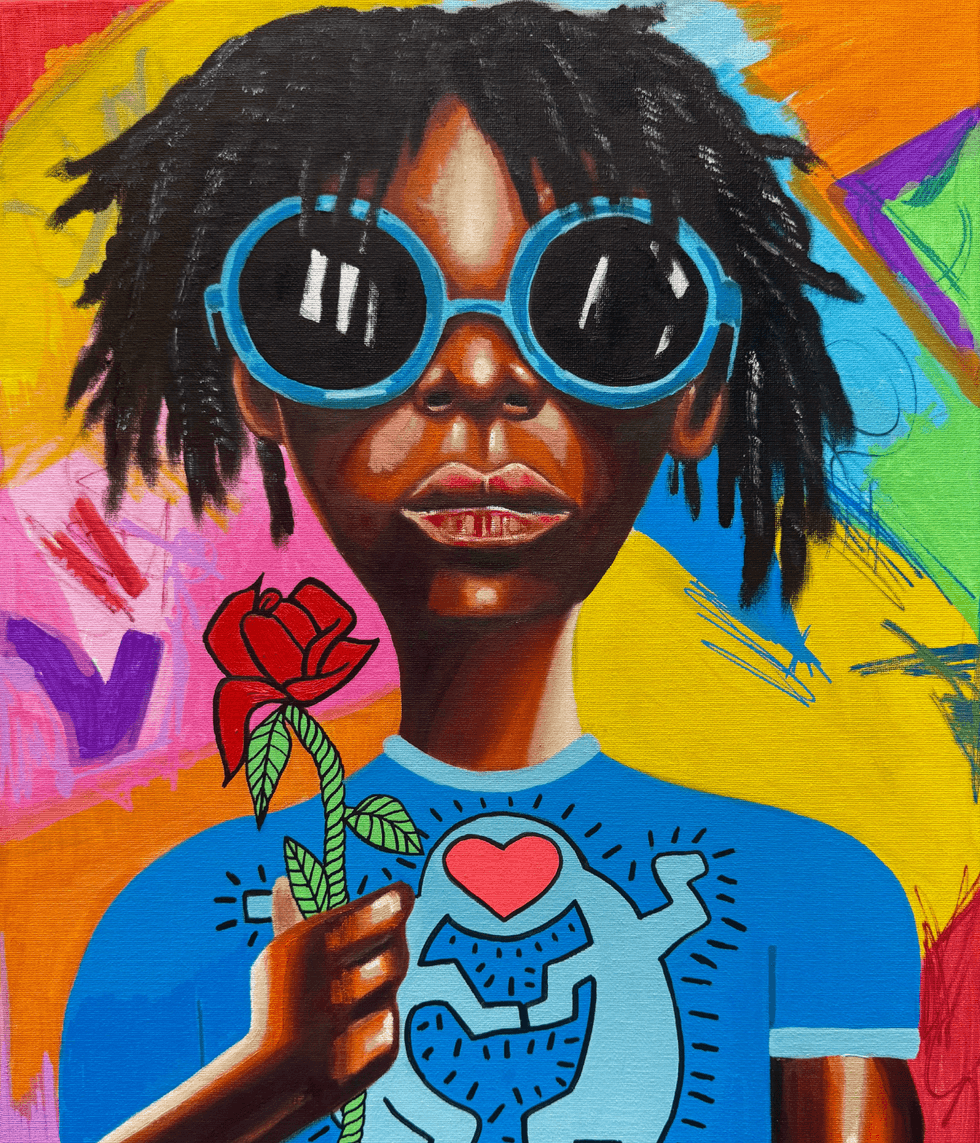
A vibrant portrait by Marner of a young Black person wearing blue sunglasses and a blue shirt, holding a red flower against a bold, multicolored backdrop.
Aaron Allen Marner
From there, I created a show at the Palm Springs Cultural Center, displaying a range of work — trans representation, African pattern pieces, queer art, geometric work, and textured pieces — and continuing to build on the series. I also created the first artwork for Classic Black Barbie for Barbie Con in 2024. Around that time, I was honored as Grand Marshal of Palm Springs as both an activist and artist. I also began exploring leather and becoming a visible figure to bring awareness to that community.
Before I began working on this series, I was abused by a previous boyfriend. A week after my showing at the Cultural Center, I left for my safety and spent the next year on the edge of homelessness. I moved from place to place, continuing to work the entire time. I lived in 15 different spaces before eventually leaving for Los Angeles. I constantly felt like I couldn’t catch up — artistically, physically, or financially. I spent so much time trying to take care of my health and make progress, only to be set back again by having to move or not having the resources I needed to keep going.
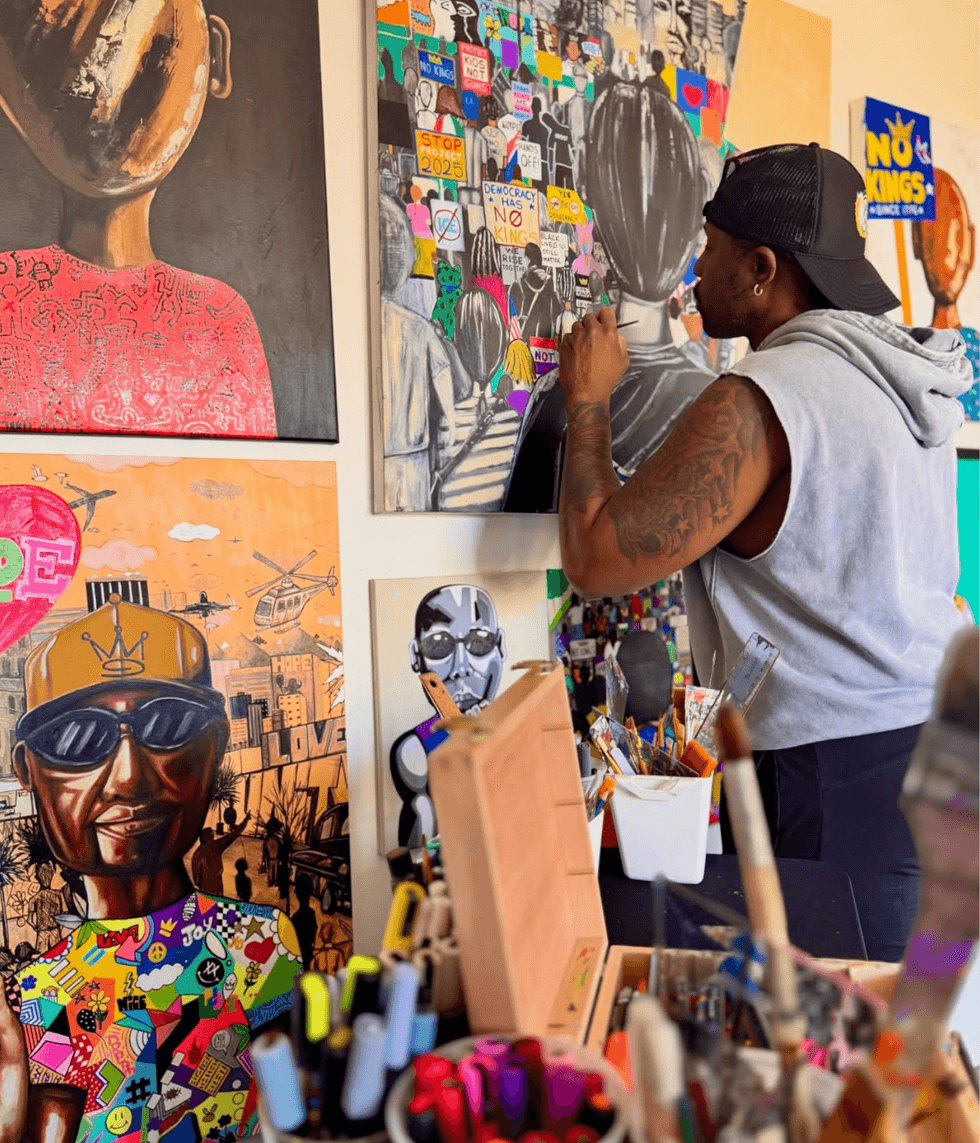
Marner works in his studio, creating pieces that reflect identity and protest
Aaron Allen Marner
When I arrived in Los Angeles, I started working on what I thought would be a continuation of the series for another show, but it fell through. Once again, I was dealing with the harsh reality of summer, which can be especially difficult for working artists. The busiest times in the art world tend to be from spring to fall, and even then, financial stability and access to show space can be inconsistent. Without strong connections in the city and with most spaces having long waiting lists, I did my best to make it work, but I began to fall behind.
At the same time, I realized the country was shifting. People were in the streets, angry at the administration and what felt like growing threats to basic rights and humanity. I felt my own quality of life changing. Quietly, I watched things shift online and in person — especially for artists, and even more so for queer artists who spoke out or belonged to marginalized communities. Sales slowed. Opportunities disappeared. I saw the way I was treated in public change, again and again.
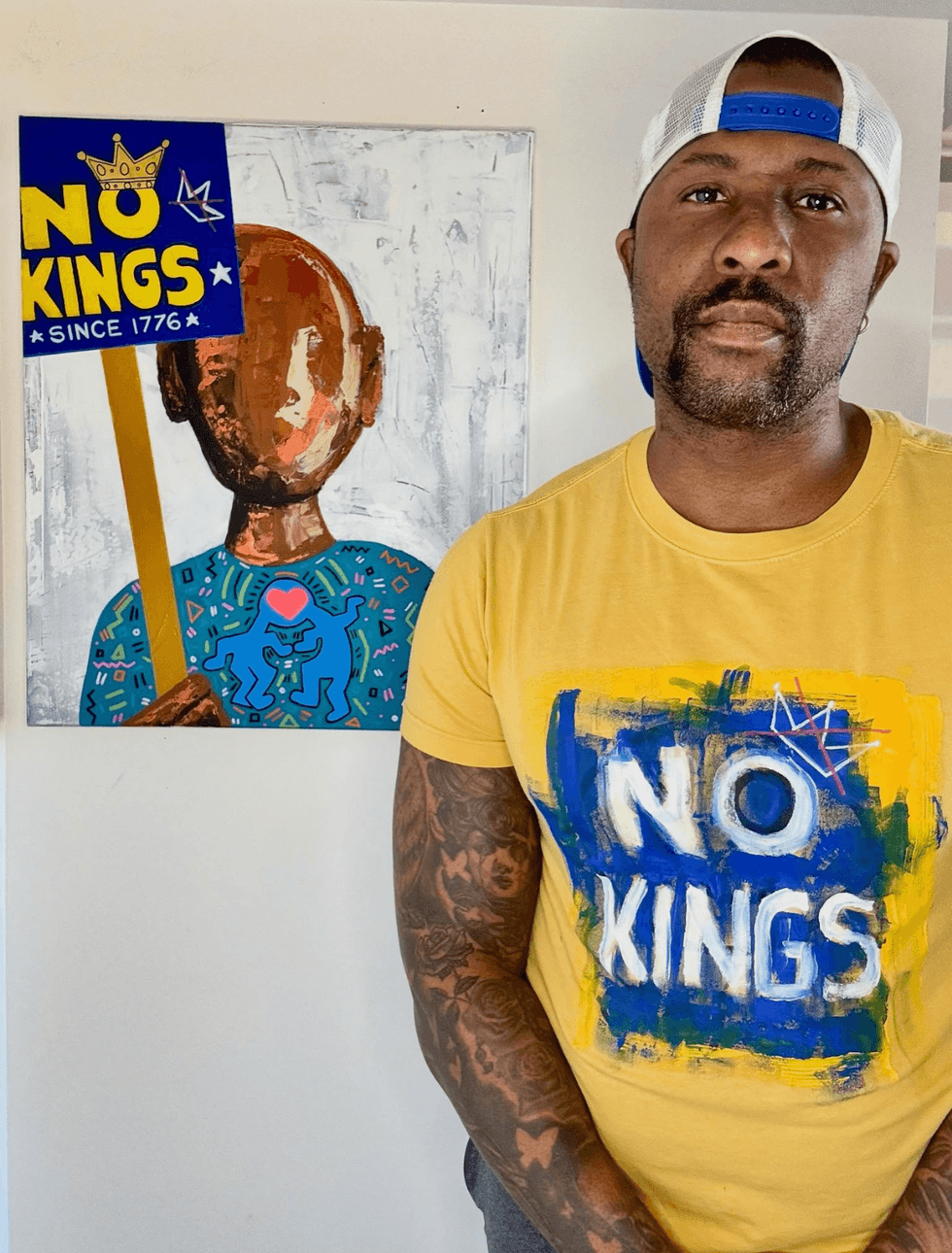
Aaron Allen Marner stands in front of a painting featuring a “No Kings” protest sign
Aaron Allen Marner
I began participating in protests. I began creating work that directly reflected what was happening in this country — cuts to health care, including PrEP and transgender care, labor disputes, immigration issues, women’s rights, and what felt like a broader attack on anyone who didn’t align politically. I had started my art career full-time in 2020, inspired by George Floyd, and during that time I found success and national attention. But the same visibility that once created opportunities now seemed to limit them.
I started to question everything. If I used my platform to speak out — through art and photography — was I putting myself in danger? Free speech felt like it was losing its value. I watched people being detained, harmed, and silenced.
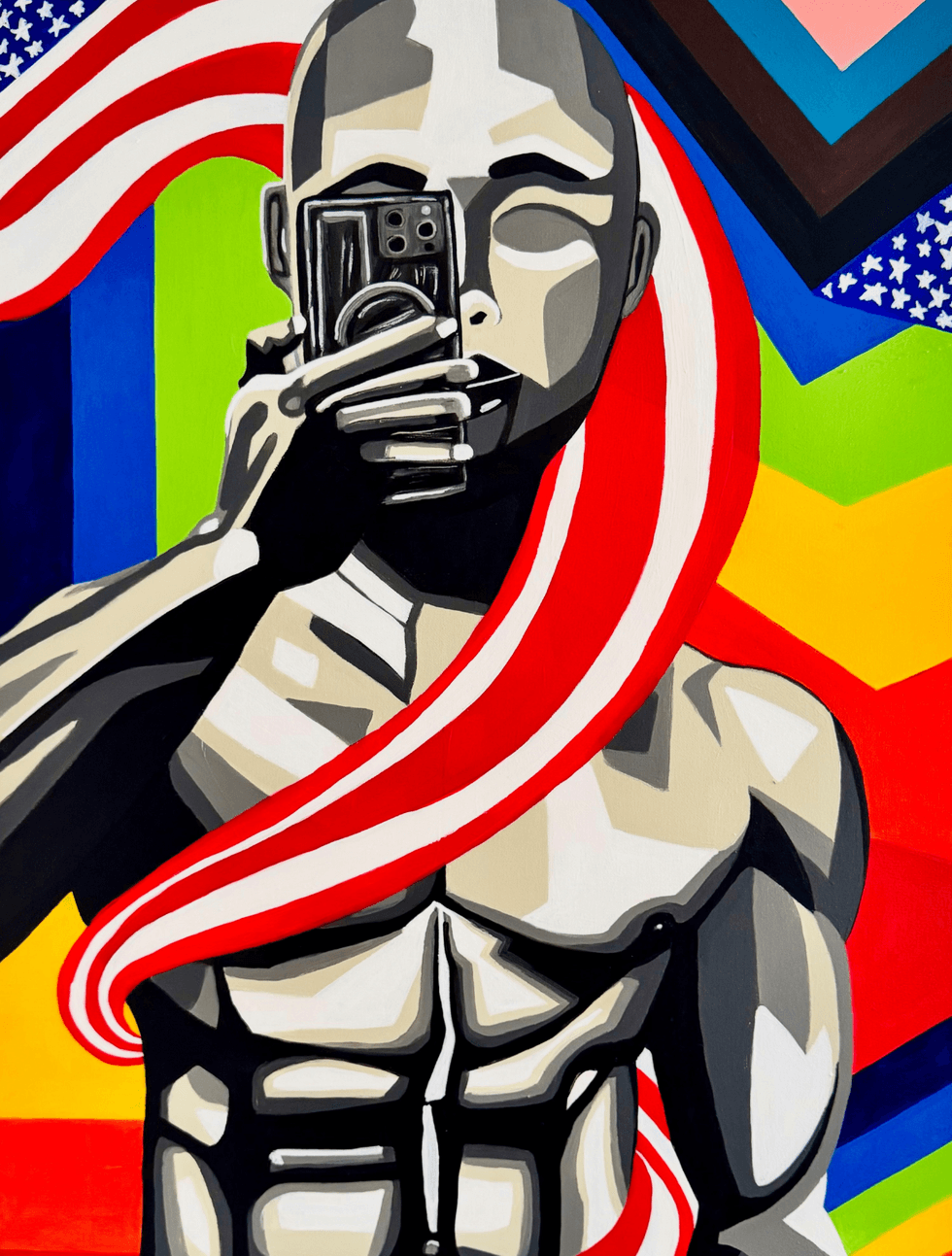
A painting by Marner featuring a figure with a camera, layered over rainbow hues and American flag imagery
Aaron Allen Marner
What I came to understand is that if you take someone already struggling in a field that’s inherently difficult, and you reduce their platform, their finances, and their opportunities, they either quit or fall into instability because there’s nothing in place to sustain them. Well-known artists continue to be celebrated, but many others — especially queer creatives — are overlooked, even when they’re creating meaningful, impactful work. I’ve experienced this myself, and I’ve seen it happen to others. It’s not new — it’s something that has happened historically as a way to quiet voices that challenge the status quo.
My goal has always been to bring awareness and to exercise my right to speak and express myself. I don’t create work to focus only on hardship, but to highlight humanity within it. While marginalized communities are being torn down, my intention is to build them up.
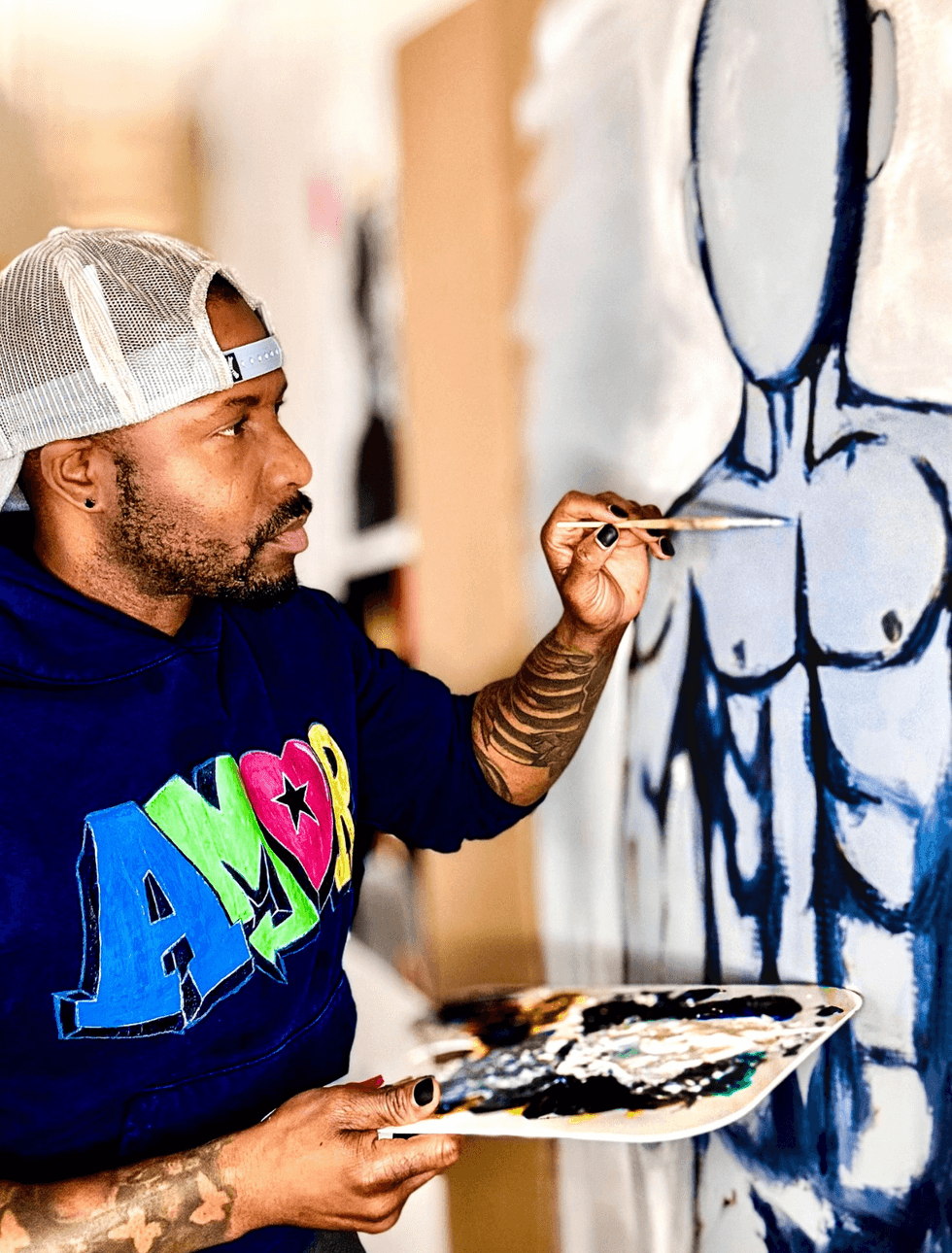
Marner works on a large-scale painting, adding detail to a stylized human figure on canvas
Aaron Allen Marner
In the winter of 2025, I became ill and was bedridden for two months with nerve damage. Even then, I continued working, ultimately completing a new show in time for the opening of The Freedom to Exist, currently on display at Strut. The show centers on awareness — gay rights, trans rights, Black culture in honor of Black History Month, ballroom and drag culture, and HIV awareness.
Follow Aaron Allen Marner on Instagram: @aaronallenartstudio and @aaronallen1313.
Opinion is dedicated to featuring a wide range of inspiring personal stories and impactful opinions from the LGBTQ+ community and its allies. Visit Out.com/submit to learn more about submission guidelines. We welcome your thoughts and feedback on any of our stories. Email us at voices@equalpride.com. Views expressed in Opinion stories are those of the guest writers, columnists, and editors, and do not directly represent the views of Out or our parent company, equalpride.