

This story originally appeared on Them.
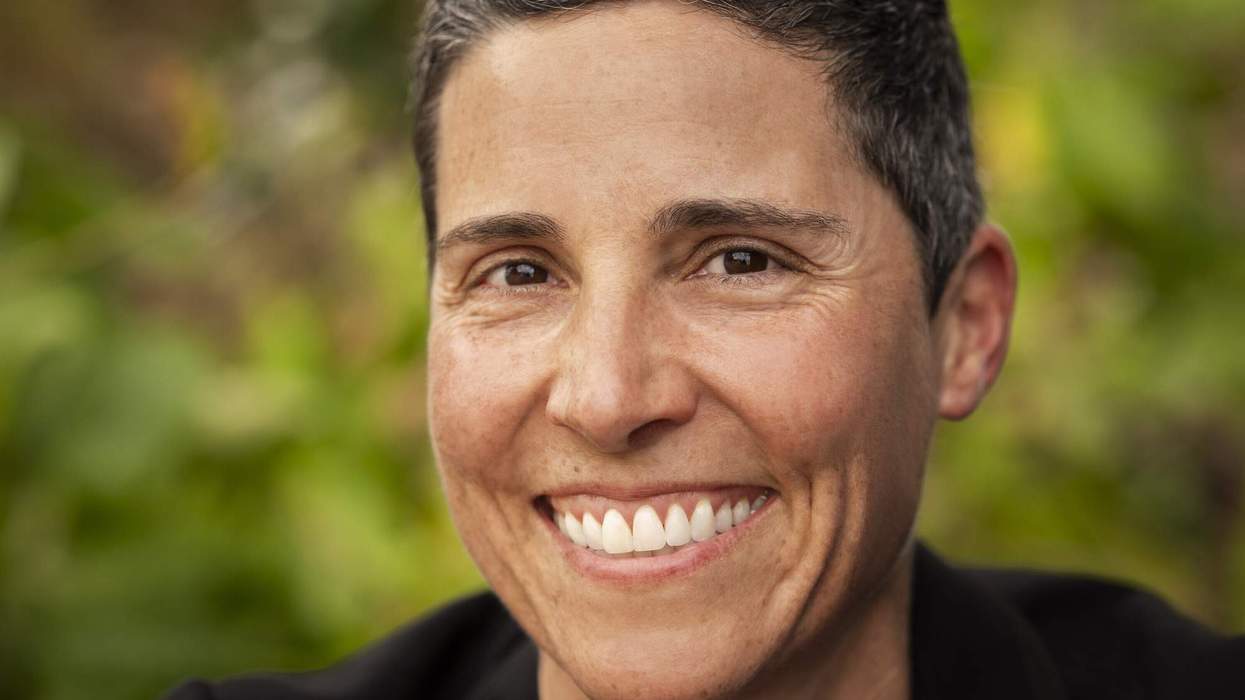
Stepping onto the beach in Fiji, Kristin Flickinger was finally living out a decades-long dream. The Idaho-born crisis manager has been applying for Survivor since the middle of the first season. “It feels correct,” Flickinger tells Them of finally being cast for season 51. “Honestly, 26 years is a long time to do anything, and I have had a 26-year Survivor journey before I was even on the show.”
What kept Flickinger in the process was faith that it would finally happen. “I didn’t sit around for 26 years hemming and hawing and hoping Survivor would come. I lived knowing that it would come,” she shares.
While we can’t know what happens once Flickinger and her castmates begin competing today, she says the experience itself lived up to her expectations. “I spent a lot of time over the years thinking about what it would be, how incredible it would be to be out in Fiji to be on Survivor. What I thought matched up very much with the experience. It was incredible,” she says.
Flickinger spoke to Them about finally living out her dreams, and what advice she’d share for anyone wanting to apply.
You’ve been applying for Survivor since the middle of Season 1. What do you remember about the first day?
There was a moment when we were out there and it was the first day and we were stepping onto a giant ship. It broke my brain because I’m a student of the show. I flashed back to season one and the ship they were on, and to season seven on Pearl Islands when they got thrown off a ship in their street clothes for the first time. I was like, “Wow, I am in this legacy. I’m part of this surreal adventure.”
What do you think was different about this attempt compared with your past applications?
There are some things that get said all the time by the casting team. “When it’s the right time, it’ll be the right time” and all of those things. I’ve been really angry about those statements for a while, believing them. At some point over 26 years, it’s like, but when is that time going to be?
During the last year, because of casting, when I started really thinking about my story and how I tell the story of who Kristin is. I started thinking about being that queer kid in Idaho in the ’90s. There were not a lot of folks around me like me who I could see. I built up walls to protect myself. For me, the walls were about excellence. It was about if I can be perfect then no one can say shit to me. No one can challenge me because I’m the best at school. I’m the best on the field. I use that as an armor to keep people away, but what I realized during the casting process for Survivor was that little kid built up a fortress of LEGOs and Play-Doh. I was a little kid inside and I never realized that I was still inside that fortress. It served really well for a little kid, but I’m much bigger than that now.
So what felt different this year? I went through some deep stuff, showed up, recorded the video like I always do, but for some reason it broke through.
That’s a lot of commitment. What is it about this game that you love so much?
It reached into my soul and was like “go play the game” when I watched it the first time. That just happened. I was a challenge person forever. I love watching the challenges and I want to go do them. Then I became more interested in the structure, the strategy of the game. Then I started studying strategy and I’d watch the same episode over and over from different perspectives of people and figuring out the strategy. That hooked me, then the people [on Survivor] started hooking me. I’ve been watching long enough that I’ve had different phases and at the end of the day it’s like every part of this show has hooked me and kept me coming back.
How do you see your work in crisis management as an asset to you on Survivor? Were there aspects of your career that you thought might actually be a detriment to your game?
There’s two things there: One is my experience as a crisis manager working in the LGBTQ+ movement, in social justice. I know how to do a lot with a little. I know how to work with folks. Our people don’t like to be told what to do and have opinions about many things. I’m trained in combat with people who don’t like to be told what to do and have opinions. I went out thinking I can plant my feet under me when there’s chaos around me and I can be calm.
In terms of what I had to quiet, I was the oldest player of the cast. As you know, the oldest woman on the cast can be labeled things. You can be labeled “bossy,” “difficult,” “aggressive,” all of those things, and none of those is considered great for your game. I was very aware of that and I wanted to do my best to do none of those things, but I have 26 years of knowledge about the game.
In your initial cast Q&A, you mentioned navigating the world as a queer woman while leading teams and serving the LGBTQ+ community during moments of crisis. Can you tell us more about the work you do in your day-to-day life?
I have an amazing partner, Kim. We just got engaged. We’ve got a husky who speaks using buttons, telling us what she wants. We call her “the roommate.”
I’m a consultant, so I do everything from working with executives who are transitioning out of their jobs to sitting in wild crisis situations and steering organizations through scary moments to hosting galas. I enjoy being at the helm in moments when things just need to be steered in a steady manner.
We’ve talked a lot at work about how Survivor has become such a gay show. What do you think it is about Survivor that resonates so strongly with queer people?
When I was first applying, I talked about how I was a chameleon, right? It’s a glamorous way of saying I could code-switch. I think we’re all masters of code-switching, and that’s a trauma response. In this space, it’s something that’s valuable in a different way. Stepping out there as a 49-year-old queer woman I am working twice as hard as some other folks out there. For folks of color too, I can imagine. Working twice as hard while [a] mediocre somebody is getting ahead in the world. It matters because we’re humans and we have our biases inside of us. But you’re on an island so if you can open a coconut and you can make friends with somebody, you can go far in the game.
What does it mean to you to be representation for LGBTQ+ people who are watching Survivor and seeing your story?
When I went out there, I was not going out there to be representation for anybody. I was going out there for myself. I have worked for 25 years in the movement, in the community, doing the work. I have given back. I have served. Survivor was about me going out and getting to do this.
However, I realized pretty quickly in one of my early confessionals that representation had been so important to me coming up through Survivor. When I saw people like Ami [Cusack], people like Scout [Cloud Lee], I was like, “Oh my God!” Not only is there one queer character. There are two women on the same season from different generations with different experiences.” And the idea that I only ever saw one queer character — they were almost always having a tragic ending forever. To see real people in a space together existing and interacting, opened up something inside of me to understand that there could be a different outcome for me, and that makes me emotional. The fact that I’m out there and I’m a visibly queer person is important, and I’m proud of that. If there’s a queer kid sitting somewhere watching I hope we do them proud.
What would you say to someone who is considering applying to Survivor?
If you’re considering applying for the show, apply for the show. Go get it. If you’ve applied for the show, whether it was 20 years ago or last year, and you heard back or you didn’t hear back, I’ve been at every phase of that. I went back and looked at my videos from the early days, they were terrible. You’re not going to break anything by sending in a bad video. I know everyone says be yourself. What I would say is be the distilled version of yourself that you can sustain. Do that then find the thing that makes you emotional. Doesn’t matter what the emotion is. Sit in that, know how to about that, and then show it. If you can be generous in those ways, you’ll have a much better shot of breaking through.
This conversation has been edited and condensed for clarity.
Get the best of what’s queer. Sign up for Them’s newsletters.