




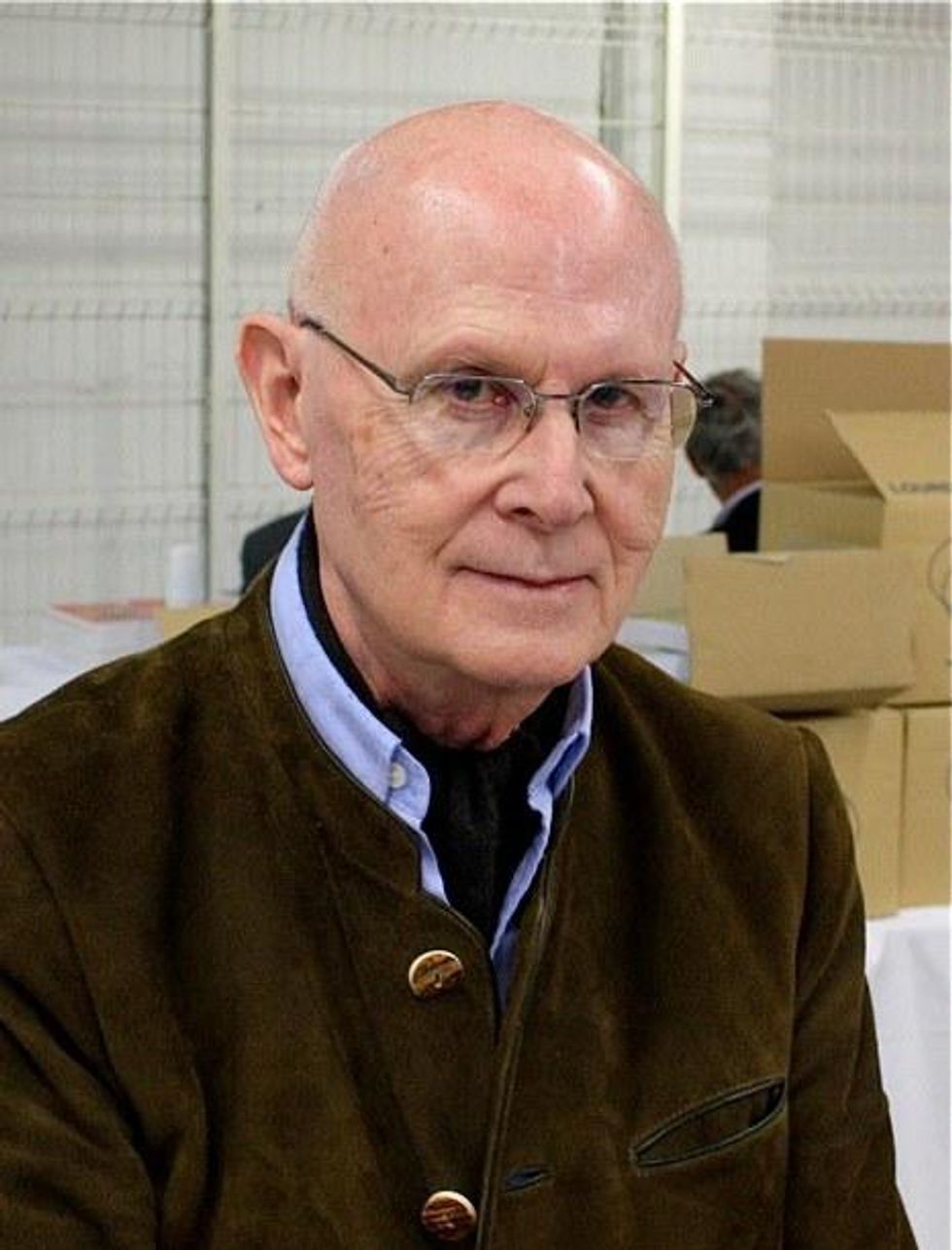
 The news of the world is all abuzz over word that a 78-year-old man named Dominique Venner shot himself on the altar at Paris' iconic Notre Dame Cathedral today. The location of the horrific event is notable enough, but the story's being given an even more unique angle for the fact that Venner was one of France's most prominent right-wing and anti-gay activists and spent the past few months rallying against that nation's new marriage equality law. Further, the nationalist's final blog post, since removed but found by John M. Becker, makes vague reference to "symbolic actions" that many are construing as reference to same-sex marriage.
"New spectacular and symbolic actions are needed to wake up the sleep walkers, shake the anesthetized consciousness, and awaken the memory of our origins. We are entering a time when words must be authenticated by acts.
"It is here and now that our destiny is played until the final second. And this final second has as much importance as the rest of a life. That is why we need to be ourselves until the very last instant."
The Independent also reports that Venner's letter warned all of European society would "replaced" by "sharia law" and Islamist control.
Now many are assuming that Venner, a well-known Catholic, took his own life at Notre Dame as a form of political protest. Though the research on why people commit suicide is understandably choppy, prevention experts insist there's not one reason. There's probably not even 100 reasons.
"Suicide's never as simplistic as one thing causing it," Vanessa McGann, a psychologist with the American Foundation for Suicide Prevention, told me. "It's a perfect storm."
People most often take their own lives because they are mentally ill. In rare cases, perhaps in cases of self-immolation, suicide can be used for political purposes, but the odds that Venner would go against his Catholic teachings, teachings that strictly forbid suicide, would throw away his life and (in his mind, at least) his soul simply to make a political statement?
Reports that directly cite marriage equality as the catalyst for Venner's death are hideously myopic and could potentially be used by LGBT opponents to "illustrate" the detrimental impact of equality.