


Despite all the Glee-tastic gay-youth storylines and popular campaigns that claimed we're "Born This Way" and "It Gets Better," 2011 may have been the year that the LGBT community forgot what it really means to grow up gay.
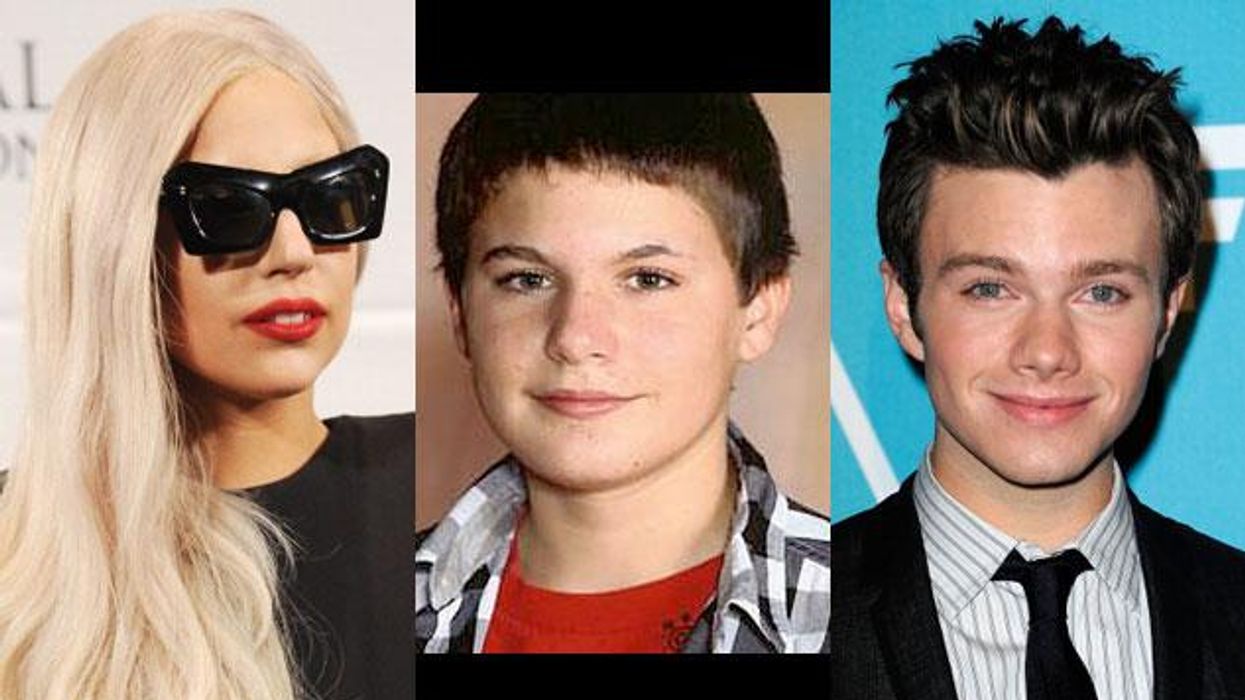
On September 19, 14-year-old Jamey Rodemeyer (pictured center) hanged himself outside his suburban Buffalo home, almost a year to the day that the ubiquitous It Gets Better YouTube campaign began its mission of using webcams to offer solace and hope to queer kids contending with bullying and violence. As the year crawls to a close, the It Gets Better Project has generated more than 26,000 YouTube videos, including one by Rodemeyer himself, just months before he claimed his own life.
"People would be like, 'f****t,' 'fag,' and they'd taunt me in the hallways, and I felt like I could never escape it," Rodemeyer said in the video, which has now been viewed over a million times.
According to the It Gets Better website, "For us, every video changes a life. It doesn't matter who makes it." By this logic, a video of a 14-year-old kid describing the harassment he faces everyday in the hallways is the same as, say, the one by Suze Orman, who waited until she was a 56-year-old multimillionaire to walk out of her Prada-lined closet.
The news cycle seems to have moved on, and those "Teen Tragedies" and "Deadly Bullying" coverlines that were so prominent have been replaced by "Gay Teens On TV," with adorable Glee stars Darren Criss and Chris Colfer standing cozily close--but not too close--on the cover of Entertainment Weekly.
But the encouraging success of shows like Glee, which present positive, if sometimes simplistic, portrayals of queer youth and transgender people, by no means marks an end to the kind of taunting and gender-role policing that Rodemeyer faced for years. To its credit, Glee acknowledges this discrepancy by showing the harassment that besets its main gay character, Kurt (Chris Colfer)--even at the hands of closeted gay characters.
If TV show plotlines aren't your ideal barometer for what's happening in America's schools, you might take a look back at sociologist C.J. Pascoe's 2007 book Dude, You're a Fag, which details her two years of observing the student body at a Northern California high school. In the book, Pascoe concludes that being out in high school has indeed gotten much, much easier--but only for those gay boys who play football and for lesbian girls who are willing to wear tight clothing and allow straight boys to flirt with them.
For queer kids who can't or won't toe the gender line, escape is the only solution, as it was for one particularly mild-mannered boy Pascoe calls "Ricky," known for his Glee-like delight in dancing and singing at school events. By the end of his senior year, Pascoe reports, Ricky dropped out of school and moved to a nearby town.
Ricky is no exception. Just two years ago, a 2009 survey of 7,261 middle- and high-school students conducted by the Gay, Lesbian and Straight Education Network found that nearly nine out of 10 LGBT students had experienced harassment in the past year, and nearly a third had missed at least one day of school because of safety concerns. For many gay kids, even today, school is still about survival more than education.
The Trevor Project's wonderful "That's So Gay" campaign has made some inroads. This past year, it used YouTube videos featuring openly gay performers Wanda Sykes and George Takei to take on the ubiquitous phrase that means "that's so stupid." The campaign has found funny, entertaining ways to challenge adolescent homophobia; but many kids still use the insult freely and often, just the way Katy Perry, still worshipped by legions of gay fans, used it in her 2008 hit "Ur So Gay."
Fighting school harassment is such an uphill battle, it's often hard to know where to begin. Even Lady Gaga, the fabulously outspoken LGBT activist and superstar, misfired this year with "Born this Way," which, though conveniently named for the title song of her new album, plays into the shopworn notion that gender-preference must be congenital to be acceptable.
Rodemeyer, who'd been bullied since grade school for hanging out with girls, saw Lady Gaga as not only an idol but as a source of acceptance and affirmation, however untouchable. Hours before he hanged himself outside his home in suburban Buffalo, he posted a thank-you note to his role-model on one of his blogs, as well as a note to his recently deceased grandmother, telling her that he would be with her soon. Activists, journalists, and Gaga herself have seized on the suicide, decrying the loss of another promising life to bullying.
LGBT kids are coming out in greater and greater numbers every day, and at younger and younger ages. And while growing up gay in 2011 may not be as treacherous as it was even twenty years ago, it would seem that some of us LGBT folks who did come out way back then are still suffering from a case of selective amnesia.
In her landmark 1991 article "How to Bring Your Kids Up Gay," the late Eve Kosofsky Sedgwick accused the mainstream gay movement--which even then seemed more concerned with marriage and military than with the plight of queer kids--of just that. Twenty years on, we're still asleep at the wheel when it comes to LGBT children. Perhaps Rodemeyer's death will be our wake-up call (as actor Zachary Quinto claimed it was and what swayed him to make his decision to come out publicly).
2011 was the year we went back in time, back before AIDS education, safe-sex programs, and even Stonewall. We went back, in fact, to those horrible 1950s sex-ed films that exhorted adolescents to suppress their urges, to channel their budding desire into sports or sewing. A decade into the new millennium, it seems that's still the only message we're willing to offer. It gets better, kid, now go out there and play a good, clean game of football--but only if you're a boy.
Brent Calderwood is a San Francisco-based journalist and editor. His website is www.brentcalderwood.com.